- Free Consultation: (312) 313-0306 Tap Here To Call Us





How Is Fault Determined in a Chicago Car Accident?


A car accident can leave you with painful injuries, mounting medical bills, and uncertainty about what comes next. One of the most common questions we hear is how is fault determined in a car accident and how that decision affects your ability to recover compensation. In Illinois, determining fault is a critical step in every personal injury claim because it establishes who is legally responsible for the damages.
Fault is not always clear immediately after a collision. Insurance companies, law enforcement, and legal professionals review the available evidence to determine liability. Understanding this process can help you protect your rights and avoid costly mistakes. At Chicago Auto Accident Lawyer, we help injured victims build strong claims and pursue the compensation they deserve. Contact us today for a free consultation.
Understanding Fault in Illinois Car Accidents
Illinois follows a modified comparative negligence system when determining fault after a motor vehicle accident. Under this rule, more than one driver may share responsibility for causing a crash.
You may recover compensation if you are less than 51% at fault for the accident. However, your recovery is reduced by your percentage of fault. For example, if your damages total $100,000 and you are found 20% responsible, you may recover $80,000.
Because fault directly affects compensation, insurance companies carefully investigate every accident before resolving a claim.
What Evidence Is Used to Determine Fault?
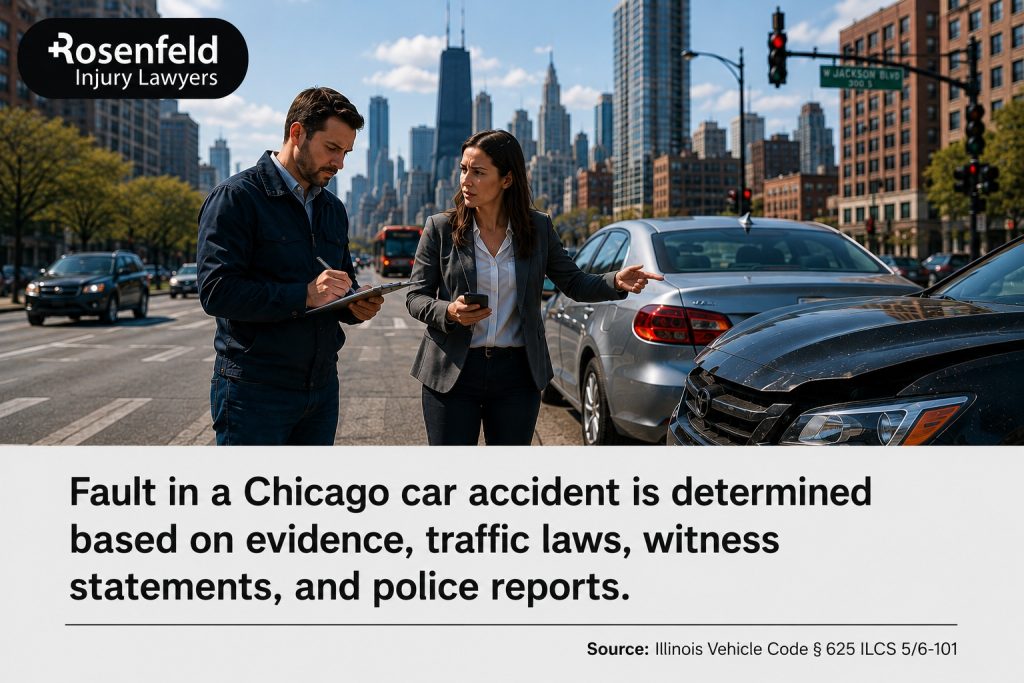
Determining liability requires a careful review of the available evidence. Insurance adjusters and attorneys analyze multiple sources to understand how the accident occurred.
Common evidence includes:
- Police accident reports
- Photographs of the accident scene
- Vehicle damage
- Dashcam footage
- Traffic camera recordings
- Witness statements
- Medical records
- Event Data Recorder (black box) information
- Cell phone records in distracted driving cases
Police reports are often among the first documents reviewed during an investigation, but they are only one piece of the overall evidence.
The stronger the evidence, the easier it becomes to establish liability and support your claim for compensation.
Common Factors That Help Establish Liability
Several factors help determine which driver caused the collision.
Traffic Law Violations
Violations of Illinois traffic laws often provide strong evidence of negligence. Common examples include:
- Speeding
- Running a red light
- Failure to yield
- Illegal lane changes
- Following too closely
- Driving under the influence
- Distracted driving
Careless actions such as texting while driving, failing to pay attention, or ignoring traffic signals may also establish negligence and strengthen an injury claim.
Can Both Drivers Be at Fault?
Yes. Many collisions involve shared responsibility.
When both drivers contribute to a crash, insurance companies assign each driver a percentage of fault based on the available evidence. As long as you are less than 51% responsible, you may still recover compensation. However, your recovery will be reduced by your percentage of fault. This process can be especially important for those injured in a Lyft accident, where multiple parties and insurance policies may be involved.
This is one of the reasons people ask how is fault determined in a car accident after a collision. Every piece of evidence can influence how liability is assigned, including factors involving Illinois lane laws and head-on collisions and the actions of each driver before the crash.
How Insurance Companies Investigate Fault
Insurance adjusters begin investigating shortly after receiving notice of an accident.
Their investigation may include:
- Reviewing police reports
- Interviewing drivers and witnesses
- Inspecting vehicle damage
- Reviewing surveillance or dashcam footage
- Examining medical documentation
- Consulting accident reconstruction specialists when necessary
- Evaluating repair estimates
Insurance companies are responsible for evaluating claims, but they also seek to control claim costs. They may dispute liability or argue that you share responsibility for the accident. Preserving evidence early can help strengthen your case and protect your right to recover compensation, including by understanding issues such as Uber insurance requirements when a rideshare vehicle is involved.
What You Should Do After a Chicago Car Accident
The actions you take after a collision can affect your ability to prove fault and recover compensation. Taking the right steps can also help preserve valuable evidence.
- Call the Police: Report the accident immediately so an officer can document the scene and prepare an official crash report. This report often becomes an important part of the insurance investigation.
- Gather Evidence: If it is safe to do so, take photographs of the vehicles, road conditions, traffic signs, skid marks, and visible injuries. Be sure to collect the names and contact information of any witnesses who saw the accident.
- Seek Medical Attention: Even if you believe your injuries are minor, seek medical treatment as soon as possible. Medical records help establish that your injuries were caused by the accident and document the extent of your damages.
Avoid discussing fault at the scene or giving recorded statements to an insurance company before understanding your legal rights. Speaking with an attorney early can help protect your interests throughout the claims process and improve your chances of pursuing a fair motorcycle accident settlement.
Why Acting Quickly Matters
Waiting too long after a car accident can make it harder to prove liability. Important evidence may disappear, surveillance footage may be overwritten, and witnesses may have difficulty remembering key details. The Illinois Department of Transportation’s 2023 City Crash Summaries provide annual crash data for communities across the state, highlighting the importance of documenting collisions and preserving evidence as soon as possible.
Acting quickly allows your legal team to investigate the accident, preserve evidence, obtain crash reports, interview witnesses, and build the strongest possible claim. Early action also helps prevent delays when negotiating with insurance companies and ensures you understand what to do after a hit and run
We Can Help You Pursue the Compensation You Deserve
Understanding how fault is determined in a car accident can help you protect your rights after a collision. Liability depends on the available evidence, Illinois’ modified comparative negligence laws, and the specific facts of your case. At Chicago Auto Accident Lawyer, we help injured victims understand their legal options and pursue compensation for medical expenses, lost wages, pain and suffering, and other damages. Contact us today for a free consultation and let us review your case, including questions related to Uber accident liability
Frequently Asked Questions
Fault is determined by reviewing police reports, witness statements, photographs, medical records, applicable traffic laws, and other evidence to identify each driver’s level of responsibility.
Yes. Illinois follows modified comparative negligence, allowing compensation when you are less than 51% at fault, although your recovery is reduced by your percentage of fault.
Police reports, witness statements, photographs, surveillance footage, medical records, vehicle damage, and electronic data can all help establish liability after a motor vehicle accident.
No. Police reports provide valuable information, but insurance companies and courts consider all available evidence before making a final determination regarding legal liability.
Yes. Speaking with an attorney first helps protect your rights, preserve important evidence, avoid harmful statements, and strengthen your claim before insurance negotiations begin.
 Legally Reviewed By
Attorney Jonathan Rosenfeld
Content legally reviewed by Jonathan Rosenfeld This page has been reviewed for legal accuracy by Jonathan Rosenfeld, a Chicago personal injury attorney with nearly 25 years of experience representing people injured in car, truck, motorcycle, pedestrian, and rideshare accidents. Jonathan has recovered more than $450 million in settlements and verdicts for injured clients and families in Chicago. He holds a 10/10 rating on Avvo, is a member of the Million Dollar Advocates Forum, and has been repeatedly recognized by Super Lawyers. Jonathan leads the firm’s approach to holding insurance carriers and corporate defendants accountable for serious traffic injuries.