- Free Consultation: (312) 313-0306 Tap Here To Call Us







Hit and Run Car Accident in Chicago: What to Do Next?


Key Takeaways
- Call 911, seek medical attention, and report the accident as soon as possible.
- Preserve photos, witness information, and any details about the fleeing vehicle.
- Uninsured motorist coverage may help you recover compensation even if the driver is never found.
If you’re in a hit-and-run accident in Chicago, call 911, get medical care, document everything you can about the other vehicle, and file a police report, then contact your insurance company about a possible uninsured motorist claim.
Being involved in a hit-and-run accident is frightening and confusing. You’re shaken, possibly injured, and the driver who hit you has fled without a trace. It’s natural to feel overwhelmed and wonder if you’ll ever get compensation.
The good news is that even if the driver isn’t found, you may still recover compensation through your own insurance policy. However, time is critical. The first steps you take can significantly affect your claim.
Knowing what to do after a hit and run in Chicago matters. Calling 911, documenting the scene, seeking medical care, and reporting the accident can help protect both your health and your legal rights.
What Counts as a Hit-and-Run in Chicago?
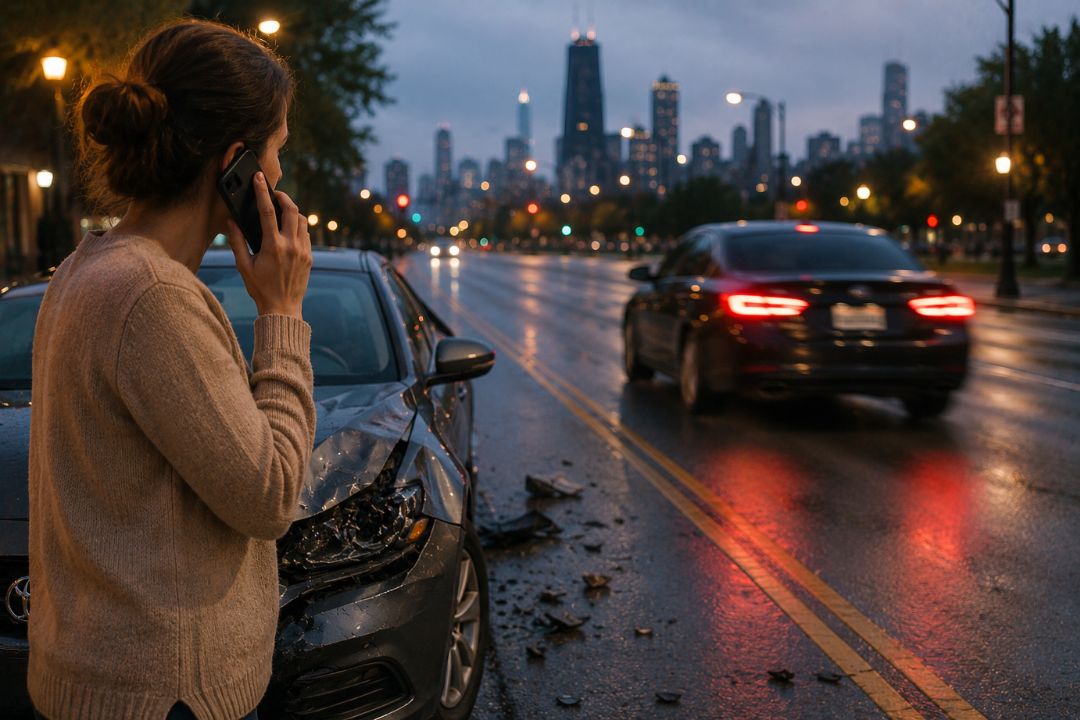
A hit-and-run occurs when a driver involved in a collision leaves the scene without stopping to exchange information or provide assistance to injured parties.
Under 625 ILCS 5/11-401 of the Illinois Vehicle Code, a driver involved in a crash causing injury or death must stop, provide required identifying information, and offer reasonable assistance to injured people. Leaving the scene can result in serious consequences for the fleeing driver, especially when a fatal car accident lawyer in Chicago may need to step in to evaluate liability and wrongful death claims arising from the incident.
IDOT maintains statewide and city-level roadway crash data that can help illustrate how often collisions, including hit-and-run incidents, occur on Chicago streets. You can review the department’s Illinois roadway crash data for more detail.
What to Do After a Hit-and-Run Car Accident in Chicago
Taking the right steps immediately after a hit-and-run can protect your health, preserve evidence, and strengthen your insurance claim.
1. Stay Calm and Ensure Safety
Move your vehicle to a safe location if possible. Turn on your hazard lights and check yourself and any passengers for injuries.
2. Call 911 Immediately
Report the accident as soon as possible. If anyone is injured, request emergency medical assistance. Police will create an accident report that may become important evidence later.
3. Don’t Chase the Fleeing Driver
Avoid attempting to follow the other driver. Instead, focus on remembering details about the vehicle and documenting the scene.
4. Document the Scene Thoroughly
Take photos of vehicle damage, debris, traffic signals, and road conditions. This evidence may help establish what happened and support your claim.
5. Write Down Vehicle Details
Record anything you remember about the fleeing vehicle, including the make, model, color, license plate information, and any distinguishing features.
6. Get Witness Contact Information
Collect names and contact information from anyone who witnessed the accident. Their statements may help support your version of events.
7. Seek Medical Attention
Even if you feel fine, seek medical care as soon as possible. Injuries such as whiplash, concussions, and soft tissue damage may not appear immediately.
8. Contact Your Insurance Company and a Lawyer
Notify your insurance company promptly. Then consider speaking with a car accident lawyer in Chicago to better understand your rights and options.
How to File a Hit-and-Run Report in Chicago
Filing a police report creates an official record of the accident and can play an important role in both insurance claims and potential legal action. The report may also provide useful information when investigating how missing reflective tape contributes to nighttime truck accidents.
You can obtain a copy of your accident report through the Chicago Police Department.
When Should You Report the Accident?
Illinois law requires certain accidents involving injuries, deaths, or significant property damage to be reported.
Prompt reporting helps preserve evidence and may improve the chances of identifying the driver.
Hit and Run Insurance Claims
Many victims assume they cannot recover compensation if the driver is never found. Fortunately, that is not always the case.
If the Driver Is Identified
If the driver is identified, you may file a claim against their insurance policy. If the driver is not found, you may be able to pursue compensation through your own coverage, particularly when uninsured motorist coverage applies to your policy. Understanding what to do after a hit-and-run pedestrian accident can also help you understand the steps involved. Understanding who is at fault in a head-on collision can also help clarify how liability is determined when multiple factors contribute to a crash.
Uninsured Motorist Coverage and Hit-and-Run Accidents
Uninsured motorist coverage hit and run claims are common because the fleeing driver is often never identified. Our guide to uninsured motorist coverage in Illinois explains how this coverage works in more detail.
Depending on your policy, uninsured motorist coverage may help pay for:
- Medical expenses
- Lost wages
- Pain and suffering
- Emotional distress
Property damage may also be covered if you carry collision coverage.
Because insurance companies may dispute claims or offer less than you deserve, careful documentation is important, especially when the other driver has no insurance and you need to explore alternative ways to recover compensation.
What to Do if You Witness a Hit-and-Run
Witnesses can play an important role in helping identify the fleeing driver and supporting the victim’s claim.
If you witness a hit and run:
- Call 911 immediately
- Note vehicle details and direction of travel
- Remain at the scene if it is safe
- Provide your contact information
- Write down what you observed
Your observations may help law enforcement locate the driver and support the victim’s case.
Hit and Run Penalties in Illinois
Hit and run penalties in Illinois can be severe, particularly when an accident causes injury or death.
Drivers who leave the scene may face criminal charges, fines, license suspension, and potential jail or prison time depending on the circumstances. Even when legal action is possible, handling a car accident claim yourself can be challenging when dealing with insurers, evidence, and settlement negotiations.
The fleeing driver may also face civil liability for the damages caused by the accident.
Why You Need a Chicago Hit-and-Run Car Accident Lawyer
Hit-and-run accidents often involve complex insurance claims and challenges related to proving liability.
A Chicago hit and run car accident lawyer can help:
- Investigate the accident and identify the driver
- Gather and preserve evidence
- Negotiate with insurance companies
- Handle uninsured motorist claims
- Pursue compensation for your losses
Having legal guidance can be especially valuable when serious injuries or disputed claims are involved, including injuries such as a disc herniation that may require extensive treatment and recovery. This can be particularly relevant when considering what to do after a hit-and-run in a parking lot.
Choosing Legal Representation After a Hit-and-Run
Not every attorney handles hit-and-run claims the same way.
If you’re considering legal representation, our guide on what to look for in a car accident attorney can help you understand what factors to consider before making a decision.
Statute of Limitations
Illinois generally gives injured victims two years from the date of the accident to file a personal injury lawsuit, as explained in more detail on Illinois Legal Aid’s overview of Illinois statutes of limitations. Acting sooner can help preserve evidence and strengthen your claim.
Bottom Line
A hit-and-run accident can leave you with injuries, vehicle damage, and many unanswered questions. Knowing what to do next can help protect your health, preserve evidence, and improve your chances of recovering compensation after a hit and run pedestrian accident
Whether the driver has been identified or not, our team can help you navigate the claims process and pursue available compensation. Contact Chicago Auto Injury Lawyers today to discuss your case, or visit our Chicago hit and run car accident lawyer page to learn more about case value, insurance disputes, and what legal representation can do for you, including cases involving a delivery truck accident.
Frequently Asked Questions
You may still recover compensation through an uninsured motorist claim even if the driver is never identified. Understanding what to do after a Chicago hit-and-run accident can help you evaluate the steps available after the crash.
Illinois generally gives injured victims two years from the date of the accident to file a personal injury lawsuit.
An attorney can review your policy and determine whether other forms of coverage may apply.
A lawyer can help investigate the accident, deal with insurance companies, and pursue compensation on your behalf.
Call 911, gather any vehicle information you can safely observe, and provide a statement to law enforcement.
Depending on your policy, uninsured motorist coverage and collision coverage may help cover certain losses.
 Legally Reviewed By
Attorney Jonathan Rosenfeld
Content legally reviewed by Jonathan Rosenfeld This page has been reviewed for legal accuracy by Jonathan Rosenfeld, a Chicago personal injury attorney with nearly 25 years of experience representing people injured in car, truck, motorcycle, pedestrian, and rideshare accidents. Jonathan has recovered more than $450 million in settlements and verdicts for injured clients and families in Chicago. He holds a 10/10 rating on Avvo, is a member of the Million Dollar Advocates Forum, and has been repeatedly recognized by Super Lawyers. Jonathan leads the firm’s approach to holding insurance carriers and corporate defendants accountable for serious traffic injuries.