
100% Focus on Your Recovery,
Chicago Auto Accident Lawyer
Chicago Auto Accident Lawyer
Our Team of Attorneys Are Committed to Maximizing the Value of Your Case






For most riders, yes. Uber reports that 99.9% of its rides end without any safety incident. However, serious crashes and assaults do happen, and knowing your rights can help if something goes wrong.
Is Uber safe for people traveling around Chicago? It depends on the circumstances, including driver behavior, traffic conditions, and the safety measures used during a trip. As a Chicago-based personal injury law firm, we understand the consequences when a rideshare journey ends in an injury. We believe riders deserve clear information about the risks, available safety features, and steps to take after an incident.
Although most trips are completed without reported safety incidents, understanding Uber safety statistics and knowing how to use the app’s safety tools can help riders make informed decisions.
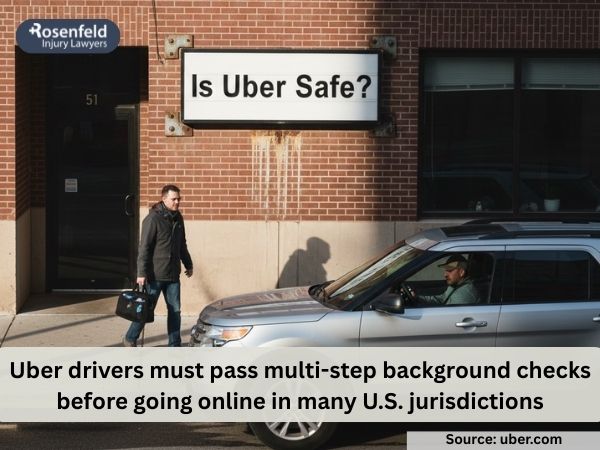
While millions of rides happen every day, Uber riders still face real safety concerns that should not be ignored. These include:
Understanding these risks is the first step toward protecting your own safety and understanding your legal rights.
Uber’s 2021-2022 U.S. Safety Report provides the company’s own figures on reported incidents across its platform. These Uber safety statistics offer useful context, but they should not be treated as a complete measure of every incident that occurred.
According to Uber’s safety reports, 99.9998% of rides ended without a critical safety incident, and 99.9% ended without any safety incident at all. While these figures show that serious incidents are rare, they still occur, and when they do, the consequences can be severe.
During this period:
Uber categorizes its most serious incidents into three types: motor vehicle fatalities, fatal physical assaults, and sexual assault.
Uber reports a decrease in the rate of crashes overall while the motor vehicle fatality rate remains substantially lower than the national average, even as traffic deaths increased nationwide.
Uber motor vehicle fatality data (2021–2022):
Although Uber’s rate was lower, it increased by roughly 40% during the reporting period, compared with an 11% increase in nationwide traffic trends.
Urban areas experienced a larger increase in fatalities than rural areas. Nationally, 60% of fatalities occurred in urban environments, while 97% of Uber-related fatalities occurred in cities, where Uber operates most frequently.
Of all Uber-related fatalities, 45% involved people using the Uber app, including 29% riders (about 1 in 43,000,000 rides) and 16% drivers (about 1 in 76,000,000 rides).
Risky driving by third-party drivers not using the Uber app played a major role:
Uber’s review found that 18% of crashes were likely caused by the Uber driver, 25% involved shared fault, and in 58% of cases, the Uber driver did not contribute to the crash.
These findings reinforce that fatal Uber accidents often result from external factors beyond the Uber driver’s control.
Uber reported 36 fatal physical assaults during 2021-2022, representing approximately one incident per 53 million rides. These figures come from Uber’s own safety report and provide context about reported safety incidents, but they do not establish the overall risk of every Uber trip.
Sexual assault remains a serious safety concern for rideshare passengers. Uber’s 2021-2022 U.S. Safety Report recorded 2,717 reports across its most serious sexual assault categories, a 22% decrease from the previous reporting period. However, a decline in reported incidents does not mean the risk has disappeared.
Uber reported that 68% of these reports involved allegations against drivers, 31% against riders, and about 1% against third parties. These figures reflect reports Uber received, not a complete count of every incident.
If this happened to you, you are not alone. Call 911 if you are in immediate danger, seek support, and consider speaking with a professional about your options. Our team can discuss your legal options and explain the next steps through our Chicago Uber accident lawyer page.
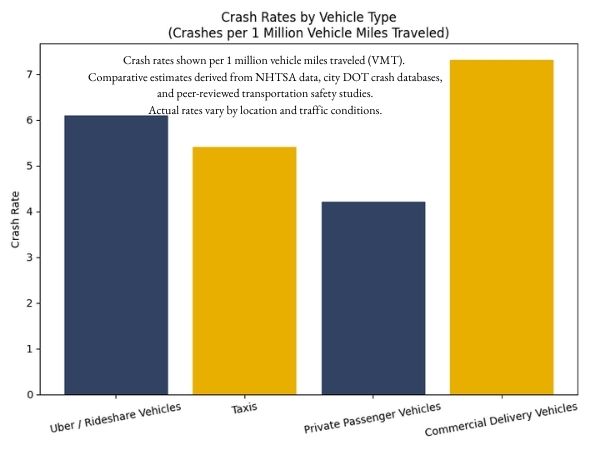
Uber has implemented multiple systems designed to reduce risk and improve rider access to safety tools. These efforts focus on screening, monitoring behavior, and empowering users through the Uber app.
Uber requires drivers to pass background checks and follow strict community guidelines. These checks include reviews of driving history and, where legally permitted, certain criminal records. These measures aim to improve Uber rider safety, though screening and app-based protections cannot eliminate every risk.
According to Uber:
If an Uber driver causes an accident, or if questions arise about Uber’s insurance requirements, liability, and coverage, the outcome depends on the driver’s app status and applicable auto insurance policies.
Before starting a ride, confirming the license plate number, vehicle details, and driver information in the app helps reduce risk. Uber recommends requesting your ride indoors, waiting inside until the correct car arrives, and having the driver confirm your name before you get in.
During the ride, sit in the back seat, wear your seat belt, and protect your personal information to stay safe. Sharing your ride with trusted contacts, such as a friend, adds another layer of protection.
If something feels wrong, trust your sense, keep your phone accessible, and follow the route and your location in the app. After the ride, leave feedback to help improve safety for others. If a crash occurs, save your trip details and learn what to do after an Uber accident.
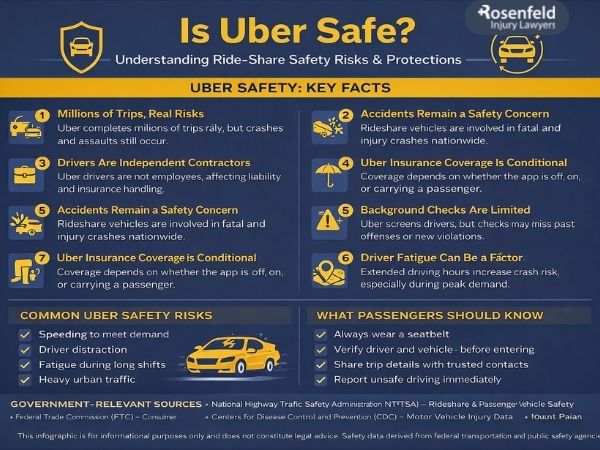
Uber safety features include in-app tools that can help riders contact emergency services, share trip details, and seek assistance when a situation feels unsafe. Availability may vary by feature and location. Review Uber’s U.S. safety information for details about the tools currently offered.
If something feels unsafe or an accident happens, prioritize safety and get help immediately. We regularly advise clients on what to do after an Uber accident, including documenting the incident, seeking medical care, and understanding insurance options.
For most riders, yes. Uber reports that more than 99.9% of rides end without any safety incident. Serious incidents are rare but real, and Chicago traffic and late-night travel can add risk.
Uber reported a motor vehicle fatality rate of 0.87 per 100 million vehicle miles traveled, compared with 1.35 nationally. These figures come from Uber’s 2021-2022 report, and individual risks vary by driver, route, and conditions.
Uber can be a practical transportation option at night, but riders should still take precautions. Check the license plate and driver details, share your trip with someone you trust, and use the app’s safety tools when needed.
Get to safety, call 911 if necessary, and seek medical care. Report the incident through the Uber app and preserve your trip details and relevant communications. Read our guide on what to do after an Uber accident.
Sometimes. Responsibility depends on the circumstances, applicable law, and the driver’s relationship with the rideshare platform. Learn more about Uber accident liability.
Fault depends on the facts of each crash. Uber’s 2021-2022 report attributed 18% of reviewed fatal crashes to the Uber driver, identified shared fault in 25%, and reported no Uber-driver contribution in 58% of cases. These figures reflect the crashes reviewed in the report and should not be generalized to every Uber collision.
If you or a family member has been injured, assaulted, or harmed while using a rideshare company, we are here to help. We offer a free consultation, work on a contingency-fee basis, and handle Uber accident lawsuits across Chicago.
If you are injured in an Uber, get to safety, call 911 when needed, and seek medical care. Report the incident through the app and save screenshots of your trip and any relevant communications. Before giving a recorded statement to an insurer, consider speaking with a lawyer. Our guide to what to do after an Uber accident explains additional steps. Contact us today.
 Legally Reviewed By
Attorney Jonathan Rosenfeld
Content legally reviewed by Jonathan Rosenfeld This page has been reviewed for legal accuracy by Jonathan Rosenfeld, a Chicago personal injury attorney with nearly 25 years of experience representing people injured in car, truck, motorcycle, pedestrian, and rideshare accidents. Jonathan has recovered more than $450 million in settlements and verdicts for injured clients and families in Chicago. He holds a 10/10 rating on Avvo, is a member of the Million Dollar Advocates Forum, and has been repeatedly recognized by Super Lawyers. Jonathan leads the firm’s approach to holding insurance carriers and corporate defendants accountable for serious traffic injuries.