
100% Focus on Your Recovery,
Chicago Auto Accident Lawyer
Chicago Auto Accident Lawyer
Our Team of Attorneys Are Committed to Maximizing the Value of Your Case






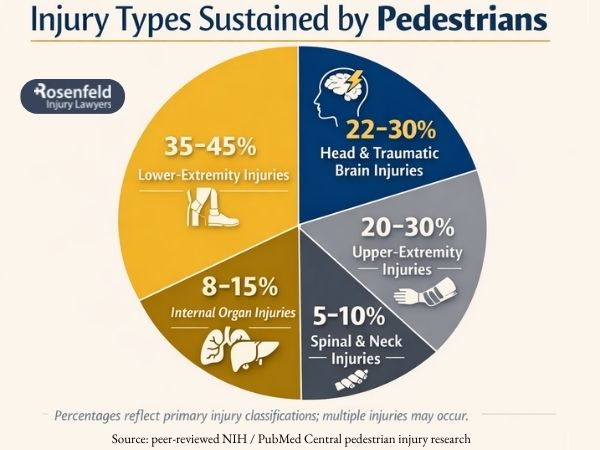
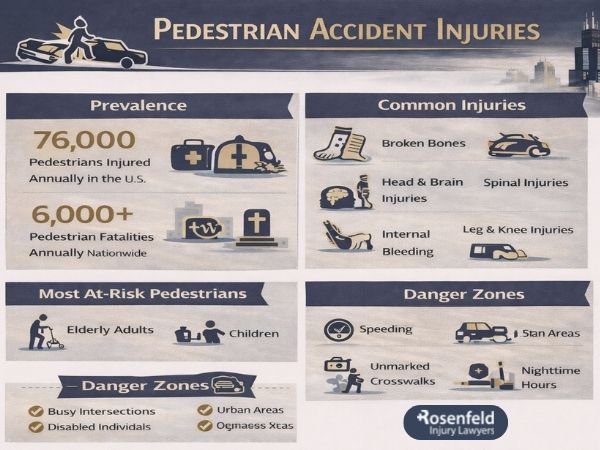
The most common injuries in Chicago pedestrian accidents include broken bones, head and brain injuries, spinal cord damage, soft-tissue injuries, and internal trauma. These Chicago pedestrian accident injuries can range from conditions that heal within weeks to life-changing injuries requiring long-term medical care.
When someone is hit by a car in Chicago, the injuries can change every aspect of their life in an instant. We’ve seen how pedestrian accident injuries leave our clients facing months or even years of medical care, lost income, and emotional upheaval. As a Chicago-based law firm focused on representing pedestrian accident victims, we stand with you.
When pedestrian accidents occur in busy urban areas like ours, whether downtown, along major corridors like Milwaukee Avenue, or in neighborhoods with poor visibility and heavy crosswalk traffic, the consequences can be devastating. If you’re searching for a compassionate Chicago pedestrian accident attorney, we’re here to guide you, protect your rights, and help you move forward.
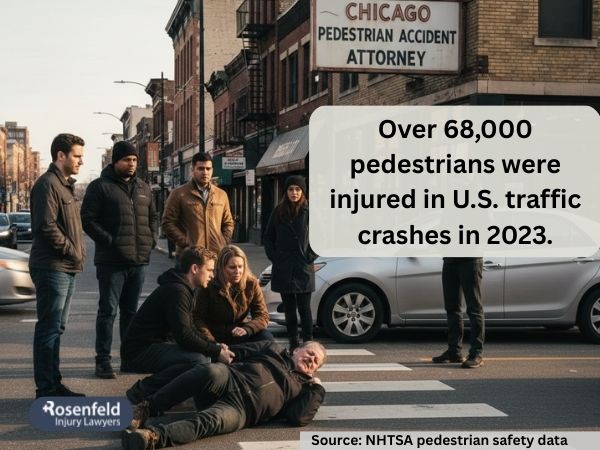
Chicago recorded 2,492 crashes involving pedestrians in 2023, including 48 fatalities, according to the Illinois Department of Transportation. The same IDOT city crash summary reported 2,537 injured pedestrians, showing how frequently pedestrian collisions result in serious harm across Chicago.
These Chicago pedestrian crash numbers help put the following types of pedestrian accident injuries into perspective. Injuries can range from broken bones and soft-tissue damage to traumatic brain injuries, spinal cord damage, internal trauma, and other conditions that may require extensive treatment or long-term care.
Chicago traffic crashes can cause a wide range of harm, from minor injuries to catastrophic, life-altering injuries. Below are the common pedestrian accident injuries we see in our work representing injured pedestrians and families affected by pedestrian accidents.
Head injuries are among the most serious outcomes when a vehicle strikes someone walking. Even a low-speed collision can cause concussions, skull fractures, or severe traumatic brain injuries that affect memory, mobility, and personality.
Many clients come to us fearing they have a TBI after a car accident, even when symptoms weren’t immediately apparent at the accident scene. These injuries often require extensive medical treatment, long-term monitoring, and sometimes physical therapy to restore cognitive and motor function.
The physical injuries from a crash are only part of the story. Many survivors face deep emotional wounds, especially post traumatic stress disorder (PTSD).
We frequently support pedestrians who develop PTSD after a car accident, experiencing fear of crossing streets, flashbacks, sleep disturbances, or anxiety when they see a vehicle involved in a similar crash. The physical and emotional toll can be overwhelming, and emotional trauma deserves the same level of care and acknowledgment as physical harm.
Being hit by a car often leads to fractures in the legs, arms, ribs, hips, or pelvis. Many pedestrian injuries involve:
These injuries may involve surgery, long periods of immobilization, and ongoing physical therapy. Even when treated promptly, many clients experience chronic pain or long-term disability.
Soft tissue injuries, including sprains, ligament tears, muscle strains, and tendon damage, are some of the most common soft tissue injuries we see in pedestrian accident cases.
These injuries may not show up on the first scan, but they can cause significant pain, stiffness, swelling, and reduced range of motion. Soft-tissue damage often requires extensive medical treatment, and it can leave survivors dealing with long-lasting discomfort.
A severe crash may result in spinal cord injuries, which can cause partial or complete paralysis. When a vehicle strikes a pedestrian at high speed or knocks them onto a hard surface, the spine absorbs tremendous force.
Some clients struggle with mobility, nerve pain, loss of sensation, or complete paralysis depending on the level of the injury. These severe injuries affect every aspect of daily life and often come with enormous medical expenses and mounting medical bills. A catastrophic injury may require lifelong treatment, rehabilitation, assistive equipment, and ongoing support.
Internal trauma is one of the most dangerous types of harm because symptoms may not be immediately apparent. Internal injuries such as internal bleeding, ruptured organs, or vascular damage require immediate medical attention.
Injuries to the liver, spleen, kidneys, or lungs can be life-threatening, especially when paired with abdominal pain or respiratory distress. Survivors often must undergo emergency surgery and ongoing monitoring to ensure complications don’t worsen.
Sadly, pedestrian fatalities remain common in Chicago, especially at high-speed intersections, during nighttime travel, or where distracted driving contributes to errors. Families of individuals lost in fatal pedestrian accidents carry unimaginable grief. These cases often involve wrongful death lawsuits to hold negligent drivers and responsible parties accountable.
In some fatal crashes, a hit-and-run driver may leave the scene before identifying information can be obtained. These circumstances can make an already difficult investigation even more challenging.
Pedestrian safety in our city is guided by both state and local laws, including the Illinois Vehicle Code (625 ILCS 5/) and the Chicago Municipal Code. Key protections include:
Illinois law requires drivers to stop for pedestrians in crosswalks, yield the right-of-way when turning, and exercise due care to avoid causing harm. Drivers must account for risk factors such as poor visibility, speed, and distracted driving. Motorists must slow down and stop when a pedestrian is present and ensure safe passage before continuing.
Chicago’s pedestrian safety rules also include specific requirements governing where pedestrians cross and how they must exercise care. Chicago Municipal Code 9-60-020 addresses crossing roadways other than at a crosswalk and crossing through streets. Section 9-60-050 addresses a pedestrian’s duty to yield when crossing outside a crosswalk, including when vehicles are close enough to create a hazard. Section 9-60-120 requires pedestrians to exercise due care for their own safety.
These rules are important when determining how a Chicago pedestrian collision occurred. A driver’s duty to yield does not eliminate a pedestrian’s duty to use reasonable care, and the circumstances of each crash must be evaluated individually. When a crosswalk is involved, the location, traffic signals, right-of-way, and actions of both the driver and pedestrian may become important evidence.
Together, these laws help reduce common injuries sustained in many pedestrian accidents, though violations still occur daily.
When filing a pedestrian injury claim, injured clients may be entitled to several categories of damages. We help our clients pursue fair compensation for:
In rare cases involving extreme negligence or reckless conduct, punitive damages may be awarded to punish wrongdoing and deter future misconduct.
If you’re considering a pedestrian accident lawsuit, it’s essential to understand Illinois’ strict timelines. We guide injury victims through these deadlines to ensure their right to file claims is protected.
Under 735 ILCS 5/13-202, most adults have two years from the date they sustained injuries to file a personal injury lawsuit after a pedestrian accident.
For children, the time limit is extended under 735 ILCS 5/13-211. The statute is paused (“tolled”) until the child turns 18, giving them additional time to bring legal action for injuries sustained.
Families pursuing claims under 740 ILCS 180/ after fatal pedestrian accidents generally have two years to file a lawsuit, although exceptions may apply depending on the circumstances.
Because deadlines vary by case, it’s important to speak with a personal injury attorney as soon as possible.
When you’ve suffered injuries, you shouldn’t have to navigate the legal system alone. As experienced pedestrian accident attorneys, we provide:
Our pedestrian accident lawyer team is here to fight for victims and families facing mounting medical bills, lost wages, and long-term recovery needs.
If you’ve been hurt in any type of crash involving a pedestrian, a Chicago motor vehicle crash attorney from our team can help. We bring a proven track record of representing clients in motor vehicle, pedestrian, and intersection-related cases across Cook County.
We take these cases on a contingency fee basis, so you never face upfront costs or attorney fees unless we successfully recover compensation for you. Reach out today for your free consultation.
Yes. Injuries such as internal bleeding, concussions, and soft-tissue damage may not cause noticeable symptoms immediately. A medical evaluation after a crash can help identify injuries early and create a record of the treatment you receive.
You can still recover compensation as long as you were not more than 50% at fault. Illinois bars recovery when a person is 51% or more responsible for their own injuries.
Two years from the date of the accident in most cases. Deadlines can change depending on the circumstances, so speaking with an attorney as soon as possible can help protect your claim.
Yes. Adrenaline can mask pain and swelling from a serious injury for hours or even days. A medical evaluation can also document injuries and treatment that may become relevant to a future claim.
You may be able to recover medical costs, lost income, and compensation for pain and suffering, among other losses. The potential value of a pedestrian accident injury claim in Chicago depends on the severity of the injuries, treatment required, financial losses, and impact on your life.
 Legally Reviewed By
Attorney Jonathan Rosenfeld
Content legally reviewed by Jonathan Rosenfeld This page has been reviewed for legal accuracy by Jonathan Rosenfeld, a Chicago personal injury attorney with nearly 25 years of experience representing people injured in car, truck, motorcycle, pedestrian, and rideshare accidents. Jonathan has recovered more than $450 million in settlements and verdicts for injured clients and families in Chicago. He holds a 10/10 rating on Avvo, is a member of the Million Dollar Advocates Forum, and has been repeatedly recognized by Super Lawyers. Jonathan leads the firm’s approach to holding insurance carriers and corporate defendants accountable for serious traffic injuries.