
100% Focus on Your Recovery,
Chicago Auto Accident Lawyer
Chicago Auto Accident Lawyer
Our Team of Attorneys Are Committed to Maximizing the Value of Your Case



Whiplash after a car accident is a common injury we see in personal injury cases across Chicago. At our law firm, we represent individuals who are dealing with pain, medical bills, and lost time from work after suffering a whiplash injury caused by someone else’s negligence. Whether your symptoms started immediately or developed over the next few days, our legal team understands how disruptive this type of neck injury can be. We help clients pursue full compensation for their injuries, medical costs, and ongoing care. If you’re experiencing neck pain or other symptoms of whiplash, we’re here to help you seek justice.

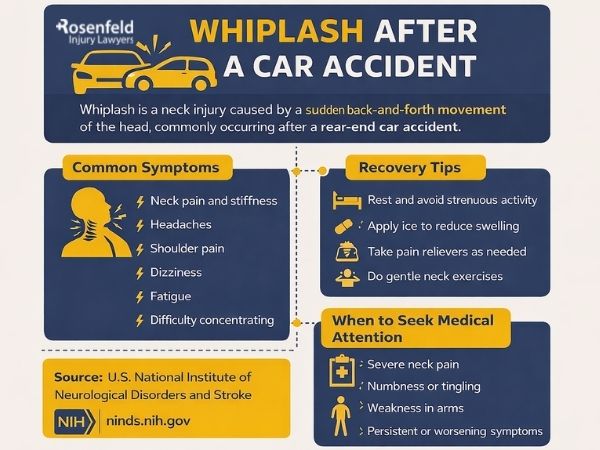
Whiplash is a soft tissue injury that affects the neck muscles, tendons, and ligaments. It’s often caused by the sudden back-and-forth movement of the head during rear-end car accidents. This motion strains the spinal cord and surrounding soft tissues, leading to pain and limited mobility. While many think of whiplash as a mild injury, the effects can last a few weeks or even longer without proper treatment. Even low-speed motor vehicle accidents can result in severe neck pain and stiffness.
Whiplash symptoms aren’t always immediate. Many people experience delayed onset car accident injuries, where pain or other effects of whiplash don’t appear until hours or even days after the crash. These delays can complicate diagnosis and treatment. Whether symptoms are mild or severe, recognizing the early warning signs of a whiplash injury is essential for getting the proper care and avoiding long-term complications.
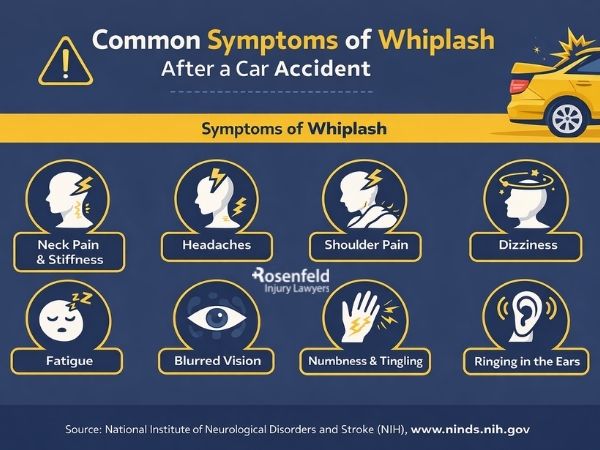
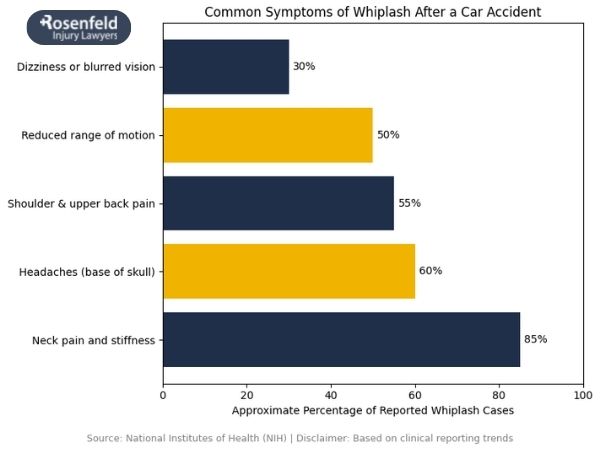
Neck pain is one of the most common signs of whiplash after a car accident. It can result from strained muscles, joint inflammation, or more serious neck injuries involving the spinal cord. In some cases, the impact may cause a disc herniation, which can lead to radiating pain, numbness, or tingling in the arms. Early intervention helps prevent worsening symptoms and supports a more effective recovery.
Whiplash often causes shoulder pain, especially when force from the crash extends beyond the neck and strains the upper back and shoulder muscles. This pain may be localized or radiate from the cervical spine. Some people experience shoulder pain after a car accident even without direct impact, as soft tissue damage or nerve irritation in the neck can refer pain to the shoulder area.
When nerves in the cervical spine are compressed or inflamed, neurological symptoms can occur. These may include numbness, tingling, dizziness, or difficulty concentrating. A headache after a car accident is also common and often starts at the base of the skull. These symptoms may signal something more serious than soft tissue strain and should be evaluated by a medical professional with experience in spinal injuries.
Beyond physical discomfort, whiplash may cause systemic symptoms such as fatigue, irritability, or disrupted sleep. One of the more frequent complaints is sleeping a lot after a car accident, which can be a sign of the body’s neurological response to trauma. These symptoms may appear mild at first but can interfere with the healing process and daily life if left unaddressed, especially when combined with other signs of whiplash.
While many people recover within a few weeks, some continue to experience symptoms long after the initial injury. Without proper treatment, whiplash can lead to ongoing complications that affect mobility, comfort, and overall quality of life. Below are three common long-term effects seen in whiplash recovery.
Untreated or under-treated whiplash can result in chronic pain that lingers for months or even years. This often involves deep aching in the neck, shoulders, or upper back, along with recurring headaches or stiffness. Chronic pain may stem from unresolved soft tissue damage, nerve irritation, or joint dysfunction. It can limit daily activities, affect sleep, and reduce a person’s ability to return to work or maintain a regular routine.

Some individuals lose range of motion in the cervical spine following a whiplash injury, especially if inflammation or scar tissue develops. This reduced mobility can make it difficult to turn the head, look up or down, or sit comfortably for extended periods. Physical therapy can help improve flexibility, but without consistent care, long-term stiffness and limited neck function may persist, affecting overall posture and movement.
Whiplash can weaken the neck muscles and supporting soft tissues, making the area more vulnerable to reinjury. Even a minor incident–such as a sports injury or sudden jolt–can trigger a setback or worsen existing symptoms. People with a history of whiplash may also be more prone to tension headaches, nerve compression, or spinal misalignment, increasing the likelihood of future problems without preventive treatment.
Treating whiplash after a car accident can range from short-term care to months of medical attention. Even with mild whiplash, costs can escalate quickly due to repeated visits, imaging, medications, and therapy. In more serious cases, long-term care or surgery may be necessary. These medical expenses often form a large part of a personal injury claim, especially when they coincide with lost income, limited mobility, or ongoing pain.
In many cases, whiplash is initially managed with conservative treatment such as rest, ice, a neck brace, and over-the-counter or prescription pain medications. Anti-inflammatories may be used to reduce inflammation, and in some cases, muscle relaxants are prescribed to alleviate pain. While conservative care may seem minor, these early treatments still lead to medical bills that can quickly grow–particularly when follow-up visits, imaging tests, or referrals to specialists are needed.
Some individuals may require extended conservative care if symptoms worsen or evolve into chronic pain. This could include multiple appointments with a medical professional, time off work, and additional costs for medical supplies. If initial symptoms progress, further testing, such as MRIs or CT scans, may be ordered, increasing the overall financial burden tied to the initial injury.
Physical therapy is often recommended when whiplash symptoms last longer than expected or interfere with everyday activities. Therapy focuses on restoring range of motion, strengthening the neck muscles, and addressing pain through stretching, controlled movement, and massage therapy. These sessions can continue for several weeks or months, especially in cases involving severe whiplash, lingering neck pain, or other whiplash-associated disorders.
Because physical therapy involves a long-term commitment, the medical bills can add up quickly. Treatment may require multiple sessions each week, and insurance coverage often only pays for part of the cost. For individuals with limited or no insurance, these expenses can be overwhelming. In more complex cases, a delayed response to therapy might lead to consultations with pain management specialists or even surgical evaluations, increasing the value of a personal injury claim.
According to Law.com’s VerdictSearch, the average award for whiplash-related claims is approximately $28,584, while the median payout is $15,000. Reported case values range from around $4,500 to more than $250,000, depending on the specifics of the injury and legal outcome.
Several key factors affect how much a whiplash injury may be worth in a personal injury claim:
Damages in personal injury claims involving whiplash after a car accident can cover a range of financial and personal losses. Most claims include compensation for medical bills, such as ER visits, diagnostic imaging, physical therapy, massage therapy, medications, and ongoing whiplash treatment. If the injury affects a person’s ability to work, lost wages may also be recovered. For more serious cases involving chronic pain or reduced range of motion, additional damages may be awarded for pain and suffering and loss of normal life. Claims may also include future medical care if flare-ups or long-term symptoms are expected. The severity of the injury, how long symptoms last, and how they impact daily life all play a role in the value of a personal injury case.
Catherine Gallagher, a 29-year-old teacher, was struck while turning left onto North Avenue in Chicago. She suffered whiplash-related neck, back, and shoulder injuries, along with post-concussive syndrome. Despite not being transported by ambulance, she sought emergency care hours later and underwent physical therapy, vestibular therapy, and massage therapy. Her doctors testified that she would have long-term neck pain and headaches. The defendant admitted fault but challenged the extent of damages. The jury awarded Gallagher $250,106, including past and future medical expenses, pain and suffering, lost wages, and loss of normal life.
Erik and Debra Avner were rear-ended in a multi-vehicle crash in Schaumburg. Erik suffered whiplash-type injuries that resolved after three months of chiropractic care. Debra sustained neck, shoulder, chest, and back pain, with aggravated pre-existing conditions and ongoing symptoms that interfered with her active lifestyle. She had her whiplash treated for eight months with multiple providers. The case settled before trial for $87,116.55, with both defendants contributing. The settlement covered their medical treatment within a timeframe acknowledged by both sides’ orthopedic experts as directly related to the accident.
Knowing what to do after suffering a whiplash injury can protect both your health and your legal rights. While initial symptoms may seem minor at first, they can develop into more serious issues without proper care. Taking the right steps early on can strengthen your recovery and support any future personal injury case.
Always seek medical attention as soon as possible, even if symptoms seem minor. A medical professional can identify whiplash symptoms, rule out more serious injuries, and create a treatment plan. Early care supports proper diagnosis and provides critical documentation if you decide to pursue legal action.
Keep records of all doctor visits, diagnoses, imaging results, prescriptions, and physical therapy appointments. Consistent documentation helps prove the extent of your whiplash injury, supports your personal injury claim, and strengthens your case if symptoms worsen or turn into chronic pain over time.
Insurance companies often try to minimize whiplash claims or push for quick settlements. Before giving a statement or signing anything, consult with a Chicago car accident lawyer. Legal guidance helps protect your rights and ensures the full value of your injuries and losses is pursued.
An experienced Chicago personal injury attorney can make a significant difference in how your whiplash case is handled and resolved. From the start, your lawyer can help gather medical records, consult experts, and ensure that your whiplash injury, treatment, and long-term impact are fully documented. Insurance companies often downplay soft tissue injuries or offer low settlements. A skilled attorney knows how to push back, calculate damages accurately, and demand fair compensation for medical bills, lost wages, physical therapy, and ongoing pain. If your case involves chronic neck pain, neurological damage, or future care needs, legal representation is essential. Your lawyer can handle negotiations or take your case to trial if needed, working to secure the strongest possible outcome on your behalf.
If you’re dealing with whiplash after a car accident, don’t wait to get answers. Early legal guidance can make a significant difference in your recovery–both physically and financially. A Chicago personal injury lawyer can review your case, explain your options, and help you pursue compensation for medical expenses, lost wages, and ongoing care. Contact us today to schedule a free consultation. There’s no obligation, and you don’t pay unless we win your case.