
100% Focus on Your Recovery,
Chicago Auto Accident Lawyer
Chicago Auto Accident Lawyer
Our Team of Attorneys Are Committed to Maximizing the Value of Your Case



If you or someone you love suffered a TBI after a car accident in Chicago, our legal team is here to help. A traumatic brain injury can change your life in an instant, affecting your ability to live independently. At our law firm, we represent victims of serious injury caused by motor vehicle accidents across the Chicago area. We understand the challenges that come with brain injuries and fight to hold negligent drivers responsible, helping our clients recover the compensation they need for medical care, lost income, and long-term support.

A traumatic brain injury (TBI) is a disruption in normal brain function caused by a sudden impact, blow, or jolt to the head. It can result from direct trauma or violent motion and may lead to physical, cognitive, or emotional changes.
Car crashes are a leading cause of traumatic brain injury (TBI), often resulting in severe damage to brain cells, blood vessels, and nerve tissue. The violent force of a collision can cause the brain to shift, twist, or slam against the skull, leading to a range of injuries. Some may be immediately obvious, while others develop slowly as secondary injuries. Below are the most common types of brain injury linked to motor vehicle accidents.
A closed head injury occurs when there is no break in the skull, but the brain is damaged due to sudden movement or impact. These injuries are common in car accidents and can range from mild to severe TBI.
A concussion, also known as a mild TBI, often results from a sudden jolt or blow to the head. It may cause headaches, dizziness, confusion, memory issues, and changes in sleep patterns. While symptoms often resolve, repeated or untreated concussions can lead to more serious injury.
A brain contusion is a bruise on the brain caused by direct impact. It can lead to swelling and bleeding, putting pressure on brain tissue. Contusions often occur with other injuries like skull fractures or coup-contrecoup injuries.
Diffuse axonal injury is one of the most serious forms of TBI. It involves tearing of the brain’s nerve cells (axons) due to rapid acceleration or deceleration, such as in high-speed motor vehicle crashes. This type of injury can cause widespread damage and result in coma or permanent brain damage.
Brain bleeds can be life-threatening and often require immediate medical treatment. Types of bleeding within the skull include:
These injuries increase intracranial pressure, reduce oxygen supply, and damage brain cells, often requiring emergency surgery.
A coup-contrecoup injury occurs when the force of impact causes the brain to strike both sides of the skull–first at the site of impact (coup) and then on the opposite side (contrecoup). This can cause widespread brain damage and impair multiple areas of brain function.
Skull fractures can expose the brain to further trauma or infection. These injuries often accompany open head injuries and may cause bleeding, leakage of cerebrospinal fluid, or direct brain injury, depending on severity and location.
A penetrating brain injury happens when an object breaks through the skull and enters the brain tissue. These open head injuries happen in severe car crashes involving debris, glass, or sharp objects and frequently result in moderate to severe TBI.
These injuries result from a lack of oxygen reaching the brain, either partially (hypoxic) or completely (anoxic). In a car accident, this can occur due to cardiac arrest, respiratory failure, or significant blood loss. Even brief oxygen deprivation can cause irreversible brain damage and impact brain function long-term.
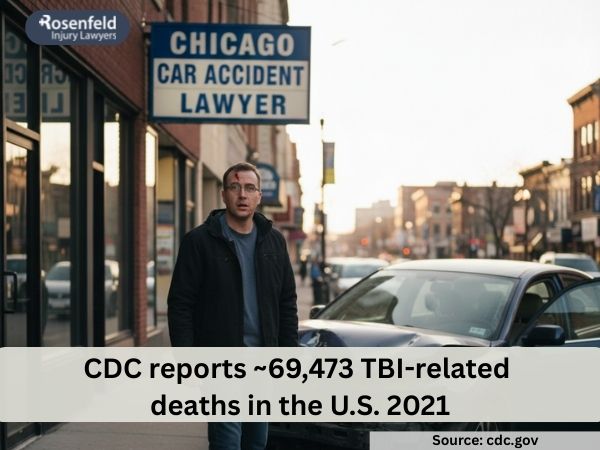
Diagnosing a head injury after a car accident usually begins with a physical examination. Medical professionals assess for signs such as confusion, memory loss, changes in speech, coordination issues, and overall mental status. These early checks help determine whether there may be damage to brain cells or nerve tissue.
To confirm a traumatic brain injury and determine its severity, doctors often rely on diagnostic imaging to detect internal damage that isn’t visible during a physical exam. A CT scan is usually the first imaging tool used. It provides a fast and clear picture of the brain and can reveal bleeding, skull fractures, swelling, or other signs of an initial injury.
For more detailed information, especially in cases involving mild traumatic brain injury or subtle symptoms, doctors may order magnetic resonance imaging. An MRI can detect injuries like diffuse injury or damage to nerve cells that a CT scan might miss.
In cases of severe TBI, intracranial pressure may be monitored to check for swelling or fluid buildup, which can lead to secondary injuries.
Specialists such as neurologists or medical examiners may be involved in reviewing imaging and monitoring brain function, especially when symptoms worsen or don’t improve. This ongoing assessment helps guide decisions about medical treatment and long-term care needs.
The cost of treating a traumatic brain injury after a car crash can be overwhelming. Many individuals face months–or even years–of medical appointments, therapy, and life adjustments.
Medical treatment after a car accident involving a brain injury may include diagnostic imaging, neurosurgical evaluations, or intensive care. In cases involving moderate or severe TBI, emergency surgery may be necessary to relieve intracranial pressure, remove blood clots, or repair skull fractures.
Rehabilitation is another significant component of treatment. Depending on the severity and type of injury, individuals may need physical therapy, occupational therapy, speech therapy, and psychological support to regain lost function. Changes in memory, communication, behavior, or mobility can all require long-term care.
Ongoing care may also involve home health services, assistive devices, and medications to manage pain, seizures, or mood disorders.
When filing a claim, it’s essential to include all related medical bills, both past and future, as well as costs for rehabilitation, home modifications, and necessary support services. A brain injury doesn’t just create a temporary setback–it can cause permanent changes that affect every part of life.
According to Law.com’s VerdictSearch, the average payout for a traumatic brain injury after a car accident in Chicago is $6,886,145, while the median value is $2,983,155. Settlement and verdict awards range from $9,500 to $35,835,684, highlighting the wide range of outcomes depending on the injury’s severity and long-term impact.
Several key factors influence how much a head injury claim may be worth:
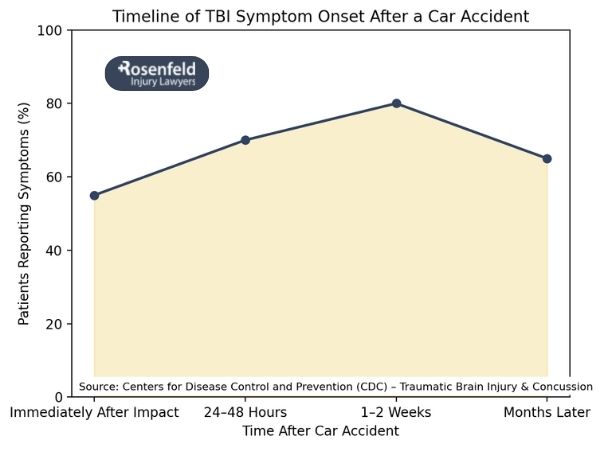
Insurance companies may challenge claims involving delayed onset car accident injuries, arguing that symptoms appeared too late to be related. That’s why early diagnosis and consistent medical documentation are essential in proving the actual impact of the injury and securing full compensation.
In personal injury claims involving a TBI after a car accident, damages are awarded to cover both financial and personal losses.
Economic damages often include medical bills, costs of ongoing medical treatment, rehabilitation, assistive devices, and lost income. If the traumatic brain injury limits a person’s ability to return to work or reduces future earning capacity, those losses are also compensable.
Non-economic damages address the more personal impact of the injury–pain and suffering, emotional trauma, changes in sleep patterns, cognitive difficulties, and reduced quality of life. In serious injury cases and those involving wrongful death, spouses may seek compensation for loss of consortium.
Whether you’ve suffered a mild concussion or permanent disability, our goal is to recover damages that reflect the full scope of the injury.
Marc C. Jacobs, a 44-year-old real estate attorney, suffered a traumatic brain injury and orthopedic injuries when a Yellow Cab driver lost control exiting I-294 in Hinsdale, launching the vehicle 32 feet and crashing into a concrete barrier. Jacobs was hospitalized for three months and spent weeks in a coma. He now suffers from cognitive impairments affecting his speech, mobility, and ability to practice law. The jury found Yellow Cab Affiliation liable under the apparent agency theory and awarded $29.4 million, reduced to $25.9 million after accounting for 12% comparative fault. His wife received $4.5 million for loss of consortium.
Carla Link was severely injured in a head-on collision on I-74 after a driver crossed the median and hit her van. The crash caused her van to roll over three times, ejecting her from the vehicle. Link sustained brain trauma, broken bones, spinal nerve damage, and permanent cognitive impairment. She required multiple surgeries and ongoing medical care, claiming $699,000 in medical expenses. The jury awarded her $11,099,054, with an additional $2,400 awarded to her husband for his claims.
Michelle Lindsay, pregnant at the time, suffered a traumatic brain injury after a box truck veered into her lane and struck her sedan head-on in West Chicago. She reported long-term cognitive issues and memory loss. Her husband, Scott, sustained knee injuries, and both claimed PTSD. They alleged $300,000 in medical expenses and $100,000 in lost wages. Though the defense argued the injuries were overstated, the case settled for $2,994,904.
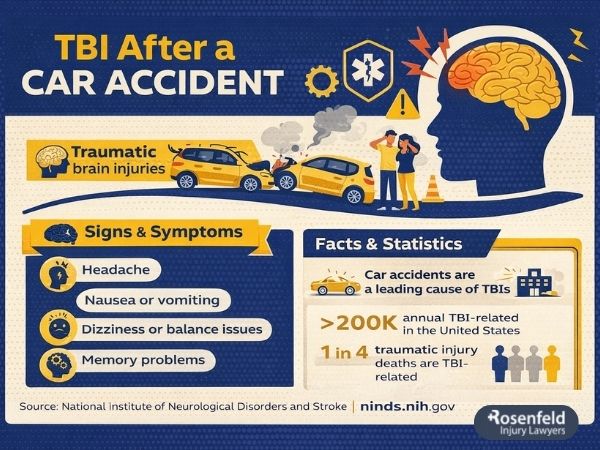
If you’ve suffered a TBI after a car accident, get prompt medical attention–even if you feel fine. Many TBI symptoms, such as confusion, dizziness, or memory issues, can take hours or days to appear. Follow through with diagnostic testing like CT scans or MRI, and keep detailed records of your treatment, time off work, and how your life has changed. Before speaking to the insurance company, consult a Chicago car accident lawyer. An experienced attorney can help protect your rights and pursue compensation for medical expenses, lost income, and long-term support related to your brain injury.
A knowledgeable Chicago personal injury attorney can help you seek compensation that reflects both the immediate and long-term effects of the injury. Your attorney can gather and preserve key medical records, consult with neurologists and other medical professionals, and present evidence of both the primary injury and its lasting impact. An attorney will also calculate damages for medical bills, lost wages, and reduced earning capacity, while documenting how the injury affects your ability to function and live independently. Insurance companies may try to downplay the effects of a head injury, especially if symptoms weren’t immediately obvious. A lawyer can step in to protect your rights, handle negotiations, and take your case to trial if necessary to help you recover the full compensation you deserve.
If you or someone you love has suffered a traumatic brain injury in a car accident, don’t wait to get legal guidance. A qualified Chicago personal injury attorney can review your case, explain your rights, and help you pursue compensation for medical expenses, lost income, and long-term care.
We work on a contingency fee basis, meaning you don’t pay anything unless we win your case. Our attorneys understand the challenges that come with brain injury claims and are ready to help you explore your legal options.
Schedule a free consultation today and take the first step toward securing the support you need.