
100% Focus on Your Recovery,
Chicago Auto Accident Lawyer
Chicago Auto Accident Lawyer
Our Team of Attorneys Are Committed to Maximizing the Value of Your Case



Sleeping a lot after a car accident can be more than just physical exhaustion–it may signal a serious condition like a traumatic brain injury or other post-accident complications. Our law firm represents injured accident victims throughout Chicago who are dealing with emotional distress or sleep disturbances after a motor vehicle accident. We understand how symptoms like these can interfere with daily life, work, and recovery.
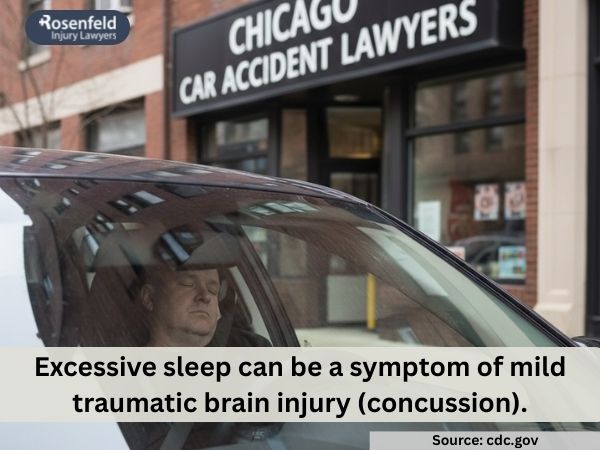
Feeling unusually tired or sleeping a lot after a car accident isn’t something to ignore. Unusual daytime sleepiness or changes in sleep patterns can point to severe conditions that may not be immediately obvious at the scene of a crash. Understanding the possible causes can help injured accident victims in seeking medical care and strengthening any related legal claim.
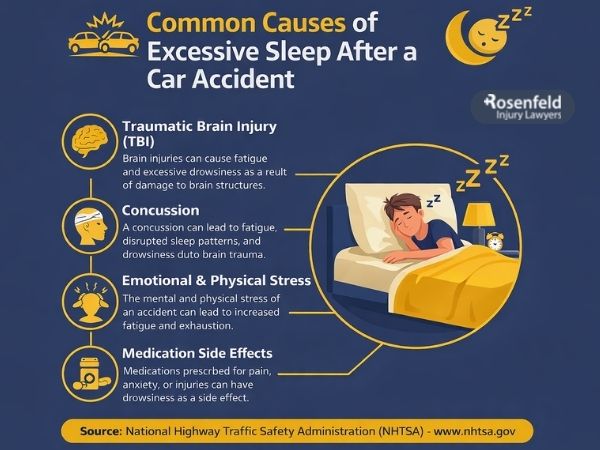
A traumatic brain injury is one of the leading causes of sleep problems following a motor vehicle accident. Even a mild TBI, such as a concussion, can affect the brain’s ability to regulate the sleep-wake cycle. Victims may notice drowsiness, brain fog, difficulty concentrating, or changes in mood. Moderate to severe traumatic brain injuries may result in prolonged unconsciousness, memory problems, or disrupted sleep quality for months.
TBI after a car accident may also lead to secondary conditions such as sleep apnea, periodic limb movement disorder, or other sleep disorders. These complications can make staying asleep difficult and reduce the benefits of what would otherwise be a good night’s sleep.
If you or a loved one is experiencing unusual daytime sleepiness, painful headaches, or confusion, seek medical attention immediately. Early diagnosis can be key to managing symptoms and preventing further harm.
The emotional toll of a car crash can have lasting effects on sleep quality and overall well-being. Depression after a car accident is a common condition that can trigger psychological fatigue, sleep disturbances, and changes in appetite or mood. Victims may have trouble falling asleep or find themselves sleeping a lot after a car accident as a way to cope with emotional overload. In some cases, this can be a sign of PTSD, especially if the person is also experiencing nightmares, anxiety, or flashbacks.
Medical treatment for car accident injuries often includes prescription medications to manage pain, inflammation, or anxiety. While these are important for physical recovery, some drugs may cause drowsiness or sleep issues.
Muscle relaxants, opioids, and certain antidepressants can make it challenging to stay awake during the day or interfere with deep sleep at night. Always discuss new or worsening symptoms with a medical professional, especially if you’re having trouble sleeping or feel groggy most of the day.
Back injuries are common in rear-end and high-speed collisions. Herniated discs, spinal misalignment, and muscle tension can all lead to significant fatigue by disrupting sleep and causing ongoing discomfort. It’s not uncommon for back pain to worsen at night, making it harder to get quality sleep. Back injuries may also limit mobility, making everyday tasks more exhausting.
Internal injuries are often harder to detect right away, especially without visible signs like bruising or open wounds. Organ damage, internal bleeding, or inflammation can cause extreme fatigue, lightheadedness, severe headaches, or unusual daytime sleepiness. Seeking urgent medical attention is critical to treating these life-threatening injuries.
Post-accident fatigue is diagnosed through a combination of medical evaluation, imaging tests, and a review of your symptoms and medical history. A medical professional may begin with a physical exam to check for visible injuries, followed by neurological assessments to evaluate signs of a traumatic brain injury. If you’re experiencing excessive sleepiness, sleep disturbances, or trouble falling asleep, you may be referred to a sleep specialist for further testing.
Sleep studies can help identify sleep problems such as sleep apnea or periodic limb movement disorder, which may be triggered by head injury or emotional distress from a car crash. Blood work may also be ordered to rule out other conditions that can cause fatigue, such as anemia or thyroid problems.
Keeping detailed records of your symptoms–including changes in sleep quality, brain fog, or psychological fatigue–can assist healthcare professionals in making an accurate diagnosis and developing appropriate treatment options.
Treating excessive sleeping after a car accident often involves addressing the underlying cause, which can lead to significant medical expenses. Medical treatment after a car accident may include diagnostic imaging, neurological evaluations, or overnight sleep studies. In some cases, surgery may be necessary to relieve pressure from a traumatic brain injury or repair internal damage contributing to fatigue.
Your doctor may recommend physical therapy, counseling for post-traumatic stress disorder or depression, prescription medications, or specialized care from a sleep clinic. These costs can add up quickly, especially if long-term care is needed to improve sleep quality.
Compensation from a personal injury claim may help cover the full range of medical costs, including follow-up appointments, therapy, and prescription drugs. Our legal team can use your medical records and expert evaluations to demonstrate how your excessive sleeping is directly tied to your car crash injuries.
According to Law.com’s VerdictSearch, cases involving excessive sleepiness after a car accident have an average award of $7,433,390, with a median recovery of $1,170,000. The total value range spans from as low as $1,612 to as high as $54,155,900, reflecting the range of outcomes based on the unique facts of each case.
Several factors influence how much you may recover, including:
Victims who experience sleep disturbances or psychological fatigue may be entitled to economic and non-economic damages.
Economic damages provide compensation for medical expenses, which can include hospital visits, diagnostic testing, sleep studies, and follow-up care such as physical therapy or counseling. If surgery, spinal injections, or devices like a spinal cord stimulator are needed, those costs are also considered. Lost wages and diminished future earning capacity are common in cases where sleep issues or associated injuries prevent a full return to employment.
Non-economic damages typically account for ongoing pain, loss of sleep quality, emotional distress, and loss of enjoyment of life.
If you’re sleeping a lot after a car accident, a strong personal injury claim supported by immediate medical care can help you pursue the full compensation you deserve.
In 2011, James Denton, a 53-year-old regional VP, was rear-ended by a semi-truck on I-65 in Jasper County, Indiana. The crash occurred after a wrong-way driver slowed traffic. Denton suffered multiple herniated discs, chronic pain, cervical and lumbar spine damage, knee injuries, and psychological trauma. He underwent nine surgeries, seven steroid injections, and was left with permanent disability, chronic fatigue, and significant sleep disturbances, including waking four to five times per night and needing separate sleeping arrangements.
His legal team pursued damages against the driver and companies involved, arguing negligent hiring and reckless conduct. Despite the defense pointing to the wrong-way driver and minimizing future damages, the jury found Universal Am-Can 60% liable and the driver 40%, awarding the Dentons $54,155,900–including $35 million in punitive damages, over $6 million for pain and suffering, nearly $3 million in lost earnings, and $3 million for loss of companionship and services to his wife.
In a 2014 rear-end collision on Interstate 90 in Chicago, Eric Thomas and Lavetta Johnson, both in their 60s, sustained soft-tissue neck and back injuries. Neither sought immediate medical attention, but both began physical therapy within a week, continuing treatment over eight weeks. They reported pain and fatigue, but both experienced improvement with treatment. The defendant disputed the severity of the injuries, citing pre-existing conditions and minor impact. The case settled shortly after opening statements, with the defendant’s insurer agreeing to pay $25,000 total–$10,000 to Thomas and $15,000 to Johnson.
In 2008, Emmanuel Chand, 27, was rear-ended at a Chicago intersection. He claimed a range of injuries, including neck strain, shoulder pain, fatigue, and spinal misalignment. He was treated conservatively with chiropractic care and did not claim lost wages. The defense argued the impact was too minor to cause the alleged injuries. A jury awarded Chand $12,574, reflecting the limited nature of his injuries and disputed causation.
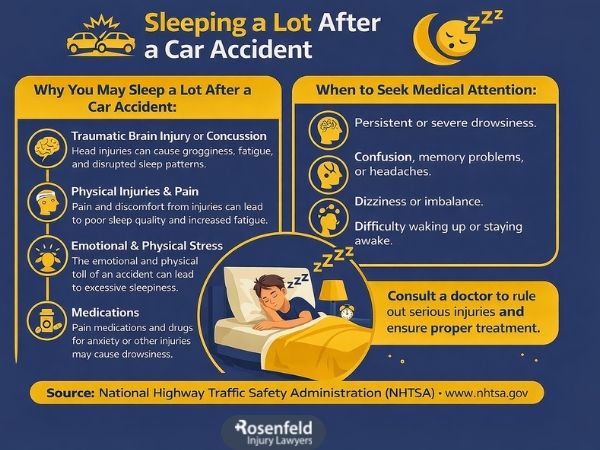
Sleeping a lot after a car accident can signal a severe underlying issue, such as a traumatic brain injury or internal damage. Delaying medical care may put your health at risk and weaken your legal claim. A healthcare professional can assess your symptoms, order imaging or sleep studies, and recommend appropriate treatment for your physical health and emotional well-being.
Keep a written record of any sleep disturbances, excessive daytime sleepiness, or unusual fatigue. Note how often you’re falling asleep during the day or having trouble staying asleep at night. These details can help strengthen your case and guide your medical care.
If sleep problems are interfering with your daily life after a car crash, legal support may be essential to protect your rights and secure financial recovery. Our Chicago car accident lawyers can help you recover compensation for medical expenses, lost wages, and long-term care needs.
An experienced car accident lawyer can play a key role in helping you reclaim your peace of mind–and your sleep. If you’re sleeping a lot after a car accident or struggling with excessive fatigue, your attorney can gather medical records, consult experts, and connect your symptoms to the crash. This documentation is critical when dealing with the insurance company.
Our legal team can also ensure that your medical treatment after a car accident–including sleep studies, therapy, or neurological evaluations–is fully accounted for in your personal injury claim. We aim to relieve the financial pressure that often disrupts sleep, especially when lost income or ongoing care is involved.
With strong legal guidance, you can focus on recovery while our Chicago personal injury attorneys fight to secure compensation for the physical, emotional, and financial effects of post-accident fatigue.
If you’re sleeping a lot after a car accident, don’t wait to get help. We offer a free consultation to review your case and explain your legal options. Our attorneys handle cases on a contingency fee basis, which means you pay nothing unless we recover compensation for you. Contact us today to schedule your free case review and find out how we can help you move forward.