
100% Focus on Your Recovery,
Chicago Auto Accident Lawyer
Chicago Auto Accident Lawyer
Our Team of Attorneys Are Committed to Maximizing the Value of Your Case



If you’re dealing with a headache after a car accident, you’re not alone–and it may be more than just a passing issue. Our legal team helps individuals throughout Chicago who experience headaches, neck pain, or other symptoms after a motor vehicle collision. At our law firm, we understand how these symptoms impact your health and daily life. We work to hold negligent drivers accountable and pursue compensation for medical bills, lost income, and pain related to post-traumatic headaches and other injuries.
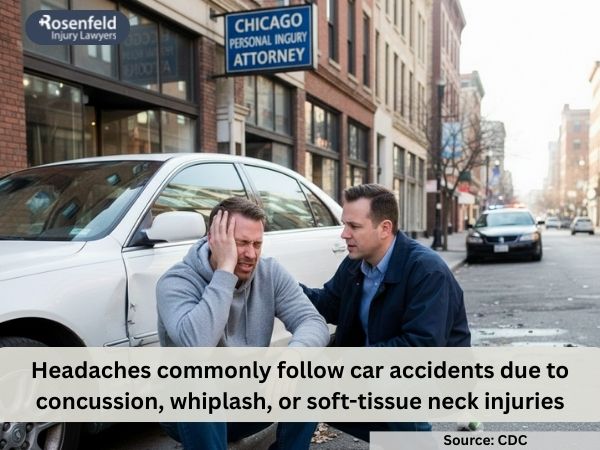
A headache after a car accident is often one of the first signs that something isn’t right. Some headaches start immediately after impact, while others may take a few hours–or even days–to develop. This delayed onset doesn’t mean the injury is minor. A sudden and violent jolt, especially during a motor vehicle accident, can shift the head and neck with enough force to strain muscles, pinch nerves, or even damage brain tissue.
In many cases, there are no visible wounds, which is why seeking immediate medical attention is so important. Without a proper diagnosis, headache pain linked to underlying injuries may worsen over time and lead to long-term health issues.
Post-concussion headaches are one of the most common symptoms following a mild TBI. While the word “mild” may suggest a minor issue, this classification simply refers to how the injury appears during initial testing. CT scans and MRIs often come back normal, even though damage has occurred to brain tissue at a cellular level.
These headaches usually feel like a persistent pressure or throbbing pain, sometimes accompanied by visual disturbances, light sensitivity, or trouble concentrating. Because a concussion is a type of traumatic brain injury, it’s essential to treat any neurological symptoms seriously, especially after an auto accident. Ignoring these signs could lead to an untreated concussion and more severe complications.
After a car accident, it’s easy to brush off a headache as stress-related. But a persistent headache–especially one that doesn’t improve or continues to get worse–could point to serious injuries. Post-accident headaches can stem from a variety of causes, including soft tissue injuries, neck trauma, or even internal brain injury.
Some injuries produce delayed symptoms, so just because you felt fine after the crash doesn’t mean you’re in the clear. Inflammation can increase over time, and what starts as a mild ache may evolve into severe pain. Ongoing monitoring is key. A constant headache or changes in headache frequency may indicate that your condition is worsening. Always seek medical attention and discuss any new or changing symptoms with a medical professional.
A car crash can trigger migraine headaches, especially if you’ve had them before. Migraines may result from head or neck injuries or from the stress the body experiences during a traumatic event. The crash forces can irritate the upper cervical spine, damage soft tissue, or affect the nerves that regulate pain signals.
Symptoms may include intense throbbing pain, light sensitivity, nausea, and sound sensitivity. Many people report pain on one side of the head or behind the eyes. Because migraines can worsen with stress, neck injuries, or hormonal shifts, it’s common for them to become more frequent after a motor vehicle accident. If you’re experiencing migraine headaches after a collision, you may need both medical treatment and legal support to help cover the medical expenses.
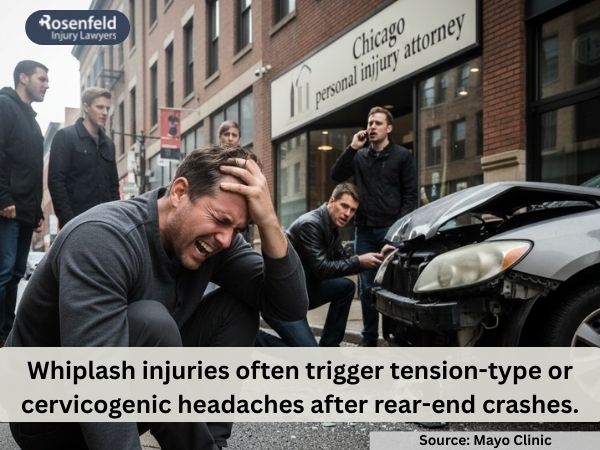
Whiplash injuries happen when the head is suddenly thrown forward and backward during a crash. This force can damage the soft tissue around the cervical spine, leading to inflammation, muscle strain, and misalignment. The result is often a tension headache or whiplash headache, which may be felt at the base of the skull, behind the eyes, or radiating to the temples.
Common causes of whiplash headaches include:
These issues often cause pain that travels from the neck muscles into the head. Pain may worsen with movement or prolonged sitting, and you may notice shoulder pain or stiffness at the same time. Physical therapy and targeted care can reduce these symptoms, but early diagnosis is essential.
A constant headache after a car accident can stem from several sources. For many people, the body’s response to injury leads to a state of guarded tension, where the muscles remain tight to protect the injured area. This can lead to chronic tension-type headaches, which often feel like a dull, aching pain that never quite goes away.
Other common causes include:
Without proper treatment, these headaches can interfere with work, sleep, and daily life. Don’t wait to see a medical professional if the pain persists.
An auto accident can trigger occipital neuralgia, a condition caused by irritation or injury to the greater occipital nerve or other occipital nerves. These nerves travel from the upper neck to the back of the skull and into the scalp. When inflamed or compressed, they can cause sharp, stabbing pain at the base of the skull that may radiate to the sides or top of the head.
Occipital neuralgia headaches are often misdiagnosed as migraines or general neck tension, but the pain is usually more sudden and electric in nature. Neck injury, whiplash, or trauma to the cervical spine are common causes. If you’re feeling stabbing pain in the back of your head after an auto accident, it’s essential to speak with a doctor familiar with nerve-related head pain. Early intervention can help prevent chronic symptoms.
Headaches after a car accident are diagnosed through a combination of physical examination and neurological evaluations. A doctor will often begin with a detailed history of the crash and your symptoms, followed by a neurological exam to assess reflexes, balance, memory, and sensory function. If a mild traumatic brain injury or concussion is suspected, further testing may include concussion assessments, CT scans, or MRI imaging to check for brain injury or soft tissue damage.
In cases involving neck trauma, cervical spine imaging may reveal alignment issues, muscle strain, or pinched nerves. Depending on your symptoms, your provider may also evaluate for TMJ dysfunction, light sensitivity, or inner ear issues. Since many post-accident headaches involve delayed symptoms, doctors often recommend continued observation and follow-up testing.
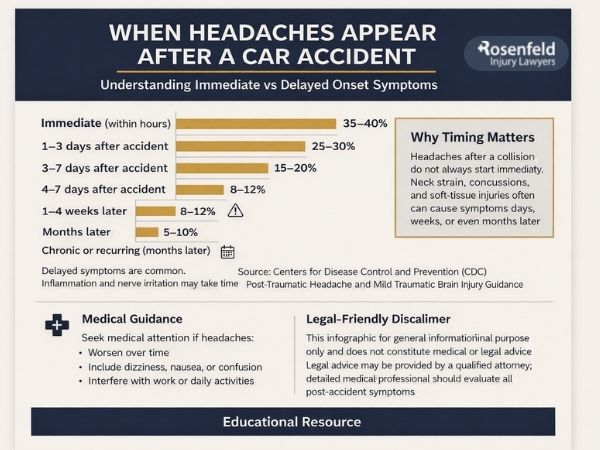
Medical treatment for headaches after a car accident often depends on the underlying cause, severity, and impact on daily function. Treatment may involve anti-inflammatory medications, muscle relaxers, or nerve pain medication to address headache pain tied to soft tissue injuries or pinched nerves. For migraine headaches, doctors may prescribe preventive or abortive medications. If the pain is linked to a concussion or mild traumatic brain injury, concussion management, rest, and cognitive pacing are typically recommended.
Physical therapy and cervical therapy can relieve pain caused by neck injury or whiplash headaches, while occipital nerve blocks may be used for occipital neuralgia. Other interventions include TMJ treatment, vision therapy, and mental health support to manage stress or trauma-related symptoms. Proper care helps improve recovery and supports claims for medical expenses.
According to Law.com’s VerdictSearch, in cases involving post-traumatic headaches, migraine headaches, or post-concussion syndrome, the average award is $178,564, while the median recovery is significantly lower at $20,000. Reported values range from as low as $681 to over $2.3 million, reflecting the wide variability in outcomes.
Key factors that influence case value include:
On October 17, 2000, 57-year-old obstetrician Dr. John Hobart was rear-ended while driving on the Edens Expressway in Chicago. Although the impact was minor and traffic was slow, Hobart claimed the car accident caused a herniated disc at C3-4, resulting in severe headaches and chronic neck pain that forced him to stop practicing medicine. He argued that the injury, complicated by a prior C4-5 fusion, left him unable to tolerate surgery and reliant on narcotic painkillers. The defense disputed the injury’s cause and accused Hobart of malingering, citing his previous spinal issues and psychological evaluations. Hobart sought $2.4 million in lost future earnings. The parties reached a $2.225 million settlement after the trial began.
On November 23, 2013, Krystle Muntean, 28, was rear-ended while stopped in traffic on Ashland Avenue near Augusta Boulevard in Chicago. Following the crash, she reported headaches, nausea, dizziness, and neck and lower back pain. Diagnosed with post-concussion syndrome, cervicalgia, and occipital neuralgia, she underwent physical therapy and chiropractic care and received pain management injections. Her treating physicians supported her claims of permanent injuries and recommended ongoing treatment, including Botox for headaches and counseling. The defense argued her only injury was a short-term neck sprain. The jury awarded $1.61 million, including damages for future medical care, pain and suffering, and loss of normal life.
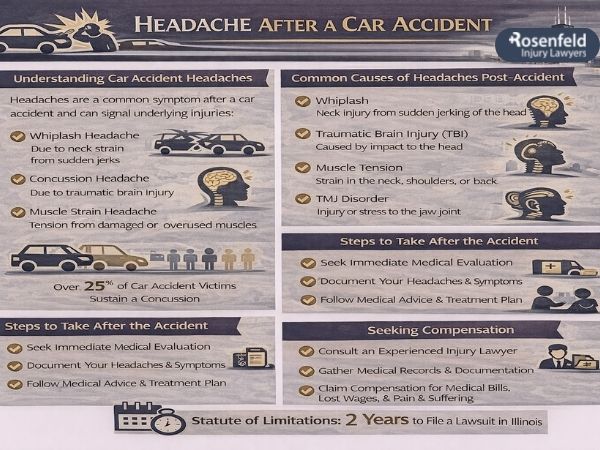
If you begin to experience headaches after a car accident, even if they seem minor, taking the proper steps early on can protect both your health and your legal rights.
Headaches can signal serious injuries like a mild traumatic brain injury, whiplash, or occipital neuralgia. A prompt evaluation helps detect underlying injuries and provides critical medical documentation.
Keep a detailed record of your headache frequency, intensity, related symptoms like neck pain, light sensitivity, or visual disturbances, and how the pain affects your daily life.
Insurance companies may downplay your injuries or offer low settlements. Talk to a Chicago car accident lawyer first to protect your claim and make sure your damages are accurately valued.
If you’re suffering from a headache after a car accident, a Chicago personal injury attorney can help you build a strong claim by gathering medical records, consulting experts, and proving the link between your symptoms and the crash. Many post-traumatic headaches, migraine headaches, and post-concussion headaches involve delayed or invisible injuries, making it critical to have legal support that understands how to present these conditions clearly.
An experienced lawyer can also handle communication with insurers, calculate the full extent of your losses–both current and future–and push for fair compensation for your pain, medical care, and lost income. If another driver’s negligence caused your condition, our legal team works to hold them financially responsible while you focus on healing.
If you’re suffering from a headache after a car accident, don’t wait to get answers. A consultation with a Chicago personal injury attorney can clarify your options and help you understand whether you’re entitled to compensation for medical bills, lost income, and long-term treatment. We’ll review your case at no cost and explain how we can assist. Contact us today to schedule your free consultation.