
100% Focus on Your Recovery,
Chicago Auto Accident Lawyer
Chicago Auto Accident Lawyer
Our Team of Attorneys Are Committed to Maximizing the Value of Your Case



Delayed car accident injuries can catch victims off guard, often surfacing days or even weeks after the crash. At our law firm, we help injured drivers and passengers in Chicago hold negligent parties accountable. Our experienced injury lawyers know how to connect delayed symptoms to the crash and recover compensation for medical bills and other related damages. Insurance companies may downplay injuries that don’t show up right away, but we don’t. If you’re feeling new or worsening symptoms after a car accident, we’re here to help.
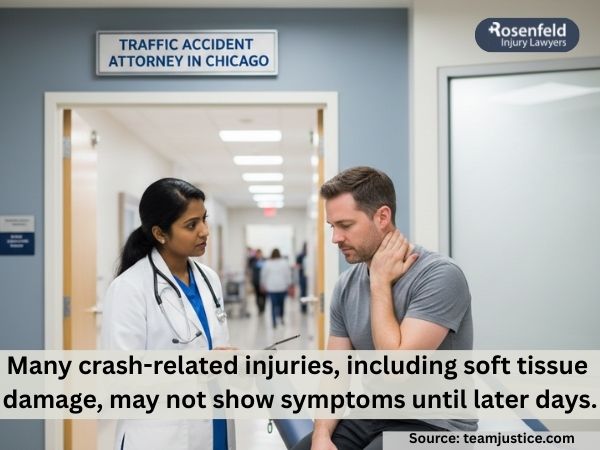
Delayed injuries are medical conditions that develop or noticeably worsen in the hours, days, or even weeks following a car accident. These injuries can affect muscles, joints, nerves, internal organs, or even the brain. In many cases, adrenaline and shock mask the early signs of damage, allowing hidden injuries to go undetected at the scene or during an initial medical exam. Some injuries simply take time to produce noticeable symptoms.
A delayed injury doesn’t mean the condition is minor or that it’s unrelated to the crash. In fact, many serious injuries, including spinal injuries, traumatic brain injuries (TBIs), and internal bleeding, may not be apparent right away. For example, soft tissue injuries like whiplash or muscle strain may take days to fully develop. The same is true for psychological symptoms such as post-traumatic stress disorder or sleep disturbances, which can emerge long after the physical trauma.
Just because you walked away from the scene doesn’t mean you’re in the clear. Delayed symptoms are a warning sign that something deeper may be wrong. That’s why seeking medical treatment is essential, even if some time has passed since the car crash. A comprehensive medical examination can help identify severe injuries and ensure you receive the proper treatment before things get worse.
Delayed car accident injuries are more common than most people realize. Even after a crash that seems minor–like a fender bender or a low-speed impact–serious injuries can develop. The body’s natural response to trauma often includes a surge of adrenaline and cortisol, which can block pain signals and mask symptoms for hours or days. Inflammation, swelling, and internal damage can also build over time, delaying the appearance of pain or dysfunction.
This is why many people don’t connect new symptoms–like back pain, shoulder pain, or emotional changes–to the car accident that caused them. Others may dismiss issues like mood swings or sleep disturbances as stress or aging, not realizing that they’re signs of deeper problems such as PTSD or mild traumatic brain injuries.
It’s important to know that delayed injury symptoms are well-recognized in both the medical and legal fields. A delay in symptoms doesn’t make an injury less severe. It doesn’t disqualify your right to file a personal injury case. When documented correctly, these conditions are legally actionable, just like injuries that show up at the scene.
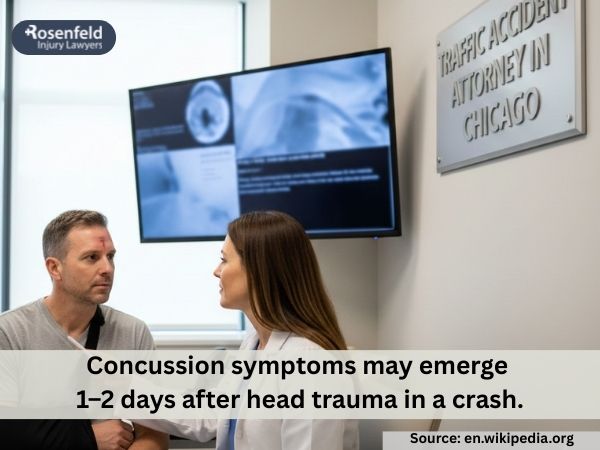
If you begin to feel pain after an accident–even days or weeks later–a prompt medical evaluation is critical. Delayed symptoms may point to severe injuries that need immediate medical attention. Getting examined by a doctor immediately can prevent further complications and help confirm the link between your symptoms and the car crash.
Many people hesitate to go to the doctor if some time has passed, believing it’s too late. In Illinois, the personal injury statute of limitations (735 ILCS 5/13-202) allows injured individuals two years from the date of the accident to file a claim. In some cases, the clock starts from the time the injury was discovered or reasonably should have been discovered. This means that delayed-onset injuries can still support a valid case, as long as you act within the legal timeframe to file a car accident claim.
A timely medical diagnosis not only helps your recovery, but it also protects your right to compensation. It also builds a clear record that links your chronic pain or other physical symptoms to the original auto accident. Early documentation makes it much harder for an insurance company to deny your claim.
Some car accident injuries are impossible to ignore; broken bones, lacerations, or visible swelling are usually identified and treated right away. But not all injuries present themselves so clearly. Many severe conditions develop slowly, making them easy to miss without proper medical care. These delayed car accident injuries can lead to long-term complications if they’re not diagnosed early.
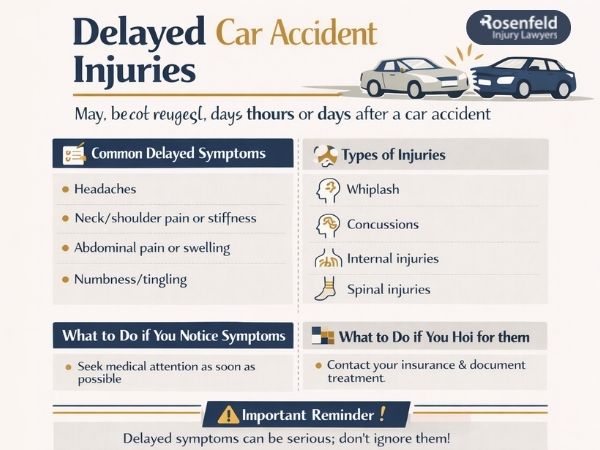
Below are some of the most common delayed injury symptoms that may point to underlying damage after an auto accident.
A traumatic brain injury (TBI) doesn’t always involve a direct blow to the head. Even a sudden jolt or violent shake–common in car crashes–can cause the brain to collide with the skull. This can lead to mild traumatic brain injuries, such as concussions, or more severe brain trauma.
Symptoms may include:
These symptoms often take days to appear. Left untreated, even a mild TBI can result in permanent brain damage. Because these injuries may not show up on standard imaging right away, ongoing monitoring and follow-up with a medical professional are essential.
Spinal injuries often cause delayed pain due to the way pressure builds along the spine after trauma. In a collision, forces from seatbelts, sudden stops, or impact angles can compress or twist the spine in unnatural ways. This can lead to:
A neck injury caused by a car accident can feel like minor soreness at first, but progress to severe pain or restricted movement. These symptoms may indicate more serious structural damage, not just strained muscles.
If neck pain doesn’t improve–or gets worse–advanced imaging and orthopedic evaluation are necessary. These tests can confirm whether spinal cord injuries or soft tissue damage are present, and guide appropriate treatment.
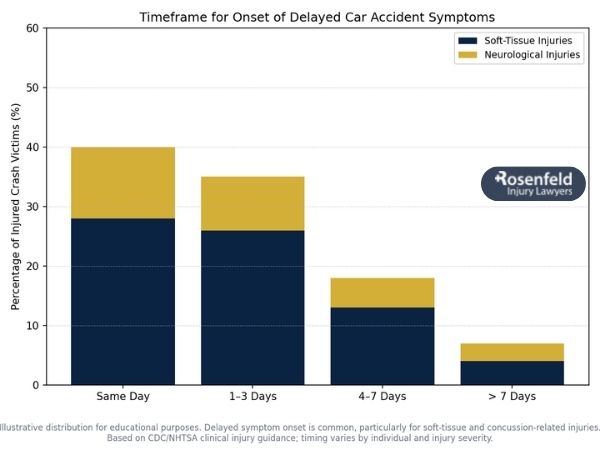
Soft tissue injuries are some of the most common injuries with delayed symptoms. These include:
Soft tissue damage may not be visible on X-rays but can still cause significant pain and limit mobility. You may feel pain after an accident that seems to go away, only to return later as inflammation sets in.
If you’re experiencing stiffness, swelling, or muscle pain that wasn’t there right after the crash, it could be a sign of delayed injury. Physical therapy and follow-up care are often required to heal properly and avoid long-term issues.
Not all injuries bleed or bruise on the surface. Internal injuries are especially dangerous because they may go unnoticed until symptoms become severe. These can include:
Symptoms such as abdominal pain, dizziness, or fainting should never be ignored. Internal bleeding may initially cause vague symptoms like fatigue or nausea, which is why many victims delay seeking treatment. But once vital signs begin to shift, it can become a medical emergency.
Back and shoulder pain are often dismissed as muscle soreness, especially if there’s no visible bruising. But the forces involved in a car crash–such as sudden deceleration or side impact–can cause deeper injuries, including:
These injuries may develop slowly as inflammation increases or as the body compensates for strained areas. If shoulder or back pain lingers or worsens, it’s a sign that something more serious could be wrong.
The only way to tell the difference between a simple sprain and a more severe injury is through imaging, such as MRI or CT scans. A comprehensive medical examination can also rule out back injuries that may not be apparent early on.
Chest pain after a car accident may come from more than just seatbelt bruising. Depending on the force of the crash, delayed symptoms involving the chest could indicate:
Likewise, abdominal pain is a serious warning sign. It may be caused by:
These types of delayed injuries can become life-threatening without medical care. It’s critical to treatment even if the symptoms appear days after the car crash. Waiting too long may not only complicate recovery, but it may also affect your legal case.
Car accidents are traumatic events. Even if the physical damage seems manageable, the psychological impact can last far longer. Symptoms of emotional trauma often show up later, as the initial shock wears off. These may include:
Post-traumatic stress disorder (PTSD) is a common response to serious car accidents, even when injuries are not life-threatening. PTSD doesn’t always show up right away. For many people, the symptoms begin to surface weeks after the crash, especially when triggered by reminders of the event.
Illinois law recognizes psychological injuries as valid accident injuries. That means mental health treatment–such as therapy, counseling, or medication–can be part of your compensation claim. Emotional trauma is medically and legally recognized as a real injury that deserves proper care.
Delayed car accident injuries often face added scrutiny from insurance companies. When symptoms appear days or weeks later, insurers may argue there’s a “gap in treatment” and claim your injuries must not be serious, or aren’t related to the crash at all. They may blame a “pre-existing condition” or suggest your pain stems from an “unrelated injury” that happened afterward.
These tactics are used to limit payouts or deny claims altogether. That’s why medical documentation is critical. Reporting delayed symptoms to a doctor and following through with all recommended care creates a clear link between the accident and your condition. Imaging, diagnosis, and treatment records help support your claim.
Physician opinions also play a key role. A medical professional can explain how delayed onset symptoms are consistent with trauma from the car crash, especially in cases involving soft tissue injuries, spinal damage, or other physical injuries. Their expertise can make all the difference in holding the auto insurance company accountable.
Some delayed car accident injuries start as minor discomfort but develop into long-term health problems if left untreated. Certain conditions can worsen over time, leading to chronic pain, permanent impairment, or even long-term disability. What may seem like general soreness after a crash can become a serious medical issue without early intervention.
Seeking medical attention as soon as delayed symptoms appear gives you the best chance to manage pain and prevent further damage. It also strengthens any future claim under car accident insurance coverage in Illinois, which may be affected by how quickly you pursue treatment.
If you’re facing long-lasting symptoms after a crash, you don’t have to handle the situation alone. Legal support can help ensure your medical needs and financial losses are fully considered, especially when delayed symptoms turn out to be more severe than expected.
If you’re dealing with delayed or hidden injuries after a car accident, speaking with a car accident attorney in Chicago can help protect your health and your rights. Legal guidance early on can make a significant difference, especially when symptoms appear after some time has passed. An attorney can help preserve evidence, secure medical records, and ensure your injury is documented correctly, critical steps in proving your case.
A lawyer can also assist with coordinating treatment, referring you to medical specialists, and making sure your treatment is aligned with your legal claim. If the insurance company pushes back or denies coverage based on delayed symptoms, your attorney can step in and advocate for the compensation you deserve.
Consulting an injury lawyer doesn’t mean rushing into a lawsuit. It’s about getting informed support so you can make the best decisions for your recovery and your personal injury case.
If you’re experiencing delayed symptoms after a car crash, don’t wait to get the answers you need. A traffic accident attorney in Chicago can review your situation, help you understand your options, and explain how delayed injury symptoms may impact your claim. We offer a free consultation, and there’s no obligation to move forward. Contact us today to speak with an experienced injury lawyer who understands how delayed car accident injuries affect your life.