
100% Focus on Your Recovery,
Chicago Auto Accident Lawyer
Chicago Auto Accident Lawyer
Our Team of Attorneys Are Committed to Maximizing the Value of Your Case



Our Chicago legal team helps families coping with the devastating aftermath of a coma after a car accident. With experience handling severe brain injury claims, we know what it takes to seek justice.
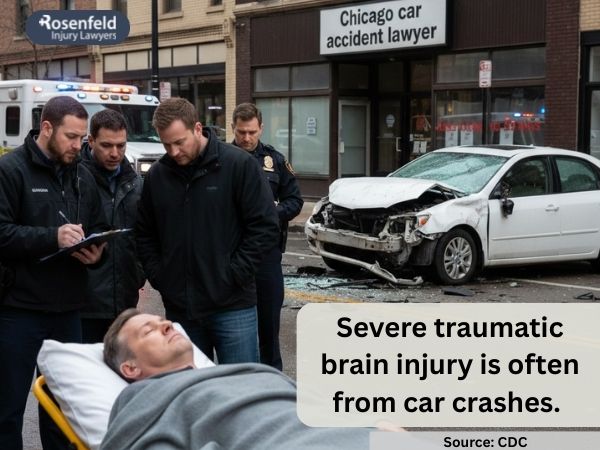
A coma is a serious medical condition where a person is completely unconscious and unresponsive to external stimuli, including pain, sound, or touch. It often results from a traumatic brain injury, such as one sustained in a car crash. During a coma, the person cannot wake or respond, though basic bodily functions like breathing may continue. This differs from a vegetative state, where a person may open their eyes or make reflexive movements without awareness. In a minimally conscious state, there are limited but definite signs of awareness and response.
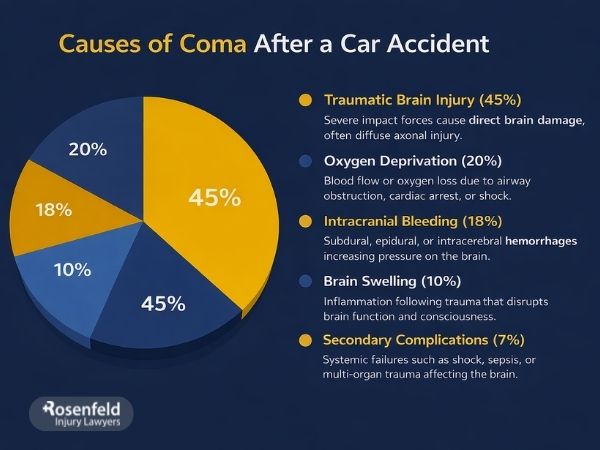
The impact of a collision can harm brain tissue, disrupt blood flow, and interfere with oxygen delivery–all of which can impair or shut down consciousness. Here’s how different types of brain injuries after a car accident can lead to a coma:
Traumatic Brain Injury (Moderate to Severe) – Direct damage to brain tissue leads to immediate unconsciousness.
Brain Swelling (Cerebral Edema) – Pressure inside the skull increases, reducing blood flow and brain function.
Brain Bleeds
Diffuse Axonal Injury – Shearing forces tear the brain’s wiring, causing instant or prolonged coma.
Oxygen Deprivation (Hypoxia or Anoxia) – Lack of oxygen damages the brain’s communication centers.
Skull Fractures – Especially at the base of the skull, which may indicate severe underlying trauma.
Not all comas after a crash are caused solely by head injuries. Shock, blood loss, or organ failure can reduce brain perfusion and lead to coma. These cases often involve catastrophic injuries and require advanced care to stabilize the patient and prevent further decline.
Diagnosing a coma after a car accident begins with a rapid neurological evaluation, often at the scene or immediately upon arrival at the hospital. Medical teams use the Glasgow Coma Scale to measure eye movement, verbal and motor response, helping determine the depth of unconsciousness. Imaging tests such as a CT scan or MRI are essential to detect cerebral edema, bleeding, or skull fractures. In severe cases, doctors may use intracranial pressure (ICP) monitoring to assess swelling and perform an EEG to evaluate brain activity. Lab tests are also performed to help identify systemic problems like low oxygen or infection. Most patients remain in the ICU for continuous observation and specialized care during this period.
Treatment for a coma after a car accident involves extensive and often long-term medical care, resulting in significant financial strain for families. In the acute phase, the focus is on emergency stabilization, managing the airway, and providing ventilator support if the person cannot breathe independently. Surgery may be necessary to stop bleeding or relieve pressure caused by cerebral edema, all contributing to high medical bills. ICU care, sedation, ICP monitoring, and seizure prevention are also standard. As time goes on, treatment shifts to nutritional support, respiratory therapy, and physical therapy to prevent muscle loss. Patients who begin to regain consciousness may need months of neurological treatment and rehabilitation. If full recovery is uncertain, planning for long-term facility care or home assistance adds to the financial impact of these injuries.
According to Law.com’s VerdictSearch, the average compensation in these cases is approximately $10,266,118, with a median award of $8,800,000. Payouts can range from $225,000 to $29,487,831, depending on the facts of the case.
Several key factors can influence compensation:
In cases involving a coma after a car accident, victims may be entitled to a wide range of damages based on the severity and long-term effects of the injuries. Compensation often includes current and future medical bills, such as ICU care, surgery, hospitalization, and ongoing rehabilitation. Long-term care costs may consist of in-home support, facility care, therapy, and assistive equipment. If the person is unable to return to work, lost wages and loss of future earning potential are also recoverable. Non-economic damages cover pain, emotional suffering, and loss of enjoyment of life, especially in cases involving permanent brain injury or limited consciousness. Families may also seek compensation for the financial and emotional impact of caregiving. If the at-fault driver showed egregious negligence or reckless behavior, punitive damages might apply.
In 2008, seven-year-old Filiberto Perez Jr. suffered a traumatic brain injury, skull fractures, and a one-week coma after being struck and pinned by a car that lost control at an improperly marked construction zone. Filiberto required brain surgery, weeks of inpatient rehabilitation, and ongoing outpatient care. He was left with permanent cognitive impairments and the mental capacity of a 7-year-old. His future care costs were projected at over $10 million. A personal injury suit was filed against multiple parties, including two drivers and several construction companies, alleging failure to follow IDOT traffic safety standards. The case settled for $18.59 million, with John Burns Construction Co. contributing $17.7 million. Other defendants paid smaller portions, including the drivers’ full insurance policy limits.
Officer Charles Tiedje suffered a traumatic brain injury, multiple fractures, and a month-long coma after a hearse ran a red light and struck his police cruiser in Wilmette. The hearse’s black box revealed it was speeding. Tiedje underwent 19 surgeries, faced over $600,000 in medical expenses, and endured lasting physical and cognitive complications. He filed a lawsuit against the driver and his employer, Weinstein Family Services Inc., who ultimately paid a $10 million settlement. The driver pleaded guilty to the traffic violation. Tiedje required long-term care and was unable to return to his previous level of physical activity.
If a loved one is in a coma after a car accident, the priority is ensuring they receive proper medical help and are monitored closely by doctors. Keep detailed records of all medical expenses, treatments, and symptoms, and request copies of medical records whenever possible. Speak with a Chicago car accident lawyer who understands the serious consequences of a traumatic brain injury. An experienced lawyer can help assess liability, negotiate with the insurance company, and fight for the compensation your family deserves.
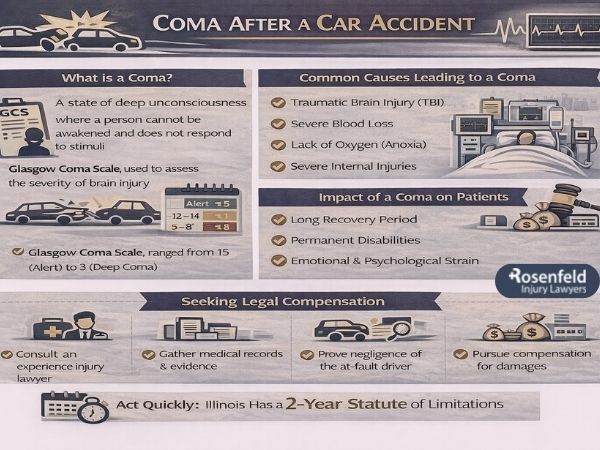
A Chicago personal injury attorney can help you gather necessary evidence, including medical documentation, witness statements, and expert opinions to support your claim. They can also handle communication with the insurance company, push back against low settlement offers, and calculate future damages like long-term medical care, lost wages, and rehabilitation costs. If your loved one is unable to speak or act on their own behalf, your attorney can also help you establish guardianship or make legal decisions in their best interest. With the proper legal support, your family can focus on healing while your attorney works to secure fair and full compensation.
If your loved one has suffered a coma after a car accident, you don’t have to face the legal process alone. Our lawyers are here to help you understand your rights, assess the full impact of the injuries, and provide clear guidance on your next steps. Contact us today for a free consultation.