
100% Focus on Your Recovery,
Chicago Auto Accident Lawyer
Chicago Auto Accident Lawyer
Our Team of Attorneys Are Committed to Maximizing the Value of Your Case



Chest pain after a car accident should never be ignored. Whether the pain begins immediately or appears hours later, it’s essential to speak with a doctor immediately, as well as an experienced car accident attorney who knows how to build a strong personal injury claim.
At our law firm, we represent car accident victims across Chicago, helping them seek medical attention and the compensation they deserve. We understand the financial stress, mental anguish, and physical trauma that follow a motor vehicle accident. Our legal team works to hold negligent drivers accountable so that you can focus on recovery.
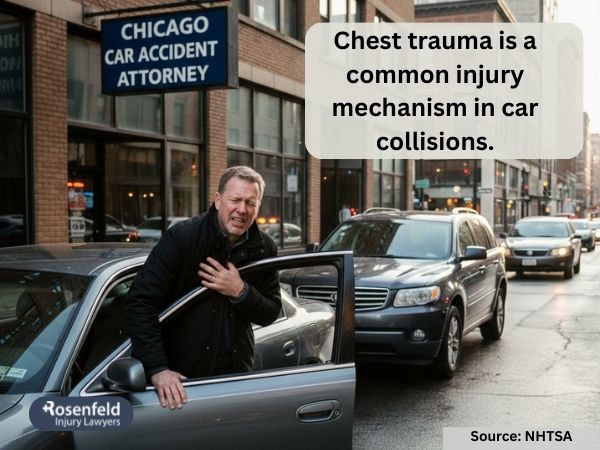
Chest pain after a car accident can come from a wide range of injuries. The sudden impact of a crash often directs significant force to the upper body, especially the chest area. Whether it’s from hitting the steering wheel, being restrained by a seat belt, or absorbing the blow of a deploying airbag, this type of physical trauma can result in bone fractures, soft tissue damage, or even harm to internal organs. Recognizing the cause of your pain is an essential step in getting the proper medical treatment and filing a car accident claim.
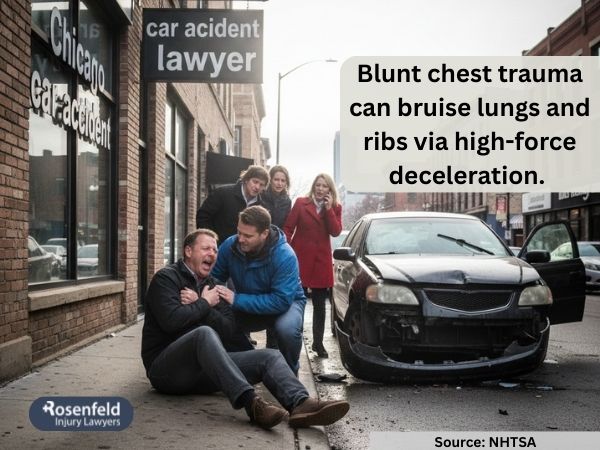
Blunt-force trauma is one of the leading reasons people feel chest pain after a crash. It happens when a force strikes the chest without breaking the skin, which is common in high-speed collisions. Victims often suffer from muscle strain, soft tissue injuries, or more serious conditions such as internal bleeding or organ damage.
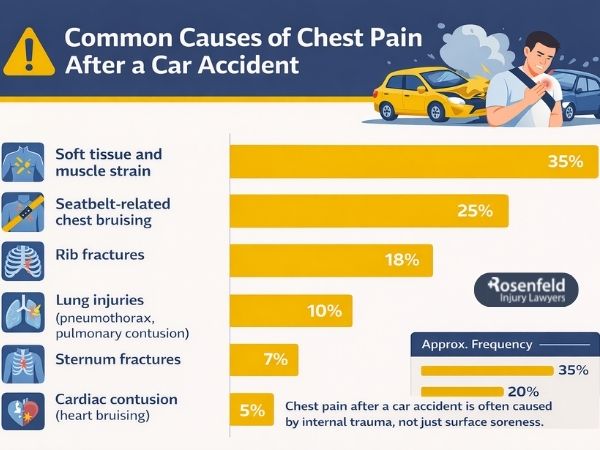
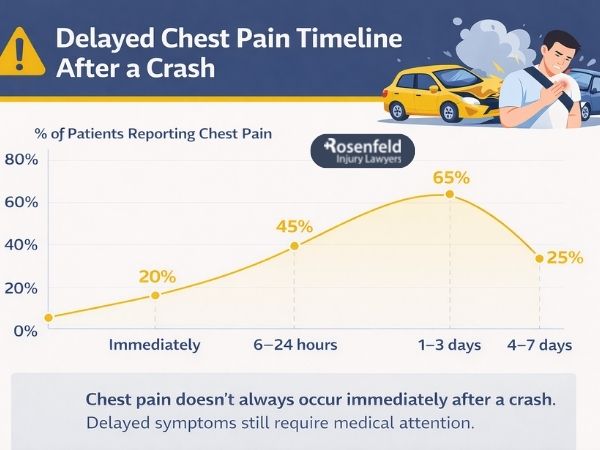
One common source of blunt-force trauma is the airbag. While airbags are intended to prevent more serious injuries, the rapid deployment can cause sharp pain or bruising in the chest area. The pressure and speed of an airbag hitting the chest can result in bruised sternum, fractured ribs, or even a cardiac contusion. Though these injuries are sometimes masked by adrenaline, delayed chest pain may appear in the hours or days after the accident and should never be ignored.
Fractured ribs are another common cause of chest pain after a car crash. These injuries can happen when the chest is compressed by the steering wheel or tightly held in place by the seat belt during impact. Rib fractures often lead to severe pain that worsens with deep breaths, coughing, or upper body movement. In some cases, broken ribs can puncture a lung or damage surrounding internal organs, leading to life-threatening complications that require emergency medical care.
A cardiac contusion, or bruised heart muscle, is a serious condition that can occur when blunt trauma to the chest affects the heart. This injury is often caused by a forceful impact with the steering wheel or dashboard. Symptoms may include sharp pain that mimics a heart attack, irregular heartbeat, dizziness, or trouble breathing. If left untreated, a cardiac contusion can lead to serious complications, especially in older adults or those with pre-existing heart conditions. Prompt medical attention is critical.
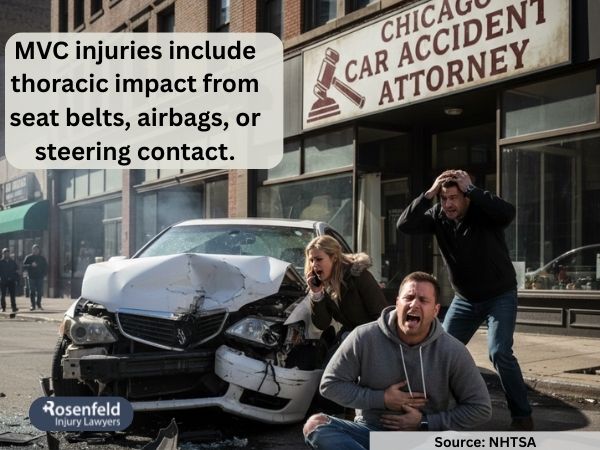
The sternum, or the breastbone, can be bruised when the chest hits the steering wheel or is compressed by a seat belt during a motor vehicle accident. A bruised sternum can cause localized pain in the center of the chest that worsens with movement or pressure. While not as dangerous as a fractured sternum, the injury can still be painful and should be evaluated to rule out deeper internal injuries or damage to the chest cavity.
The term “seat belt syndrome” refers to the combination of injuries caused by the seat belt restraining the body during a sudden stop or collision. While the seat belt helps prevent ejection and more severe trauma, the force it exerts on the body can cause soft tissue injuries, bruising, or even internal organ injuries. Victims may notice a visible bruise or abrasion across the chest or abdomen, which can signal more serious injuries underneath the surface. In some cases, seat belt injuries can lead to internal bleeding or lung injuries that may not present symptoms right away.
After a car crash, chest pain may not always be immediately noticeable–but that doesn’t mean the injury isn’t serious. Many chest injuries involve internal damage that isn’t visible without proper testing. To understand the full extent of a chest injury, medical professionals use a combination of physical exams, imaging, and other diagnostic tools.
A doctor will begin by asking about your symptoms, how the accident occurred, and where you’re feeling pain. They’ll check for tenderness, swelling, bruising, or instability in the chest area. Pain while breathing, coughing, or pressing on the ribs can suggest fractured ribs, muscle strain, or other serious injuries.
To look for internal injuries or broken bones, several types of imaging may be used, including:
If a cardiac contusion or heart-related issue is suspected, doctors may perform an electrocardiogram (ECG) or echocardiogram to evaluate heart function. These tests help rule out conditions like a heart attack, especially if you’re experiencing chest tightness, irregular heartbeat, or intense pain.
In some cases, blood work may be used to check for internal bleeding or to monitor organ function–especially if there’s a concern about lung injuries or other internal damage.
Seeking immediate medical attention is essential. Even injuries that seem minor at first–such as chest soreness or muscle strain–can lead to life-threatening complications without proper diagnosis. Records from these medical evaluations also play a key role in supporting an auto accident claim, helping to document the connection between the crash and your injuries.
Medical treatment after a car accident can range from rest and medication to emergency surgery. The type and cost of treatment often depend on the severity of the injury–whether it’s soft tissue damage, broken ribs, or more serious internal organ injuries. For many car accident victims, the physical pain is only part of the burden. The financial toll from medical bills, time off work, and long-term care can be overwhelming.
Severe chest pain may require immediate transport to the emergency room. In cases involving blunt force trauma, difficulty breathing, or signs of internal bleeding, doctors may recommend hospitalization for monitoring. This can include oxygen support, cardiac monitoring, and diagnostic tests to assess damage to the chest cavity and surrounding organs.
Imaging plays a key role in diagnosing chest injuries. X-rays, CT scans, or MRIs–all of which add to the total cost of care. These tests are critical for identifying injuries such as rib fractures, cardiac contusions, punctured lungs, or internal organ damage. Medical bills can rise quickly, especially for those without adequate health insurance.
For less serious injuries like muscle strain or soft tissue injuries, treatment may involve pain relievers, anti-inflammatory medications, and physical therapy. However, even these lower-level injuries can require weeks or months of follow-up care, especially if chest pain interferes with work or daily activities.
More serious injuries may involve surgical intervention. Broken ribs that threaten internal organs, a punctured lung, or bleeding in the chest cavity often require surgery. These procedures come with extended recovery times, follow-up appointments, and the risk of additional complications–factors that contribute to both physical and financial stress.
Seeking compensation through a personal injury claim helps cover these expenses and provides financial relief during recovery. If you’ve suffered chest pain after a car accident, documenting every aspect of your medical treatment is essential–not just for your health, but also to support your legal claim. Keeping a detailed record of your care, including all medical bills, can make a significant difference in the outcome of your claim.
Compensation for chest pain after a car accident in Chicago varies significantly, depending on the type of injury and the outcome of the legal claim.
According to Law.com‘s VerdictSearch, the average award is $2,222,340, while the median is much lower at $95,784. The full value range spans from $1,108 to $33,210,919, highlighting how widely these cases can differ depending on the facts of the case.
Several important factors determine how much compensation a car accident victim might recover:
Because insurance companies may undervalue your claim–especially in cases involving delayed car accident injuries–it’s essential to have a detailed medical record and legal support. Working with an experienced personal injury attorney in Chicago can help ensure the full scope of damages is taken into account.
Victims experiencing chest pain after a car accident may be entitled to several types of damages, depending on the severity of the injury and its impact on daily life. Common awards include compensation for medical expenses, such as emergency care, diagnostic tests, surgery, and follow-up treatment. If the injury leads to long-term limitations–such as difficulty breathing, chronic pain, or restricted mobility–damages for loss of a normal life or disability may also apply.
Pain and suffering can also be awarded, especially when the chest injury causes intense or ongoing discomfort. In cases involving internal organ damage or severe chest injury, this can be a significant portion of the claim. If the injury prevents the victim from working–either temporarily or long-term–lost wages or reduced earning capacity may be part of the claim. These claims are supported through medical records, expert testimony, and documentation of financial losses.
A high-speed tractor-trailer crash on I-55 near Plainfield killed two men and left William Taluc with multiple fractures and a collapsed lung. The truck, driven by DeAn Henry, climbed over Taluc’s car before crashing into others. The key issue at trial was whether Henry was acting as an agent of C.H. Robinson. While the defense argued she was an independent contractor, the plaintiffs claimed C.H. Robinson exerted direct control over the haul and driver. The jury agreed with the plaintiffs and awarded $23,775,000, including $7.5 million for Taluc and wrongful death damages for the Sanders and Sperl families. The case is under appeal regarding liability and insurance coverage.
Carla Link was ejected from her van and suffered brain trauma, fractured ribs, nerve damage, and permanent mobility issues after a pickup driver fell asleep and hit her vehicle head-on on I-74. The van rolled three times, leaving her with chronic chest pain and cognitive issues. Plaintiffs requested $19.1 million; the defense argued her condition was overstated. The jury awarded $11,099,054.24 to Carla and $2,400 to her husband for loss of society. Liability was not contested.
George Harris died after a tow truck rear-ended his van on the Dan Ryan Expressway. He survived for 4.5 hours with a cervical subluxation and other injuries. His family sued the driver and his employer, who admitted agency. The defense blamed a “phantom vehicle,” but the jury found the tow truck driver liable. The jury awarded $7,365,000, including $1 million for Harris’s pain and suffering and $4.5 million for his family’s loss of society.
If you’re experiencing chest pain after a car accident, start by seeking medical attention immediately. Some chest injuries, like internal bleeding or fractured ribs, may not show symptoms right away but can lead to severe health complications. Follow all medical instructions, attend follow-ups, and keep records of your treatment. Make sure to preserve any evidence from the crash, such as photos, witness information, and all crash-related documentation. Avoid discussing the accident in detail with insurance companies or accepting early settlement offers before speaking to a lawyer. A qualified Chicago car accident attorney can evaluate your claim, help you understand your legal options, and deal with insurers on your behalf.
If you’re dealing with chest pain after a car accident, an experienced attorney can help you navigate the legal and financial aftermath.
A Chicago personal injury lawyer will evaluate your case, gather essential medical records, consult experts if needed, and work to prove how the crash caused your injury. This includes calculating the full value of your claim–covering medical expenses, lost wages, future treatment needs, and compensation for pain and suffering.
Insurance companies often try to settle quickly and for less than what your case is worth, especially if you’re dealing with delayed chest pain or injuries that aren’t immediately visible. A knowledgeable attorney will manage communication with insurers, protect your legal rights, and make sure you aren’t pressured into accepting a low offer. If your injury involves serious complications like internal organ damage or fractured ribs, legal support becomes even more important. Your attorney’s goal is to secure fair compensation for everything you’ve lost.
If you’ve suffered chest pain after a car accident, don’t wait to get the legal support you need. A serious chest injury can lead to long-term medical issues and financial strain–but you don’t have to handle it alone. Our team is here to review your case, answer your questions, and explain your legal options. We offer a free consultation, and there’s no obligation to move forward. There are no upfront costs–we work on a contingency basis, which means you don’t pay anything unless we recover compensation for you.
Contact us today to schedule your free case review with an experienced Chicago car accident lawyer.