
100% Focus on Your Recovery,
Chicago Auto Accident Lawyer
Chicago Auto Accident Lawyer
Our Team of Attorneys Are Committed to Maximizing the Value of Your Case



Getting proper medical care after car accident isn’t just necessary for your health; it can also impact your ability to recover compensation to pay medical bills. Whether your injuries are minor or severe, prompt medical treatment and the proper legal help can make all the difference. At our Chicago law firm, we help individuals hurt in crashes get the treatment and support they need while pursuing full compensation from the at-fault party. We know how stressful it can be to deal with medical expenses, insurance claims, and prolonged treatment. As experienced car accident attorneys, we help clients throughout the Chicago area protect their rights and make sure their medical expenses are fully documented and claimed.
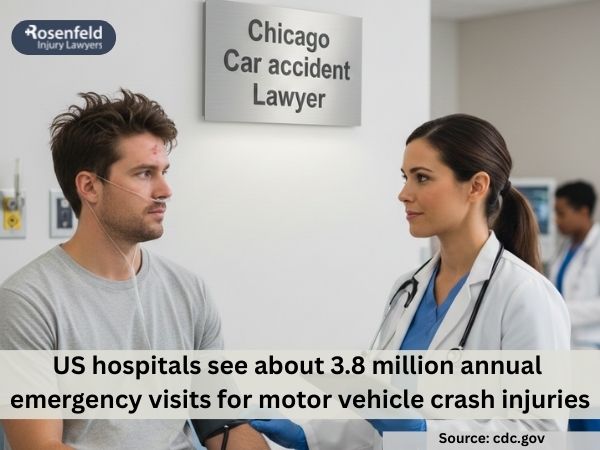
After a motor vehicle accident, getting checked by a medical provider right away is one of the most important steps you can take. Even if you feel fine or think your injuries are minor, head injuries, internal bleeding, soft tissue damage, or other injuries may not appear immediately. Prompt medical care helps protect your health and also strengthens any future personal injury claim by linking your injuries directly to the car crash.
If you were involved in a serious collision, calling 911 and accepting emergency medical care at the scene is often the best course of action. Emergency responders can assess your condition, provide immediate care, and recommend whether you should be transported to the hospital. Urgent care centers are also a good option if symptoms show up within hours or days of the accident. The longer you wait, the more likely it is that insurance companies will argue that your injuries weren’t related to the crash.
It’s common for insurance adjusters to use gaps in treatment or a refusal of ambulance transport against you. They may claim your injuries aren’t as serious as reported or weren’t caused by the accident at all. Early documentation from urgent care centers, follow-up visits, and physical therapy creates a clear medical record that connects your treatment to the collision.
Under Illinois car accident laws, specifically 625 ILCS 5/11-401, drivers involved in a crash that results in injury or death are legally required to stop, remain at the scene, and report the incident to law enforcement. A police report not only fulfills this legal duty but also becomes a key piece of evidence in a personal injury lawsuit. It’s another reason why seeking medical care immediately after a Chicago car accident helps support your case.
Many severe conditions don’t show symptoms right away. After an automobile accident, your body releases adrenaline, a natural response that can temporarily mask pain and injury. Many people assume they’re unhurt and decline medical attention, only to feel worsening symptoms later. This delay can lead to more serious complications and make it harder to link injuries directly to the crash.
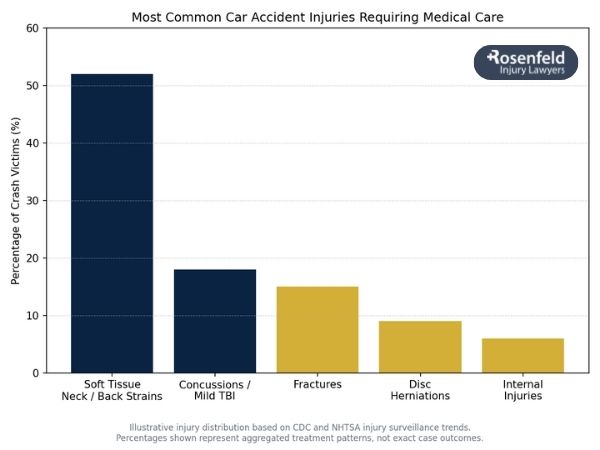
Commonly overlooked injuries include:
Diagnostic imaging, like CT scans, MRIs, or X-rays, along with a complete physical exam, is critical even when there’s no visible trauma. Without early documentation from a medical provider, it becomes much easier for insurance companies to dispute the cause or severity of your accident injuries.
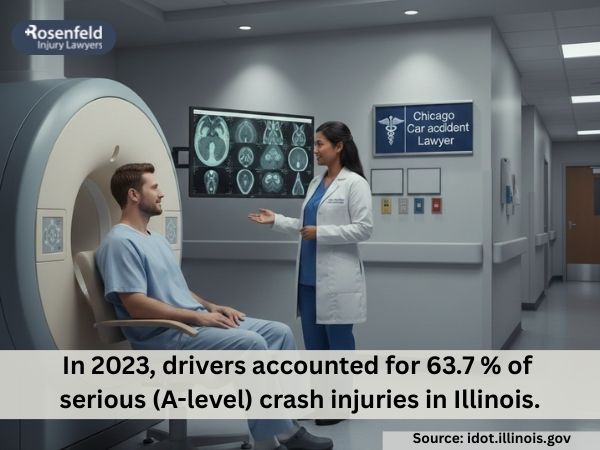
Some car accident injuries don’t show up until 24 to 72 hours–or even longer–after the collision. These delayed-onset injuries are common and can be just as serious as those with immediate symptoms. Unfortunately, waiting too long to get checked out can hurt both your health and your personal injury claim.
Common delayed symptoms to watch for include:
Being involved in a car accident creates a responsibility to pay attention to changes in your health, even if you felt okay at the scene. Leaving without follow-up care and “waiting it out” can result in missed diagnoses and worsening conditions.
Delaying medical attention also gives insurance companies an opening to argue that the car wreck didn’t cause your injuries. In personal injury claims, the timing and consistency of your treatment matter. Gaps in care–or failure to seek treatment at all–can seriously damage your ability to seek compensation through an insurance claim or personal injury lawsuit.
After a car accident, insurance companies carefully examine the timeline of your medical treatment. One of the first things they look for is how soon you sought medical care after the crash. If there’s a delay–or if you miss appointments or stop treatment too early–they may argue that your injuries aren’t serious or weren’t caused by the accident at all. Gaps in treatment often lead to reduced payouts or outright claim denials.
Your medical records play a central role in proving that the accident caused your injuries. These records establish a clear link between the car crash and the harm you’ve suffered. They also document the severity of your condition and the steps taken to recover.
When supported by strong documentation, medical costs become a recoverable category in both insurance claims and personal injury lawsuits. That includes emergency care, diagnostic tests, rehabilitation, follow-up visits, and any ongoing treatment you need.
In many cases, your health insurance may cover initial treatment after a motor vehicle accident. This can include emergency care, hospital stays, diagnostic testing, and follow-up visits. However, using your health insurance provider doesn’t mean the other driver is off the hook. If someone else caused the crash, your insurer may pursue reimbursement through a process called subrogation. This means they have a legal right to recover the money they paid from the at-fault driver’s liability insurance.
Several types of insurance coverage may come into play:
Coordinated billing is essential in Illinois injury cases. Mistakes in how care is billed–or which insurer is charged–can create delays or complications. An experienced car accident attorney can help manage these issues to protect your rights and avoid unnecessary out-of-pocket costs.
Beyond medical expenses, injured victims can pursue additional compensation for losses like lost wages, physical pain, emotional distress, and long-term disability. If a fair insurance settlement isn’t offered, filing a car accident lawsuit may be necessary to recover full damages. An attorney can help calculate the full value of your claim, gather evidence, and take legal action if the insurance company refuses to pay what you’re owed.
To support a car accident claim in Illinois, thorough medical documentation is essential. Emergency room records provide the first link between the crash and your injuries. Follow-up visits, referrals to specialists, and physical therapy notes help establish the ongoing impact on your health and recovery. These records are often the most substantial evidence used to prove the extent of your car accident injuries and justify compensation.
Insurance companies use this documentation for car accident claim evaluation. If your medical records are incomplete or inconsistent, your claim may be undervalued or denied altogether. Detailed treatment notes also help prove chronic pain, lost function, and long-term effects, which are critical in personal injury cases. Keeping clear and organized medical records strengthens your ability to recover compensation to pay medical bills and cover other costs tied to the accident.
After a car accident, getting the proper medical treatment quickly can be complicated by insurance delays and out-of-pocket costs. A car accident lawyer in Chicago can help you get the care you need by working with medical providers who understand personal injury cases. If your own coverage is limited or the other driver’s insurance company is slow to respond, our attorneys can help you access lien-based care, where doctors agree to delay payment until your case is resolved.
This can be critical if you’re facing ongoing treatment, specialist referrals, or physical therapy but can’t afford to wait. Our lawyers also manage communication with insurance companies, making sure medical records, bills, and other documentation are correctly submitted to support your claim.
Importantly, a lawyer’s role is to protect your access to care, not control your treatment. You and your doctors make the medical decisions, while your attorney focuses on securing the compensation needed to get your medical bills paid. This coordinated approach helps you focus on recovery while our team handles the legal process.
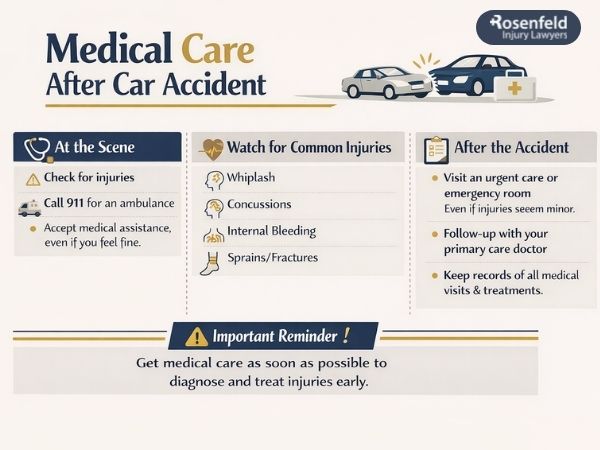
After a car crash in Illinois, victims may pursue compensation for a wide range of medical expenses. These include emergency room treatment, ambulance services, hospital stays, diagnostic testing, surgeries, follow-up appointments, rehabilitation, and any necessary ongoing treatment. Future medical costs related to long-term or permanent injuries may also be included. To claim these damages, medical records and billing documentation must clearly show that the treatment was related to the car accident.
Under Illinois law, the time limit to file a car accident claim is generally two years from the date of the crash. This legal deadline applies to most personal injury lawsuits involving car accidents. If a lawsuit isn’t filed within that period, you may lose the right to seek compensation for your injuries, medical expenses, and other damages. Acting promptly helps preserve evidence and strengthen your case.
If you were injured in a car accident in Chicago, speaking with an experienced attorney can help you get a clear understanding of your legal rights. Our team handles cases involving severe injuries, disputed insurance claims, and uncovered medical expenses. We offer a free consultation to review your case, explain your options, and discuss how to get your medical bills paid. There’s no obligation, just clear answers. Contact a traffic accident lawyer in Chicago today to get legal help.