
100% Focus on Your Recovery,
Chicago Auto Accident Lawyer
Chicago Auto Accident Lawyer
Our Team of Attorneys Are Committed to Maximizing the Value of Your Case



When someone comes to our Chicago-based firm after a rental car accident, they’re often overwhelmed by questions about Illinois rental car insurance law, coverage layers, and who ultimately pays for injuries or property damage. We meet clients every week who were traveling for work, visiting family, or simply trying to rent a vehicle for daily errands, only to find themselves facing confusing rental contract, aggressive insurance provider inquiries, and uncertainty about their rights under Illinois law.
We stand with you through each step of this process. When you’re trying to understand how these laws work, our role as your Chicago auto accident lawyer is to explain how liability coverage and optional rental company protections interact so you can move forward with clarity and confidence.
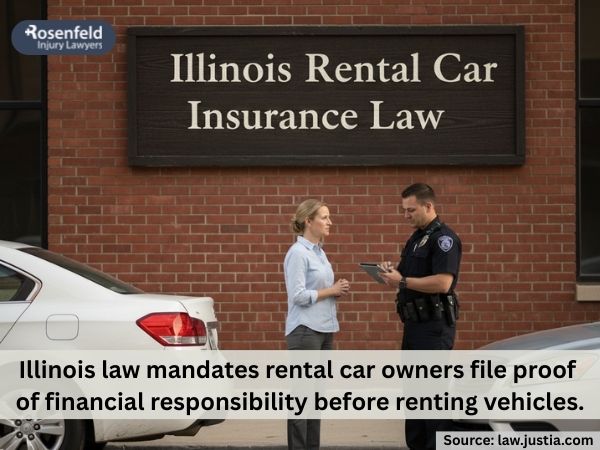
Under Illinois law, both the rental car company and the renter have a legal responsibility to insure. Many clients are surprised to learn that when you rent cars in Illinois, multiple overlapping policies may apply depending on the terms of the rental agreement, the renter’s existing car insurance, and mandatory state laws.
625 ILCS 5/7-601 requires every person who operates a vehicle in Illinois to carry liability insurance meeting state minimums. This includes drivers operating a rental vehicle, meaning the renter must have liability coverage through a personal insurance policy or purchase equivalent protection through the rental company.
Under 625 ILCS 5/9-105, a rental company must maintain liability protection or a bond for its fleet. This policy typically provides secondary or excess liability coverage, stepping in only when the renter’s auto policy does not meet the required limits or when contract terms trigger rental company responsibility.
625 ILCS 27/ governs waivers and disclosures that rental companies must provide. This law clarifies when a renter may be held responsible for physical damage to the rental car and what constitutes a valid waiver.
Understanding which policy applies, and when you might be held liable for accident costs, often requires reviewing both the rental contract and your current policy.
When you drive a rental car in Illinois, several categories of insurance coverage may apply. These work together in layers:
Most Illinois drivers carry comprehensive insurance that provides:
Your existing car insurance policy typically serves as the primary coverage when you drive a rental vehicle, unless the contract or law states otherwise.
Rental companies must maintain liability coverage, but it is often excess coverage. It may apply when:
Many rental contracts restrict unauthorized drivers, limit who qualifies as other authorized drivers, and may impose added fees or exclusions for young drivers or certain business uses.
A violation may void coverage or cause the renter to be held accountable for all damages.
Most rental agencies sell supplemental coverage. Whether these apply depends on contract terms and Illinois law requires certain disclosures under 625 ILCS 27/.
Rental companies commonly offer several insurance options designed to protect renters from specific types of loss. These can provide significant additional protection, but only when understood correctly.
A CDW or LDW is not technically insurance. Instead, it is a waiver that covers damage to the rental vehicle under the contract, meaning the rental company will not pursue the renter for certain types of physical loss.
Waivers may not cover:
Even with a waiver, renters may still be charged for “actual cost,” diminished value, or loss-of-use unless prohibited by law.
SLI increases liability coverage above the minimum policy limits required by Illinois law. This protects renters facing large bodily injury or property damage claims.
PAI provides limited medical expenses and accidental death benefits for the renter and passengers. It can supplement health insurance or MedPay but is usually secondary.
PEC covers personal belongings stolen from the rental car, though it may overlap with homeowners or renters insurance. High-value personal effects may be excluded.
These options shape how much the renter may ultimately reimburse if an accident occurs. They also interact with Illinois car accident insurance coverage options in ways many people aren’t aware of until they’re facing a claim.
We often advise renters to consider additional insurance when:
Many credit cards offer secondary collision coverage, but typically exclude:
We walk clients through these limitations so they know what’s actually covered.
Even when your personal insurance is primary, additional coverage can make a significant difference.
Uninsured and underinsured motorist coverage protects renters when another motorist causes the crash and lacks adequate insurance. This is often critical after a serious vehicle accident.
MedPay pays medical expenses regardless of fault and can help cover treatment immediately after a car accident.
Umbrella coverage provides extra liability protection when damages exceed your auto or rental policy limits.
When Illinois renters are involved in out-of-state accidents, reciprocity laws may automatically adjust the policy’s liability limits to the minimum required by the other state.
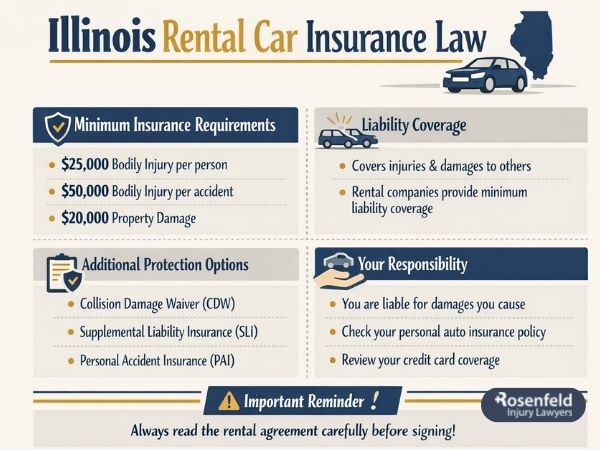
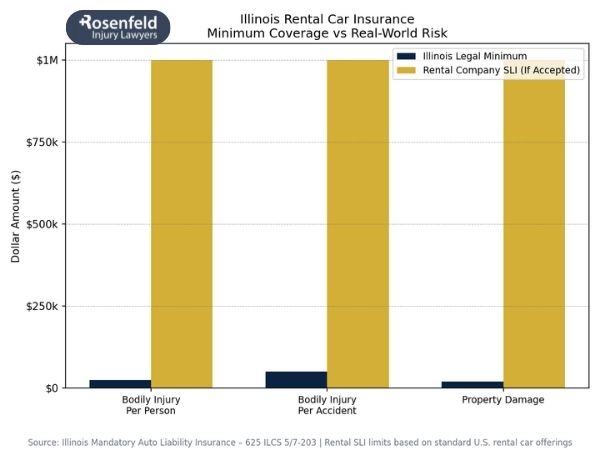
Illinois minimum liability limits are:
These limits also guide how rental company policies are structured. But actual coverage limits may be higher, depending on:
Coverage determines how much the insurance provider compensates and how much the renter may owe.
Liability after a rental car accident depends on fault, insurance terms, and policy exclusions.
The renter’s car insurance generally applies. A renter may be held liable if their policy excludes rental cars or if they violated the rental contract.
The at-fault driver’s insurance should pay. UM/UIM coverage pays if they are uninsured or underinsured.
Illinois follows comparative negligence under 735 ILCS 5/2-1116, meaning a person who is more than 50% at fault cannot recover damages, and recovery is reduced by percentage of fault.
Liability may extend to the employer under vicarious liability rules or commercial insurance policies.
If someone not listed as an authorized driver, or someone without a valid driver’s license, operates the car, the renter may be held responsible even if that driver caused the accident.
Insurer disputes are common in rental cases. We help our clients navigate these disagreements and pursue the compensation they deserve.
Financial responsibility laws ensure that every driver in Illinois, including renters, can pay for injuries and damage they cause. Under 625 ILCS 5/7-601, the renter must carry liability coverage. Under 625 ILCS 5/9-105, the rental company must also maintain a liability buffer.
Waivers of responsibility for damages affect liability, but they don’t replace insurance. Insurers determine primary vs. excess coverage by reviewing:
Because several insurance policies may apply, these cases often require a detailed legal review.
If you are involved in a rental car accident, we recommend:
We guide our clients through each step to protect their rights and preserve evidence.
Rental car accidents often involve overlapping policies, complex contracts, and disputes about responsibility. As your Chicago traffic accident lawyer, we help when:
We review each insurance policy, interpret contract clauses, negotiate with insurers, and stand beside you throughout the claims process. We handle these cases on a contingency fee basis, meaning you owe no upfront costs and no attorney fees unless we recover compensation for you. Contact us today for a free consultation.