
100% Focus on Your Recovery,
Chicago Auto Accident Lawyer
Chicago Auto Accident Lawyer
Our Team of Attorneys Are Committed to Maximizing the Value of Your Case



When someone comes to our Chicago-based firm after a complicated crash, one of the first questions we hear is: Does insurance follow the car or the driver in Illinois? Many of our clients borrowed a friend’s vehicle, let a family member use their car, rented a vehicle for a weekend trip, or were driving for work when the collision happened. The rules feel confusing because car insurance can follow both the vehicle and the person depending on various factors.
As your Chicago auto accident attorney, we help you understand how these laws work in real life. If you’re facing uncertainty or pressure from an insurance company, we can help you make sense of which insurance policies apply, which exclusions may impact coverage, and how to protect your rights after a crash involving someone else’s vehicle or your own.
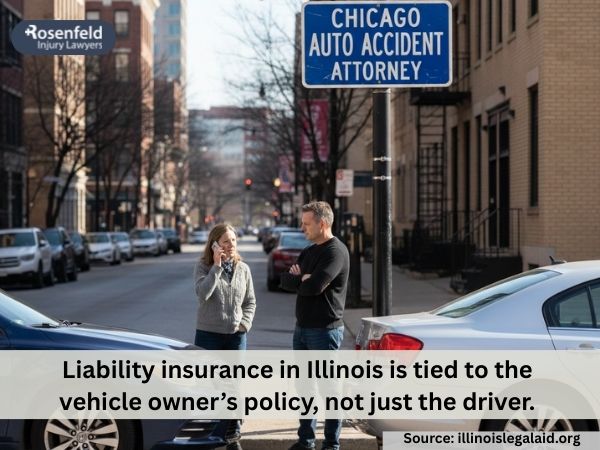
Illinois is an at-fault insurance state, meaning the driver who is at fault is financially responsible for injuries, property damage, and other covered losses. But the real issue is which car insurance policy pays first.
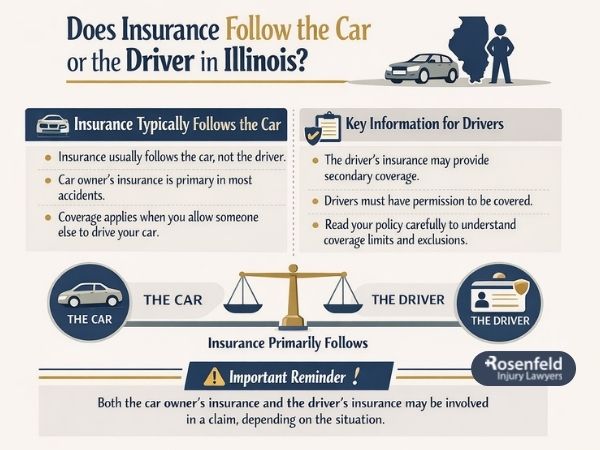
In most situations, liability coverage follows the car, not the individual driver. If someone uses your vehicle with permission, your owner’s car insurance policy is usually the primary coverage before any secondary policies apply.
Two statutes explain why car insurance typically attaches to the vehicle:
Mandatory Insurance Requirements (625 ILCS 5/7-601): This law requires every vehicle in Illinois to carry liability insurance. Coverage is tied to the vehicle, meaning it applies to the car or the driver using it with permission and establishes minimum coverage limits for bodily injury and property damage.
Proof of Financial Responsibility (625 ILCS 5/9-105): This statute describes when a driver must show proof of insurance and reinforces that Illinois treats insurance as attached to the vehicle unless a policy excludes certain drivers.
Together, these laws clarify why insurance starts with the insured vehicle before turning to secondary personal coverage when needed. Every driver must carry Illinois auto insurance coverage that meets state minimums, though many choose higher limits or optional protections that influence how insurance follows the car or the driver. Ultimately, several factors, such as permission, household-member rules, commercial use, and policy exclusions, determine which insurance coverage applies.
When clients ask whether collision coverage is attached to the vehicle or the driver, we explain that collision is tied to the insured vehicle. If the car hits another object or the vehicle rolls, collision coverage pays for damage to your car regardless of who was driving, unless exclusions apply.
An insurance company may deny a covered claim if the driver was unauthorized, if the car was used for commercial purposes outside the auto policy, if fraud occurred, or if the driver was an excluded driver.
If a friend borrows your car and crashes it, collision usually still applies, but disputes arise when other household members aren’t listed. That’s why we help clients review policy documents and push back when insurers try to deny a valid insured loss.
Comprehensive coverage also follows the insured vehicle, not the person driving. It applies in situations unrelated to a driver’s conduct, including:
If your car is stolen and someone crashes it, comprehensive typically covers the damage to your car. The identity of the driver does not matter unless the insurer claims the loss resulted from fraud or intentional conduct.
Illinois follows the permissive use rule, which means that insurance cover others drivers as well. If someone drives your car with permission, your owner’s policy is the primary insurance, and the driver’s policy becomes secondary only after your coverage limits are exhausted. This applies whether a friend borrows your car, household members use it, or another licensed driver operates the vehicle.
Common issues include unlisted family members, excluded drivers, permissive use drivers, or situations where someone uses the car regularly but isn’t on the car insurance policy.
A driver’s own car insurance policy may provide excess costs coverage once the owner’s policy is exhausted, especially when the crash causes major injuries or damage.
Coverage may be denied for non-permissive use, when the driver is an excluded driver, or when the vehicle was used for commercial activities outside the auto policy.
If you are driving someone else’s vehicle and an accident occurs, the car owner’s insurance policy is almost always primary coverage.
Your own personal coverage may apply if:
We see several recurring issues:
Borrowing a relative’s or friend’s car sounds simple, but insurance disputes often arise, especially when the insurance provider argues the driver was a “regular” user who should have been listed on the policy.
When a rental car is involved, Illinois rental car insurance coverage follows different rules. The rental company’s protection applies first if purchased, followed by your auto policy and then any credit-card supplemental coverage. Understanding which insurance covers each category of damage can make or break a claim.
Driving a vehicle without the car owner’s permission creates a non-authorized use situation.
Coverage is usually denied if you drive without consent:
If a car is stolen and an accident happens, the owner is not responsible. Coverage may shift to:
Allowing other drivers behind the wheel who pose known risks can create separate legal problems.
Illinois recognizes negligent entrustment claims when a vehicle owner knowingly allows a dangerous or unfit driver to use their car. That includes:
If the insurer believes the policyholder knowingly violated the terms of the car insurance policy, it may try to avoid paying an insurable claim.
With car sharing platforms like Turo, Getaround, and other peer-to-peer systems, questions of whether insurance follows the car become much more complicated.
If an accident happens and the insurance agent or provider claims the rental was not disclosed, the owner may face unexpected gaps in insurance.
Personal use policies generally do not cover commercial purposes, including:
Uber and Lyft provide tiered coverage:
Using your car for business purposes without the proper endorsements can lead to denials of coverage provided under your personal policy.
Some insurance policies follow you, even when you are in else’s vehicle, such as a rental car or a friend’s car.
These include:
These protections apply even when you are a passenger, pedestrian, cyclist, or borrowing a car temporarily. Because these benefits follow the driver, not the vehicle, they are crucial in crashes involving uninsured or underinsured motorists.
Many people don’t realize how many problems can arise when vehicle or driver insurance disputes overlap. We’ve helped clients work through:
As your Chicago traffic accident attorney, we stand with you through each step of the process. We handle these cases on a contingency fee basis, so you owe no upfront costs and no attorney fees unless we recover compensation for you.
If you have questions about how different coverage choices apply in your situation, contact us today for a free consultation.