- Free Consultation: (312) 313-0306 Tap Here To Call Us




What to Do After a Motorcycle Accident in Chicago: A Step-by-Step Guide


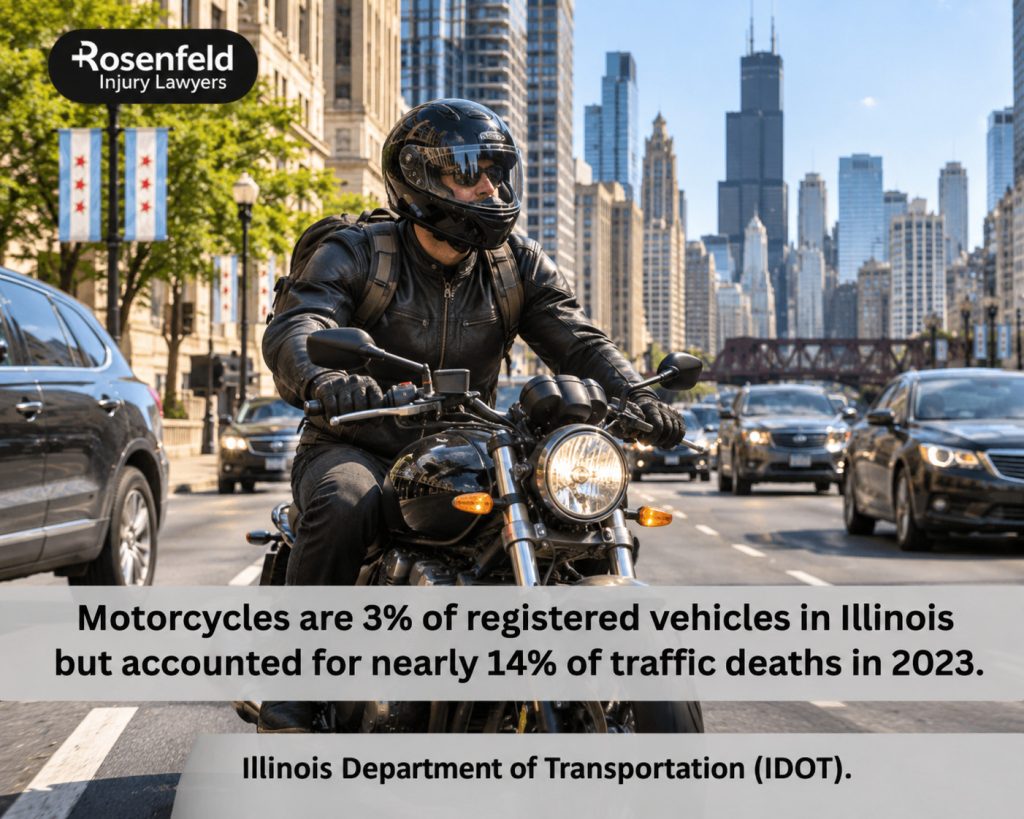
What to do after a motorcycle accident comes down to five moves: get to safety, call 911, see a doctor, document everything, and speak with a lawyer before you talk to an insurer. Each step protects your health and your claim. Here is how to handle them one at a time.
What Should You Do at the Crash Scene?
Get out of traffic if you can, shut off your engine, and call 911. If your neck or back hurts, stay still and wait for paramedics.
Adrenaline can hide pain. Many riders feel fine at the scene and feel very different by nightfall. Turn on your hazard lights if your bike still runs, since a second collision is a real risk on busy roads like Lake Shore Drive. That is what to do after a motorcycle accident when your head is still spinning: stay calm, stay visible, and let medics check you.
Do You Have to Call the Police After a Motorcycle Crash?
Yes, call 911 whenever someone is hurt. The Illinois Vehicle Code, at 625 ILCS 5/11-407, requires notice to police when a crash causes injury or death. Ask the officer for a report number before you leave.
A Chicago Police Department report records the people involved, the location, and the officer’s notes. Insurers lean on it heavily. Read your copy and flag anything that looks wrong. A report is an early step in what to do after a motorcycle accident, so do not skip it.
Why See a Doctor Even If You Feel Fine?
Get checked the same day. Concussions and internal bleeding can stay quiet for hours, which is why delayed injuries catch so many people off guard.
Medical records also connect your injuries to the crash. Without them, an insurer can claim your pain came from somewhere else. Our page on motorcycle accident injuries explains the most common ones. Tell the doctor about every ache. Keep every bill, discharge paper, and prescription.
What Evidence Should You Collect?
Take photos, gather witness contacts, and keep your riding gear exactly as it is. This proof shows how the crash happened and how badly you were hurt.
- Photos of the road, skid marks, signals, vehicle damage, and your injuries
- Names and phone numbers for witnesses
- The other driver’s name, plate number, and insurance details
- Your helmet, jacket, gloves, and boots, unwashed and unrepaired
Preserving evidence is the quiet half of what to do after a motorcycle accident. Hold off on repairing your bike until the damage is fully documented.
What If the Driver Leaves the Scene?
Call 911 and write down everything you remember about the vehicle. Your own uninsured motorist coverage may help, depending on your policy.
Note the color, make, partial plate, and direction of travel. Ask nearby businesses about cameras. Our guide to hit and run accidents covers the early steps, and our page on uninsured motorist claims explains the coverage.
Should You Talk to the Other Driver’s Insurer?
Not before you get advice. An insurance adjuster may ask for a recorded statement, and your words can be used to argue that you share the blame.
Give your name and contact details, then stop. Do not guess about speed or what you could have done differently. Do not sign anything. Fault disputes are common in motorcycle vs car accident claims, so careful wording matters. Knowing what to do after a motorcycle accident includes knowing what not to say.
Can You Recover If You Were Partly at Fault?
Often yes. Illinois uses modified comparative fault under 735 ILCS 5/2-1116. You can recover if you are 50 percent or less at fault, but your award drops by your share. At 51 percent, you recover nothing.
Riders face bias, and insurers may claim you were speeding without proof. Our page on at-fault motorcycle accident claims walks through how shared blame works. Illinois does not generally require adult riders to wear helmets, and you can read more on the Illinois motorcycle helmet law.
How Long Do You Have to File a Claim?
Most injured riders have two years from the crash date to file a lawsuit under 735 ILCS 5/13-202. Claims involving government vehicles can carry shorter notice deadlines.
Evidence fades long before a deadline passes. Witnesses move and video gets erased. Our page on the Illinois motorcycle accident statute of limitations explains the timing in more detail.
When Should You Call a Motorcycle Accident Lawyer?
As soon as you can, ideally before you give any recorded statement. Early help protects evidence and keeps insurers from steering the story.
A Chicago motorcycle accident lawyer can collect records, deal with adjusters, and explain what a claim may be worth. Serious injuries or a driver who fled make early advice more useful. That is the last piece of what to do after a motorcycle accident: get guidance while the facts are fresh.
Frequently Asked Questions
Move it only if it blocks traffic and you can do so safely. Take photos first, because its position can show how the crash happened.
Yes. Illinois does not generally require adult riders to wear helmets, and that does not excuse a careless driver. Keep every medical record.
Yes. Injured passengers can pursue the negligent party, whether that was the rider or another driver. Medical records and witness details support the claim.
Not until you understand your full medical picture. Early offers may not cover future treatment, lost income, or lasting injuries.
There is no set timeline. Injury severity, treatment length, fault disputes, and insurance coverage all affect how long a claim takes.
Ready to Talk About Your Motorcycle Crash?
If you were injured in a motorcycle accident and are unsure what to do next, Chicago Auto Accident Lawyer is here to help. Contact us to discuss your accident, understand your legal options, and learn how you may pursue compensation for your injuries. Our attorneys can help investigate the crash, communicate with insurance companies, gather supporting evidence, and pursue damages for medical expenses, lost wages, and other losses. We offer free consultations, and you pay no attorney fees unless we recover compensation for you. Let us help you take the next step toward protecting your rights and moving forward.
 Legally Reviewed By
Attorney Jonathan Rosenfeld
Content legally reviewed by Jonathan Rosenfeld This page has been reviewed for legal accuracy by Jonathan Rosenfeld, a Chicago personal injury attorney with nearly 25 years of experience representing people injured in car, truck, motorcycle, pedestrian, and rideshare accidents. Jonathan has recovered more than $450 million in settlements and verdicts for injured clients and families in Chicago. He holds a 10/10 rating on Avvo, is a member of the Million Dollar Advocates Forum, and has been repeatedly recognized by Super Lawyers. Jonathan leads the firm’s approach to holding insurance carriers and corporate defendants accountable for serious traffic injuries.