- Free Consultation: (312) 313-0306 Tap Here To Call Us




What Are the Most Common Causes of Truck Accidents in Chicago?


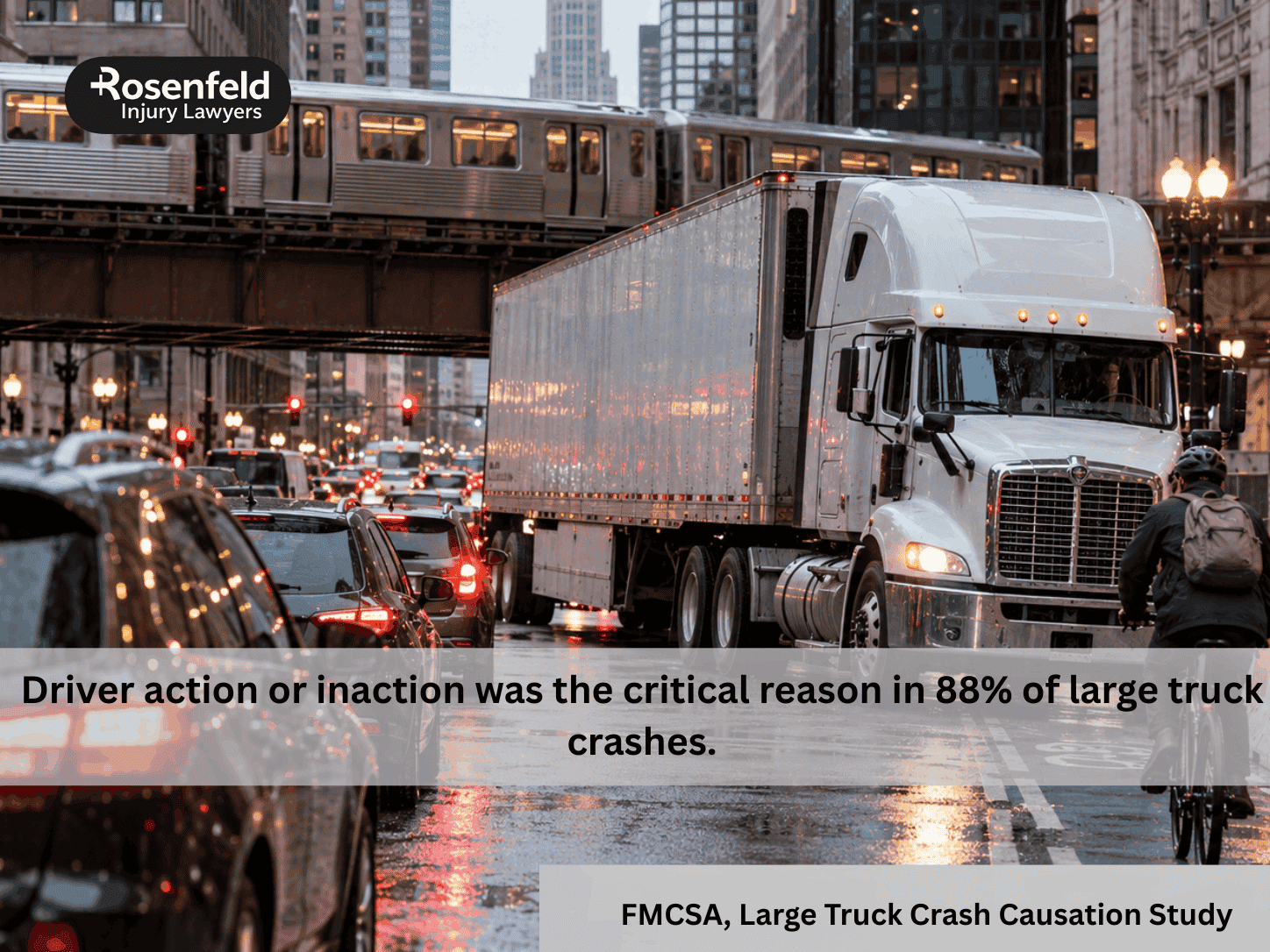
Truck accidents in Chicago can happen for many reasons, including speeding, distracted driving, driver fatigue, unsafe lane changes, following too closely, mechanical problems, and improperly loaded cargo. Because commercial trucks are much larger and heavier than passenger vehicles, these mistakes can cause serious truck accident injuries.
Chicago’s busy roads, heavy traffic, construction zones, and changing weather can create additional risks. Knowing the common causes of truck accidents can help explain how a crash occurred and what may need to be investigated afterward.
Key Takeaway
The common causes of truck accidents include driver error, vehicle problems, and cargo issues. Identifying the cause may require examining the truck, driver records, maintenance history, and other evidence.
What Are the Most Common Causes of Truck Accidents in Chicago?
Several factors can contribute to a truck accident, and more than one may be involved in the same crash. Driver behavior, road conditions, vehicle problems, and cargo issues can all play a role.
Speeding
A truck traveling too fast may need more time and distance to stop or respond to changing traffic. Heavy Chicago traffic, construction zones, and changing weather can make excessive speed even more dangerous. A speeding truck may also have less time to avoid a sudden traffic hazard.
Distracted Driving
Cell phones, navigation systems, dispatching devices, food, and other activities can distract truck drivers. Looking away from the road, even briefly, can prevent a driver from seeing stopped traffic or another vehicle in time to react. This can be especially dangerous on busy Chicago roads where traffic patterns can change quickly.
Driver Fatigue
Long hours on the road can leave truck drivers tired and affect their reaction time, concentration, and judgment. Federal regulations limit how long commercial drivers can operate without required rest periods. A fatigued driver may also have difficulty making safe decisions or responding to unexpected traffic conditions.
Unsafe Lane Changes
Large trucks have significant blind spots, making lane changes more difficult. A driver who fails to check surrounding traffic may move into an occupied lane or force another vehicle to take evasive action. These mistakes can result in sideswipe crashes or collisions with vehicles traveling alongside the truck.
Following Too Closely
Trucks need more distance to stop than passenger vehicles. When a truck follows another vehicle too closely, the driver may not have enough time to react if traffic suddenly slows, increasing the risk of a rear-end collision. The greater size and weight of a commercial truck can make these crashes particularly serious.
Mechanical or Maintenance Problems
A truck accident may also result from worn tires, defective brakes, steering problems, or other mechanical issues. Maintenance and inspection records can help determine whether a vehicle problem contributed to the crash. Regular maintenance is important because equipment problems can affect a truck’s ability to stop, steer, or remain under control.
Improperly Loaded Cargo
Cargo must be properly distributed and secured before a truck begins a trip. If a load shifts while the truck is moving, it can affect the vehicle’s balance and handling and may contribute to a rollover or loss of control. Improperly secured cargo can also create hazards for other drivers if materials fall from the truck.
What Should You Do After a Truck Accident in Chicago?
After a truck accident, seek medical attention and report the collision. If it is safe to do so, photograph the vehicles and accident scene and collect contact information from the other parties and witnesses.
Evidence such as driver records, inspection reports, maintenance documents, photographs, and electronic data may help establish how the crash happened. Truck accidents may also involve the trucking company, a maintenance provider, a cargo loader, or another party.
FAQs About Truck Accidents in Chicago
What is the most common cause of truck accidents?
There is no single cause of every truck accident. Speeding, fatigue, distracted driving, unsafe lane changes, following too closely, mechanical problems, and cargo issues can all contribute to collisions.
Are truck drivers responsible for all truck accidents?
No. Responsibility depends on the circumstances. A crash may involve the truck driver, trucking company, maintenance provider, cargo loader, another driver, or multiple parties.
Can a mechanical problem cause a truck accident?
Yes. Problems involving brakes, tires, steering, or other equipment can affect a truck’s ability to operate safely. Maintenance and inspection records may help determine whether a mechanical problem contributed to the crash.
Why are truck accidents often more serious than car accidents?
Commercial trucks are substantially larger and heavier than passenger vehicles. That difference in size and weight can result in significant forces during a collision and increase the risk of serious injuries to people in smaller vehicles.
Speak With a Chicago Truck Accident Lawyer
Truck crashes can have different causes, and determining what happened may require more than examining the vehicles after the collision. If you were injured in a truck accident, a Chicago truck accident lawyer can review the circumstances and explain your legal options.
 Legally Reviewed By
Attorney Jonathan Rosenfeld
Content legally reviewed by Jonathan Rosenfeld This page has been reviewed for legal accuracy by Jonathan Rosenfeld, a Chicago personal injury attorney with nearly 25 years of experience representing people injured in car, truck, motorcycle, pedestrian, and rideshare accidents. Jonathan has recovered more than $450 million in settlements and verdicts for injured clients and families in Chicago. He holds a 10/10 rating on Avvo, is a member of the Million Dollar Advocates Forum, and has been repeatedly recognized by Super Lawyers. Jonathan leads the firm’s approach to holding insurance carriers and corporate defendants accountable for serious traffic injuries.