
100% Focus on Your Recovery,
Chicago Auto Accident Lawyer
Chicago Auto Accident Lawyer
Our Team of Attorneys Are Committed to Maximizing the Value of Your Case



Chicago’s highways are some of the busiest in the country, with constant movement of freight in and out of the region. With this heavy traffic, truck drivers must follow specific safety practices to reduce risk for themselves and others. Our law firm understands how quickly a routine trip can turn dangerous when proper safety measures are overlooked. That’s why we’re committed to representing victims of serious trucking collisions and providing resources like these truck driver safety tips to help prevent them.
Whether you’re operating a flatbed trailer across I-294 or making deliveries through city streets, your decisions behind the wheel matter. As attorneys focused on truck accidents in Illinois, we’ve seen how preventable errors can cause lifelong harm. These safety tips are essential for avoiding collisions, complying with regulations, and protecting your livelihood.
Large trucks make up a small percentage of total traffic, yet they are involved in a significant share of fatal crashes. Their size, weight, and extended stopping distances mean even a minor error can cause devastating harm. Tractor-trailer units and other commercial vehicles require far more skill and attention than passenger cars, especially on urban streets or during adverse weather and poor road conditions.
Truck drivers must stay alert, often while hauling heavy loads over long distances. A fully loaded truck can weigh up to 80,000 pounds. That kind of force amplifies the consequences of rear-end collisions, wide turns, and sudden stops. These aren’t just mechanical challenges; they’re serious safety risks that demand constant vigilance.
Bus drivers face similar challenges, especially in dense areas with school zones, pedestrian traffic, and sudden stops. Whether you’re behind the wheel of a semi or a passenger coach, your role carries a higher level of responsibility than most motorists realize. Practicing defensive driving and understanding traffic patterns can help prevent accidents before they happen.
Defensive driving isn’t just a suggestion; it’s essential. The size and weight of large vehicles make it much harder to recover from sudden traffic changes, lane shifts, or driver errors nearby. Anticipating the behavior of other drivers helps prevent accidents and gives truck drivers more time to respond to unexpected hazards.
One of the most important defensive driving tips is to scan ahead. This means watching the road beyond the vehicle immediately in front of you, looking at least a quarter mile ahead on highways. Spotting brake lights, debris, slow traffic, or emergency vehicles early gives you more options to stop safely or adjust your route.
Defensive driving also includes checking blind spots often, watching for erratic behavior from other motorists, and being especially alert in traffic congestion. Many truck drivers know that avoiding overreactions is just as important as reacting quickly. Keep your hands on the wheel, avoid distractions, and stay focused at all times.
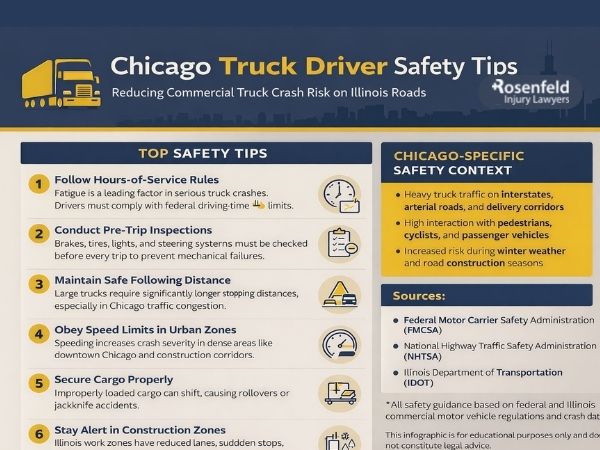
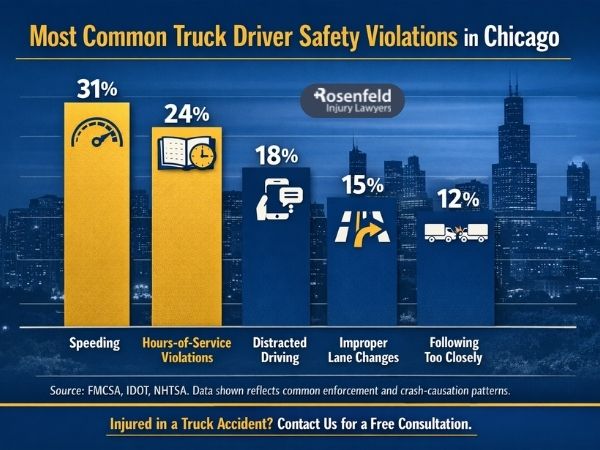
Speed limits exist to protect everyone on the road, but they carry even more weight for truck drivers. A truck’s stopping distance increases significantly with speed, especially when carrying a full load. Exceeding the posted limit – even by a small amount – can mean the difference between a near miss and a multi-vehicle collision.
Many roads in and around Chicago have separate speed limits for commercial vehicles. These are not suggestions. They reflect the greater risk posed by large trucks due to their momentum, height, and braking needs. Ignoring these limits can lead to rear-end collisions, jackknifing, or dangerous lane changes that put other drivers at risk.
Watch for lowered limits in construction zones and during inclement weather. Adjust your speed to match road conditions, traffic flow, and visibility. Sticking to speed limits helps truck drivers maintain control, stay within safe following distances, and comply with both traffic laws and company policies.
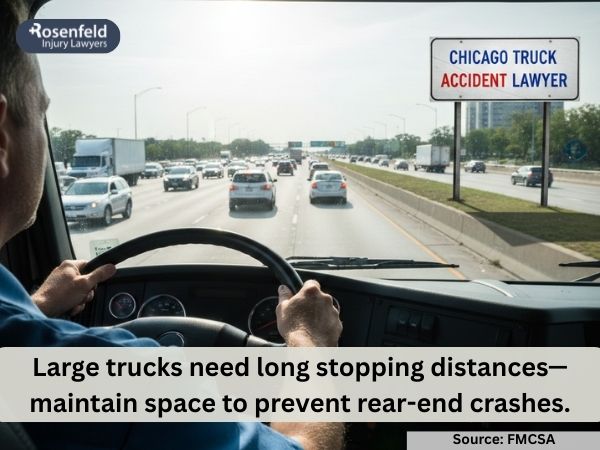
Keeping a safe distance around your vehicle – also known as maintaining a space cushion – is a critical safety measure. Large trucks need more time and distance to slow down or stop safely. Crowding smaller vehicles or following too closely reduces your ability to respond to sudden changes, especially in city traffic or during lane merges.
The general rule is to leave at least one second for every 10 feet of vehicle length between you and the vehicle ahead. That number should increase with speed, in poor weather conditions, or when driving through construction zones. Space cushions also help protect against rear-end collisions if traffic suddenly comes to a stop.
Truck drivers should maintain awareness of the space on all sides, not just in front. Pay close attention to blind spots, school zones, and heavy traffic areas where vehicles may cut into your lane. A proper space cushion gives you room to stop safely, change lanes carefully, and avoid collisions caused by other motorists’ mistakes.
Every truck and bus has large blind spots, areas where vehicles disappear from your view, even with properly adjusted mirrors. These blind spots are especially dangerous during changing lanes, turning, or stopping. Many truck drivers have been involved in collisions simply because a smaller vehicle was hidden from sight.
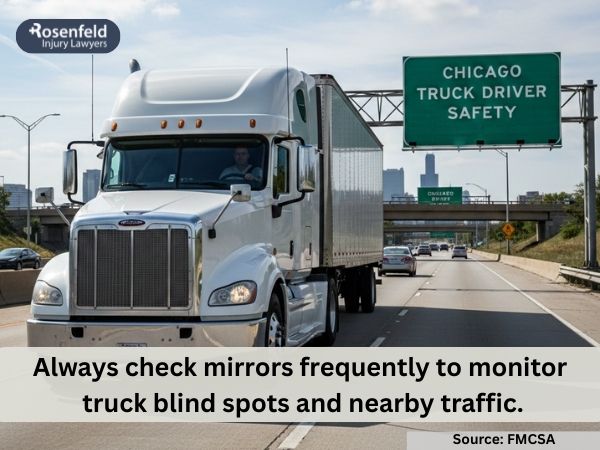
The most common blind spots for large trucks are directly behind the trailer, along the right side extending several lanes, and just in front of the cab. Always assume there are other motorists in those areas, even if you can’t see them. This mindset encourages safer habits, such as checking mirrors often, using signal lights early, and waiting a few seconds before moving over.
Newer trucks may have cameras or sensors, but technology isn’t foolproof. Blind spots are still a factor, especially in heavy traffic. Stay alert in situations where other vehicles might hover alongside your trailer, particularly near truck stop exits, merging ramps, or tight city streets.
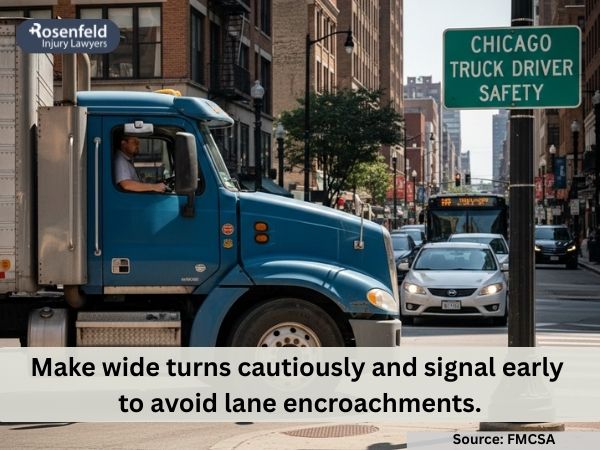
Lane changes in large trucks require more space and time than most motorists realize. Because of a truck’s length and blind spots, even a well-executed lane change can be risky if not clearly communicated. One of the most effective safety tips is to signal early, giving drivers plenty of notice before you begin to move.
Turn signals should be activated several seconds before switching lanes or merging. This is especially important on highways, in construction zones, and near exits where other motorists may be speeding up or slowing down. The earlier you signal, the more time nearby vehicles have to adjust.
Truck drivers are trained to wait an extra beat even after signaling, allowing for last-minute movements by other road users. It’s also smart to recheck mirrors and blind spots immediately before initiating the lane change. This level of care helps prevent sideswipes, forces fewer hard brakes by other drivers, and supports overall road safety.
Distracted driving is one of the leading causes of tractor-trailer accidents. For truck drivers, the consequences of even a brief distraction can be catastrophic. The sheer size and momentum of a big truck leave little room for error, especially in fast-moving traffic or tight urban areas like downtown Chicago.
Distractions come in many forms, such as phones, GPS adjustments, food, or even fatigue. While it may be tempting to check a message or look at paperwork between stops, doing so while driving can take your eyes off the road long enough to miss brake lights, traffic laws, or work zone signs.
Federal regulations prohibit commercial drivers from texting while operating a vehicle. Many trucking companies also have zero-tolerance policies on distracted driving. Staying focused helps prevent accidents, protects your license, and keeps other road users safe. Always pull over safely at a truck stop or rest area if you need to make a call, check your truck atlas, or handle paperwork.
Driver fatigue is a serious threat to everyone on the road. Truck drivers spend long hours behind the wheel, often through overnight shifts or during heavy traffic. Without enough rest, reaction times slow, decision-making suffers, and the risk of serious or fatal crashes increases dramatically.
Federal hours of service (HOS) regulations are in place to limit how long commercial drivers can operate without rest. These rules exist for a reason. Ignoring them not only violates federal law but also endangers lives. Fatigue-related collisions can be just as deadly as those caused by alcohol or speeding.
Taking adequate breaks isn’t just about checking a box in your service log. It’s about staying alert and fit to drive. Use downtime to stretch, hydrate, and eat properly. Park at a designated truck stop when possible to rest in a safe area. Truck drivers who prioritize rest are far less likely to be involved in rear-end collisions or lane departures due to drowsiness.
Getting lost or taking an unsafe route can put truck drivers in dangerous situations, especially when operating large vehicles through urban areas or unfamiliar terrain. A reliable GPS or mapping device designed for commercial vehicles can help you avoid low bridges, weight-restricted roads, tight turns, and residential neighborhoods not meant for big trucks.
Consumer-grade navigation tools often don’t account for the size, height, or load weight of a tractor-trailer unit. Relying on them can lead to last-minute lane changes, missed exits, or getting stuck on restricted routes. A GPS specifically made for trucking can guide you along roads that safely support your vehicle’s length and cargo type.
Before starting any trip, plan your trip with a current truck atlas or a route approved by your carrier. This simple step helps prevent detours, reduces stress, and keeps your schedule on track. Technology is useful, but it works best when paired with experience and preparation.
Loose or shifting cargo can quickly turn a routine delivery into a disaster. Whether you’re hauling flatbed loads, dry vans, or flatbed trailers, ensuring your freight is properly secured is a non-negotiable safety measure. Poorly balanced or unsecured loads can affect steering, increase stopping distance, or even cause rollovers.
Federal cargo securement regulations require that all freight be properly tied down or locked using approved equipment, including load locks, straps, chains, and tarps when necessary. These rules apply to all types of commercial vehicles and are strictly enforced during inspections and after any roadway incident.
Before hitting the road, check that your cargo is stable and evenly distributed. Make sure the fifth wheel assembly is locked and that all doors or covers are latched properly. Post-delivery, double-check the load paperwork to confirm everything was delivered safely and intact. A quick review can help you prevent accidents caused by shifting weight or dropped cargo.
Construction zones are high-risk areas for all drivers, but especially for those operating large trucks or buses. Narrow lanes, reduced speed limits, uneven pavement, and unexpected stops can all create hazards, especially when you’re managing a tractor-trailer unit with a full load. Collisions in these areas often involve road workers, passenger vehicles, or even other trucks caught off guard.
Watch closely for work zone signs, lane shifts, and reduced speed limits well in advance. These warnings are there to give you time to slow down and react safely. Heavy fines also apply for speeding or aggressive driving through these zones, particularly for commercial vehicles.
Stay alert to sudden movements by other drivers, especially those unfamiliar with work zones. Many truck drivers know that accidents often happen when vehicles cut across lanes to avoid barriers or exit points. Maintain a space cushion, reduce distractions, and drive cautiously through all construction areas, even when traffic seems clear.
A dash cam can be one of the most valuable tools a truck driver has. In the event of a crash, clear video footage can show precisely what happened, protecting you from false claims and helping investigators determine fault. This is especially important in establishing negligence in truck accident cases, where liability can lead to serious financial and legal consequences.
Many truck drivers are wrongly blamed in accidents involving other vehicles, especially in lane changes, sudden stops, or side-swipes. Without evidence, it often becomes your word against someone else’s. A dash cam provides a factual record, not just of the crash itself, but of the moments leading up to it, including traffic patterns, driver behavior, and weather conditions.
Installing a reliable camera system is a small investment compared to the cost of defending yourself in a lawsuit. For drivers working independently or for trucking companies, dash cam footage may be the key to proving that you followed traffic laws and took reasonable actions to prevent accidents.
Post-trip inspections are a critical part of every truck driver’s daily routine. Skipping them – or rushing through – can lead to missed maintenance issues that create serious hazards on the road. Brakes, tires, lights, and securement systems all need to be reviewed carefully at the end of each shift, especially after a long haul or driving through rough terrain.
A thorough inspection should include checking the brake lines, steering system, wheel assembly, air compressor, and low air pressure alarm. These systems work together to keep a tractor-trailer unit under control. Catching signs of wear or damage early allows you to fix problems before they cause failures or contribute to fatal crashes.
Also, take time to examine your load weight, fifth wheel assembly, and any signs of shifting cargo. While pre-trip inspections ensure you’re starting safely, post-trip checks help you catch new issues that may have developed during the drive. For many truck drivers, consistent inspections are what keep their truck – and their career – on the road.
Even when truck drivers follow every rule and safety tip, accidents can still happen, especially in a city as congested as Chicago. Whether you’re involved in a collision with other vehicles, struck by a motorist who ignored traffic laws, or unfairly blamed for a multi-vehicle crash, legal support is essential. You don’t have to face the aftermath alone.
An experienced truck accident attorney in Chicago can review the details of your case, protect your rights, and work to limit your liability. Trucking accidents often involve complex insurance claims, regulatory issues, and competing versions of events. Having a legal advocate on your side helps ensure your version of the incident is clearly heard and backed by evidence such as dash cam footage, inspection records, and service log details.
Whether you’re an independent operator or working under a large carrier, getting legal advice early can make a significant difference in the outcome. A skilled attorney understands how to defend truck drivers against claims of negligence in truck accident cases and works to protect your record, your license, and your income.
If you’ve been involved in a crash – whether with other trucks, passenger vehicles, or while hauling flatbed loads through tight corridors – don’t wait to get legal help. The aftermath of a trucking accident can impact your livelihood, insurance coverage, and ability to continue working. Speaking with a qualified traffic accident attorney is a smart step toward protecting your interests.
Our legal team understands the challenges faced by truck and bus drivers, including the pressure to meet deadlines, follow strict regulations, and stay alert through long shifts. We’ll review the evidence, explain your options, and handle communication with insurers or other parties so you can focus on recovery and compliance.
If you’re dealing with a claim or citation related to a trucking incident in the Chicago area, reach out to schedule a free, no-obligation case review. A consultation with an experienced traffic accident attorney can help you avoid costly mistakes and take informed steps forward.