
100% Focus on Your Recovery,
Chicago Auto Accident Lawyer
Chicago Auto Accident Lawyer
Our Team of Attorneys Are Committed to Maximizing the Value of Your Case



Understanding Uber insurance requirements in Illinois is critical for anyone injured in a rideshare accident, whether you’re a passenger, Uber driver, or someone hit by a rideshare vehicle. Insurance rules for transportation network companies are complex, and many victims don’t realize that different coverage applies depending on what the driver was doing at the time of the crash. Without the right legal guidance, it’s easy to run into coverage gaps that leave you responsible for medical bills, property damage, or lost wages.
Our Chicago Uber accident attorneys help clients across Cook County and throughout Illinois understand their rights after a serious crash involving an Uber vehicle. We know how to deal with Uber’s insurance coverage, determine which policies apply, and fight for full compensation on your behalf. If you’re struggling with the legal process or facing delays from insurers, we’re here to take the pressure off and help you move forward.
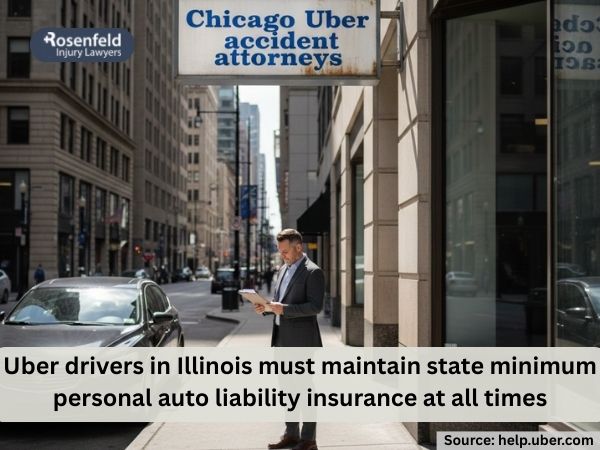
Yes, Uber provides liability insurance in Illinois, but coverage depends on the driver’s status on the app. Under the Illinois Transportation Network Provider Act (625 ILCS 57/), Uber is classified as a transportation network company and is required to carry specific insurance coverage for its drivers.
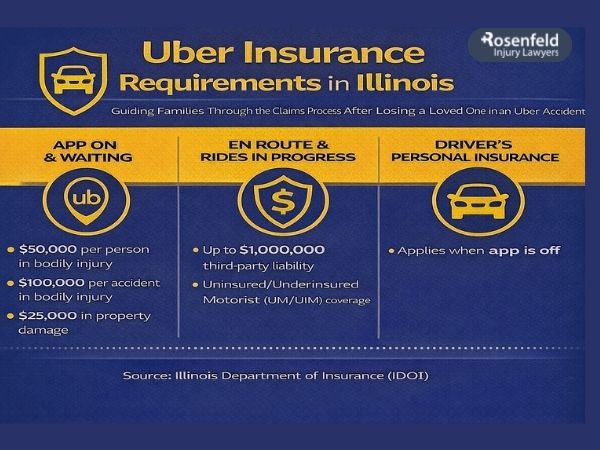
When the Uber app is off, a driver’s personal car insurance policy is the only coverage in effect. Once the app is on and the driver is waiting for a ride request, Uber offers limited liability insurance: $50,000 per person for bodily injury, $100,000 per accident, and $25,000 for property damage. When a trip is accepted, or a passenger is in the car, Uber’s insurance coverage increases significantly, providing up to $1 million in liability coverage, plus uninsured/underinsured motorist protection and contingent comprehensive and collision coverage.
This layered approach helps fill gaps in coverage between a driver’s personal insurance policy and the requirements of commercial operation.
During “Period 1,” the Uber driver is logged into the Uber app but hasn’t accepted a ride request. In this phase, Uber’s insurance coverage offers limited liability insurance as secondary protection. If the driver causes an accident, Uber provides up to $50,000 per person for bodily injury, $100,000 per accident, and $25,000 for property damage. However, this only applies if the driver’s personal auto insurance policy doesn’t cover the claim or denies it due to rideshare activity. Many personal auto policies exclude driving for transportation network companies unless the driver has added a rideshare endorsement. This creates a risk of coverage gaps if a claim is filed during this period. Since no passenger is in the vehicle, this tier doesn’t cover injuries to riders but can apply to other drivers or third parties involved. Understanding how liability coverage works in this early stage is essential to staying financially protected.
In “Period 2,” once a ride has been accepted, but the passenger isn’t yet in the vehicle, Uber’s insurance coverage becomes more comprehensive. The company provides up to $1 million in liability insurance for bodily injury or property damage caused to other drivers or parties involved. Uber also includes contingent comprehensive and collision coverage to cover the driver’s own vehicle, but only if the personal car insurance policy already includes comprehensive coverage and collision coverage. This protection applies regardless of fault, with a $2,500 deductible. If an uninsured or underinsured motorist causes the accident, Uber’s uninsured/underinsured motorist coverage helps cover bodily injuries sustained by the Uber driver. Drivers without proper personal insurance may find that this period exposes them to significant risk. Having rideshare insurance or an endorsement on their personal policy helps avoid gaps in coverage and delays in the claims process.
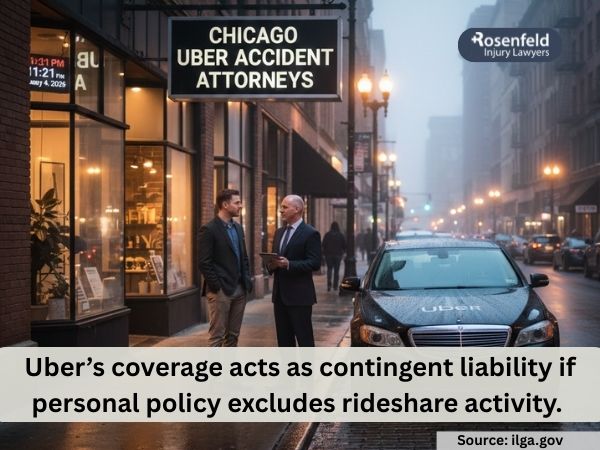
“Period 3” begins when the passenger enters the vehicle and ends when the trip is complete. This is when Uber’s insurance coverage offers its highest protections. Coverage includes up to $1 million in liability coverage for bodily injury and property damage involving third parties, including pedestrians, other drivers, or cyclists. Uber also provides uninsured/underinsured motorist (UM/UIM) coverage to protect both the passenger and the Uber driver in an accident caused by someone with insufficient insurance coverage. In some states, including Illinois, limited medical payments coverage (MedPay) may apply to help pay for emergency care. If the driver carries collision coverage and comprehensive coverage on their personal auto insurance policy, Uber offers contingent coverage for their own vehicle, minus a $2,500 deductible. During this phase, the personal car insurance typically becomes secondary. Understanding these coverage limits is critical for both drivers and passengers in the event of a serious accident.
Yes, there are gaps in coverage that Uber drivers in Illinois need to watch for, especially if their personal auto insurance policy isn’t set up for rideshare use. Many personal insurance policies specifically exclude coverage while the vehicle is being used for a transportation network company like Uber. If a driver fails to add a rideshare endorsement or purchase separate rideshare insurance, their claims process could stall or be denied entirely.
Another common gap happens during inactive periods when the Uber app is off. During this time, Uber’s insurance doesn’t apply, and the driver is left relying solely on their personal auto insurance policy. Even comprehensive and collision coverage through Uber won’t apply unless the driver already carries those protections on their personal auto.
To stay financially protected, drivers should update their personal policy to include rideshare endorsements. Without them, they may be personally responsible for property damage, medical bills, or bodily injuries after an accident. Understanding Illinois car insurance coverage rules is essential for protecting yourself behind the wheel.
Yes, Uber offers contingent collision coverage to protect Uber drivers after an accident, but only under specific conditions. This type of insurance coverage applies during Periods 2 and 3, when the driver is en route to pick up a passenger or during an active trip. However, this protection only activates if the driver already carries collision coverage on their personal auto insurance policy. If the driver lacks personal collision coverage, Uber’s policy will not apply, leaving the driver without help for repairs to their own vehicle. When available, Uber’s collision coverage pays for vehicle damage, regardless of fault, up to the car’s actual cash value. A $2,500 deductible applies to any payout. This structure helps protect drivers, but only if their personal insurance is aligned. Without the right personal policy, drivers may face serious coverage gaps and unexpected costs after an accident.
Uber does provide contingent comprehensive coverage under certain conditions–but it only applies during active ride periods–specifically when the Uber app is on, and the driver has accepted a ride request or is transporting a passenger. Like its collision counterpart, Uber’s comprehensive coverage is contingent on the driver maintaining comprehensive coverage on their personal insurance policy. If the driver lacks this on their own insurance, Uber’s policy will not apply. When active, this protection covers damage unrelated to collisions, such as theft, vandalism, fire, or weather-related events like hail or flooding. The coverage limit is based on the vehicle’s actual cash value at the time of the loss, and a $2,500 deductible applies. This extra coverage helps protect drivers from losses outside their control, but it’s only effective when paired with the correct personal insurance policy. Without proper coverage, the driver bears the full cost of these events.
If a passenger is injured during an Uber trip, Uber’s insurance coverage provides up to $1 million in liability coverage for bodily injury caused by the Uber driver or other parties involved. This applies during active ride periods, after a ride request is accepted, and until the trip ends. If an uninsured or underinsured motorist causes the accident, Uber’s uninsured/underinsured coverage can help pay for medical expenses and related losses. In some situations, medical payments coverage (MedPay) may also be available to help with immediate treatment costs, regardless of fault. This can offer short-term personal injury protection while the claim is under review. However, passengers may still face challenges in the legal process, especially if multiple insurers are involved or coverage limits are disputed.
Yes. When Uber’s insurance coverage doesn’t fully compensate a victim after an accident, filing an Uber accident lawsuit may be necessary. In Illinois, injured passengers, Uber drivers, or other parties can seek damages beyond what’s covered by liability insurance or UM/UIM policies. Claims may involve medical expenses, long-term care, lost wages, emotional distress, or pain and suffering. For those dealing with catastrophic injury, such as paralysis or traumatic brain injury, the long-term impact often exceeds coverage limits. In fatal incidents, surviving family members may file for wrongful death damages. Legal action helps address both short-term costs and lasting effects on quality of life. Reviewing similar lawsuits and past Uber settlements can offer insight into what compensation may be appropriate. It’s also helpful to explore available rideshare safety resources to stay informed about insurance rights and the types of coverage that apply in these cases.
Filing an Uber accident claim involves multiple layers of reporting and coordination between insurance carriers. Whether you’re a rideshare driver, passenger, or third party, the first step is to report the accident through the Uber app as soon as possible. This notifies Uber’s insurance provider and begins the formal claims process. Uber typically partners with a third-party insurer to handle claims, and communication may take place directly between you and that insurance company.
If the accident involved another driver, you may also need to file a claim with that person’s auto insurance provider. These overlapping claims can lead to confusion about who is responsible for property damage, bodily injury, or medical expenses. Promptly collecting and preserving evidence–such as photographs, dashcam footage, witness statements, and police reports–is critical, especially when liability is unclear.
Disputes often arise when personal auto insurance policies exclude rideshare activity, or when coverage limits are in question. If there are questions about fault or gaps in coverage, multiple insurers may attempt to deny or reduce payment. In such cases, working with an attorney familiar with Uber accident claims can help ensure your claim is taken seriously and that all parties involved are held accountable.
The aftermath of an Uber accident often involves dealing with multiple insurance companies, unclear liability coverage, and unexpected coverage gaps. A lawyer can step in to manage the entire claims process on your behalf, handling communication with Uber’s insurer, reviewing your personal insurance policy, and gathering evidence to support your claim. Whether you’re a passenger, rideshare driver, or third party, an attorney can help determine which insurance coverage applies, what coverage limits may affect your case, and whether additional coverage is available through an Uber accident claim.
Our Chicago traffic accident attorneys understand how rideshare insurance works and can push back when insurers delay, deny, or undervalue claims. Legal support can be especially important if you’re facing serious injuries, large medical bills, or lost income. With the right legal guidance, you can stay focused on recovery while your attorney works to protect your financial interests and hold all parties involved accountable.