
100% Focus on Your Recovery,
Chicago Auto Accident Lawyer
Chicago Auto Accident Lawyer
Our Team of Attorneys Are Committed to Maximizing the Value of Your Case



In a city as busy as Chicago, crashes involving public city buses and private carriers happen nearly every day, and understanding the differences between public vs private bus accidents is critical when you’re trying to protect your rights.
Our Chicago-based firm helps injured passengers navigate these unique challenges. As experienced bus accident lawyers in Chicago, we guide our clients through the claims process with clarity, compassion, and the strong advocacy they deserve.
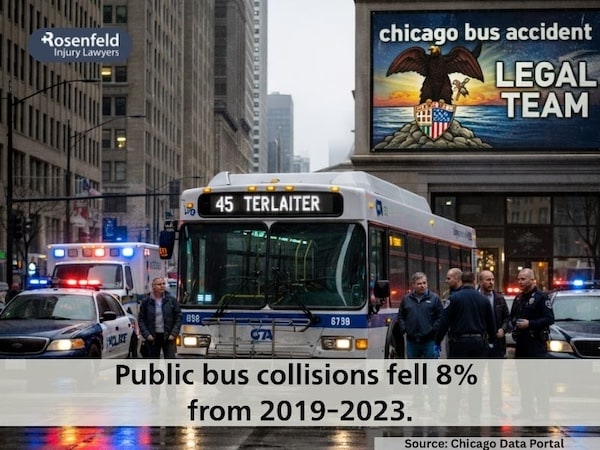
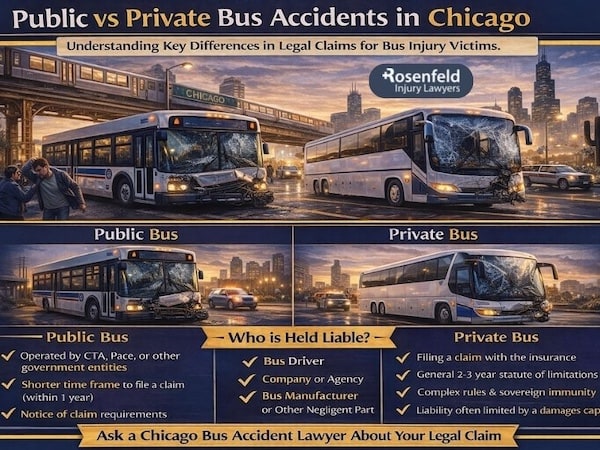
Although every bus accident is unique, there are clear differences in public vs private bus accidents in Illinois. Public bus accidents involving the Chicago Transit Authority and public school buses fall under laws which impose special rules, immunity protections, and shorter filing deadlines. By contrast, private bus accidents involving commercial operators follow standard negligence rules and typically allow more flexibility and a longer filing window.
Both types of crashes can involve multiple parties: the bus driver, the bus company, the bus manufacturer, other motorists, or contractors responsible for maintenance records or safety inspections.
Whether the case stems from public transportation systems or private bus operators, our role as your bus accident lawyer is to investigate fault, protect your legal claims, and pursue compensation for medical care, lost wages, and long-term injuries such as traumatic brain injuries, spinal harm, or other severe injuries.
Many public bus claims in Cook County involve Chicago’s major government entities and public transit system operators, including:
When accidents involving government entities like the CTA, Pace, Metra, or other public bus companies occur, they are usually governed by the Local Governmental and Governmental Employees Tort Immunity Act (745 ILCS 10/). This law sets special rules for public bus accident cases, including:
You generally have one year to bring claims against a government agency. This is twice shorter than the standard two-year statute of limitations for personal injury cases in Illinois. Missing this one-year deadline can bar your case entirely, even if liability is clear.
Certain public bus accident claims require written notice to the transit agency before filing a lawsuit. These notices must often include specific information, such as the accident scene location, nature of the injuries, and names of the parties.
Government agencies receive special protections under tort immunity laws. While these protections do not cover negligent driving, failures in policy, driver error, or poor vehicle maintenance, they can limit or eliminate liability in some circumstances.
Despite immunity rules, public transportation authorities like the CTA are still considered common carriers. That means the bus operators must act with the highest degree of care for passengers’ safety.
In many public bus accident claims, the legal standards involve examining whether the transit agency failed to train drivers, maintain vehicles, follow safety protocols, prevent distracted driving, or screen drivers properly.
Because public transportation cases move quickly and require specific filings, we encourage injured clients to reach out as soon as possible so we can preserve evidence, request video footage, and ensure all notice requirements are met.
Chicago has a large commercial passenger-transportation network, with dozens of companies operating charter buses, shuttle bus accidents, corporate buses, tour bus accidents, hotel shuttles, party bus accidents, intercity services, and other services. Examples include:
In these accidents involving private bus companies, the legal process differs significantly from public transit cases:
Private companies must follow state and federal motor-carrier safety laws. Liability often involves evaluating driver error, poor vehicle maintenance, mechanical defects, hiring practices, screening processes, and compliance with safety regulations.
Unlike public entities, private bus operators typically fall under the standard two-year statute of limitations for personal injury. This applies to most bus accident claims against private companies.
Private companies don’t have the same immunity protections as government agencies. That means injured bus passengers can often seek compensation for a full range of damages, including long-term medical care, lost earnings, emotional trauma, and future issues.
Private entities often carry substantial commercial policies. However, their insurance company may aggressively dispute fault, minimize injuries, or argue comparative negligence. We step in early to protect our clients’ rights and present strong evidence before the insurer shapes the narrative.
Whether the case involves a crash caused by another negligent driver, a collision with passenger vehicles, a mechanical failure, or a dangerous incident during loading or unloading, our bus accident attorney team’s legal expertise helps clients move forward with confidence.
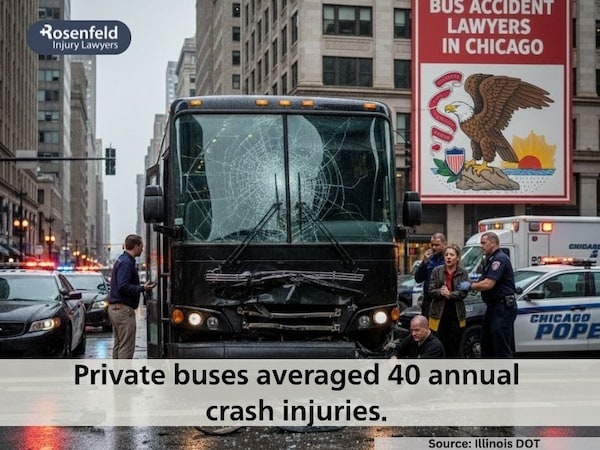
Based on reported Cook County cases, the settlement range for bus accident cases in the Chicago area includes:
These numbers vary significantly depending on the facts of a case. Factors that influence the value of an injury claim include:
As with all personal injury cases, each claim requires a detailed, fact-specific evaluation.
Below are brief descriptions of real-world cases illustrating how bus accident victims have pursued compensation in Chicago-area courts.
A private-company shuttle bus operated by First Student, Inc. struck another vehicle during a left turn. The passenger suffered a neck injury requiring surgery. The lawsuit alleged negligence by the driver and vicarious liability by the employer. Defense counsel argued comparative negligence, but the passenger recovered significant compensation.
A CTA passenger fell during a sudden stop caused by a phantom vehicle. She struck her head and back on the fare box. The claim alleged the bus driver failed to maintain a proper lookout and violated internal safety policies. The CTA argued the phantom vehicle was solely responsible, but the passenger recovered compensation.
A Midway Airport shuttle bus allegedly lurched forward while passengers retrieved luggage. The driver and operators denied the movement occurred and cited mechanical interlocks. Despite disputes, the passenger obtained a settlement for her injuries.
A passenger was hurt when a CTA wheelchair ramp partially closed on her foot. The claim alleged the driver failed to warn passengers and should have waited until the bus fully cleared. The CTA argued comparative negligence, but compensation was awarded.
If you’re considering a bus accident lawsuit, understanding your deadlines is essential. Illinois law provides:
Missing a deadline can permanently bar your ability to seek compensation. We step in early to protect your rights and make sure all filings are made on time.
As experienced bus accident lawyers in Chicago, we help our clients through every stage of the legal process. Our services include:
Our personal injury attorney team stands with our clients from day one. You don’t have to face the legal system alone.
If a bus accident occurs, taking the right steps can make a major difference in the strength of your case:
The earlier we get involved, the stronger your case becomes.
If you or a loved one was injured in a Chicago-area bus accident, we’re here to support you. Our motor vehicle accident lawyers in Chicago offer a free consultation and compassionate, confidential legal representation. We handle public and private bus accident cases on a contingency fee basis, meaning there are no upfront costs and no attorney fees unless we recover compensation for you.
When you’re ready, our team will help you understand your options, protect your rights, and move forward at a pace that feels safe and empowering.