
100% Focus on Your Recovery,
Chicago Auto Accident Lawyer
Chicago Auto Accident Lawyer
Our Team of Attorneys Are Committed to Maximizing the Value of Your Case



As Chicago-based experienced lawyers, we work closely with individuals and families whose lives are disrupted when bus accidents occur on city streets. From CTA routes downtown to bus traffic in residential neighborhoods and highway accident corridors like I-90 and I-94, the majority of causes of bus accidents are often preventable. When our clients reach out to a Chicago bus accident attorney at our firm, they’re looking for answers, accountability, and reassurance. We stand with you, and we believe in your case.
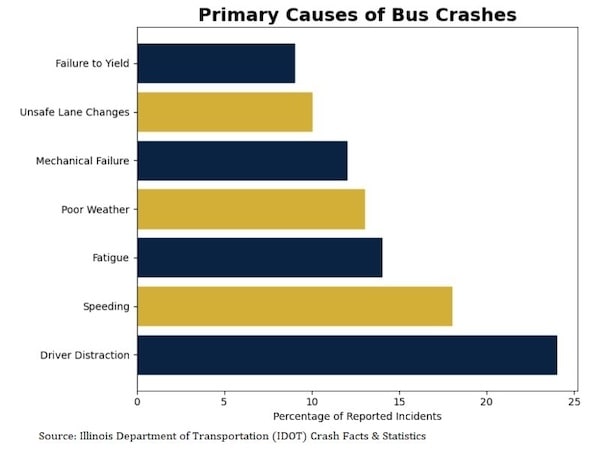
Bus accidents in Chicago rarely stem from a single mistake. Instead, they often involve overlapping failures by bus drivers, bus companies, and other motorists sharing the road. Under the Illinois Vehicle Code (625 ILCS 5/), all drivers, including those operating buses, must follow specific safety rules designed to protect passengers, pedestrians, and other motor vehicles. These laws regulate bus drivers and establish clear standards for proper training, speed, lane usage, and vehicle condition.
Chicago’s dense traffic patterns, frequent construction, poor roads, and changing weather conditions increase risk when negligence is present. CTA buses, Pace suburban routes, private charter buses, and school bus operators all navigate congested corridors where small errors can lead to serious injuries, property damage, and costly medical expenses. While buses are designed with seat belts and other protective measures, safety systems cannot overcome careless or unlawful behavior.
Below, we outline the most common causes of bus accidents we see while representing bus accident victims across the city.
Distracted driving remains one of the most common causes of bus accidents in Chicago. Bus drivers may be distracted by mobile devices, route screens, passenger activity, or communications with dispatch. Even a momentary lapse in attention can lead to a crash involving other motor vehicles, pedestrians, or passengers inside the bus.
Driver fatigue is a serious safety concern, particularly on long routes or early-morning and late-night shifts. Conditions such as obstructive sleep apnea can impair reaction time and judgment, increasing the risk that bus accidents happen during routine operations.
Operating a bus while impaired by alcohol, drugs, or certain medications violates both company policies and Illinois law. Impaired operation significantly increases the likelihood of severe injuries and raises clear issues of fault and liability.
Improper lane positioning is especially dangerous for large buses with wide turning radii and extended blind spots. When bus drivers drift, straddle lanes, or fail to maintain proper positioning, they put other drivers and passengers at risk.
Failing to yield at intersections, crosswalks, or when merging can lead to severe bus accidents. Chicago traffic patterns require constant vigilance, particularly in areas with heavy pedestrian activity.
Due to their size and weight, buses require longer stopping distances. When bus drivers follow other vehicles too closely, rear-end crashes become more likely, often causing serious injuries to passengers.
Unsafe or wide turns can trap cyclists, strike vehicles, or throw standing passengers off balance. These incidents are common in dense neighborhoods with narrow streets.
Failure to properly supervise passengers, especially on a school bus, can lead to falls, injuries, and unsafe behavior during transit.
Large buses have extensive blind spots. Neglecting mirror checks or blind-spot protocols increases collision risk with other motor vehicle drivers and cyclists.
Skipping required inspections can allow mechanical failure, worn brakes, or other safety equipment issues to go unnoticed before a route begins.
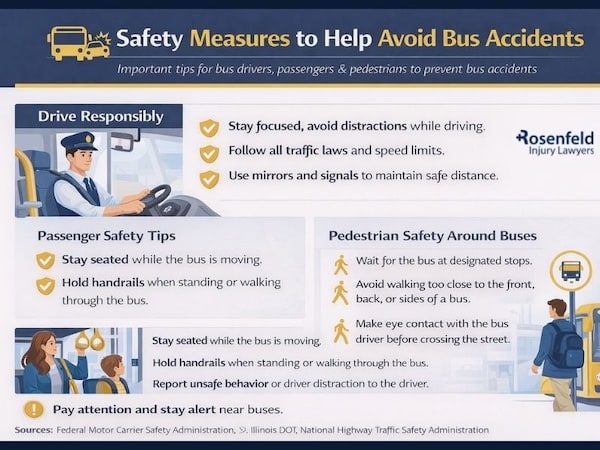
Bus company negligence often starts with poor fleet maintenance. When buses are not serviced regularly, mechanical failure becomes far more likely causes of bus accidents.
Inadequate driver training leaves operators unprepared for hazardous weather, bad road conditions, or emergency situations. Much like the airline industry, public transportation depends on standardized procedures and continuous education to protect passengers and reduce risk.
Negligent hiring practices may place inexperienced or unqualified drivers behind the wheel. Failing to identify a history of improper training or unsafe conduct creates foreseeable danger for passengers and other motor vehicle drivers.
Some bus companies fail to monitor driver behavior, bus speed, or compliance with internal safety rules, allowing dangerous habits to persist.
Ignoring known defects, such as brake issues, steering problems, or malfunctioning safety equipment, can directly lead to preventable crashes.
Overloading buses beyond safe passenger limits strains braking systems and increases injury risk when accidents occur.
Poor route planning may expose drivers to unsafe turns, congested intersections, or unsuitable road conditions without proper guidance.
Failing to enforce rest requirements contributes to driver fatigue and increases the likelihood of serious accidents.
Without consistent performance reviews, unsafe driving behaviors may go unnoticed and uncorrected.
Delays in required inspections undermine safety standards and expose passengers to unnecessary danger.
Other motorists making reckless lane changes near buses create sudden hazards that bus drivers may not be able to avoid.
Cutting off a bus in traffic forces abrupt braking, risking injuries to standing passengers and collisions with other vehicles.
Tailgating buses leaves little room for error and frequently results in rear-end car accidents.
Unsafe merging near buses can trigger sideswipes or chain-reaction crashes.
Distracted driving by other motor vehicle drivers, such as texting, phone use, or in-vehicle distractions, contributes significantly to Chicago bus crashes.
Speeding in congested areas reduces reaction time and increases crash severity, particularly when combined with reckless driving by impatient motorists.
Illinois law requires drivers to yield when buses signal to re-enter traffic. Ignoring these signals is one of the most common causes of bus accidents.
Improper passing places buses and surrounding vehicles at risk, especially on narrow city streets.
Failing to observe bus signals creates confusion and dangerous traffic interactions.
Bad weather and poor road conditions demand reduced speeds. Ignoring these conditions increases crash risk.
If you or someone you love has been injured in a bus crash, speaking with a Chicago motor vehicle accident attorney can help you understand your options. As experienced attorneys in handling bus accident claims, we focus on protecting victims, identifying who should be held liable, and pursuing fair compensation for medical bills, lost wages, and long-term injuries.
We offer a free consultation, and we handle these cases on a contingency fee basis, meaning there are no attorney fees unless we recover compensation for you. If you’re injured, confused, or overwhelmed after a crash, we encourage you to contact us. With extensive experience, we stand with our clients, and we’re here to help you move forward with clarity and support.